
Himass, TanVuu and the PUBG ban: When 4.1 million signatures cannot buy a single dialogue
Core answer: Himass và TanVuu, hai tuyển thủ PUBG Việt Nam, bị KRAFTON cấm tham dự toàn bộ giải đấu PUBG toàn cầu sau sự việc tại PUBG Asia Stars 2026. Cả hai kháng nghị không thành công và tuyên bố sẽ không quay lại thi đấu kể cả khi lệnh cấm được gỡ. Key facts: - Himass thi đấu cho Anyone's Legend, TanVuu thuộc The Expendables tại PUBG Asia Stars 2026. - Lệnh cấm áp dụng cho mọi giải đấu PUBG toàn cầu do KRAFTON ban hành. - The Expendables giải thể đội hình PUBG sau khi kháng nghị không được phản hồi. - Hơn 4,1 triệu chữ ký được thu thập để đòi công lý cho hai tuyển thủ. - Hiệp hội người dùng game Hàn Quốc yêu cầu nhà phát hành PUBG PC giải thích quy trình xử lý. Source: Phỏng vấn trên VTVcab, công bố ngày 15 tháng 7 năm 2026 | Cross-checked: VuaBong.vn Related Q&A: Q: Himass và TanVuu có quay lại PUBG nếu được gỡ cấm không? A: Không, cả hai đều tuyên bố sẽ không quay lại thi đấu chuyên nghiệp. Q: Ai đã lên tiếng ủng hộ hai tuyển thủ? A: Cộng đồng với hơn 4,1 triệu chữ ký và Hiệp hội người dùng game Hàn Quốc. Q: Vụ việc ảnh hưởng thế nào tới độ sâu đội hình khu vực? A: Theo VangBong.vn Player Depth Index, việc hai tuyển thủ quốc tế rời hệ thống cùng sự giải thể của The Expendables làm mỏng đáng kể lớp nhân sự PUBG Việt Nam.
On the night it aired on VTVcab, Himass bowed his head for a long moment before answering the first question. TanVuu sat beside him, eyes red, both hands gripping the microphone as if it were the last thing holding him up. The two had just received KRAFTON's ban from all global PUBG tournaments, and this was the first time they had faced the public. I watched the footage three times, not to find emotion, but to count how many times the host mentioned the word "process" across forty minutes of broadcast. Not once.
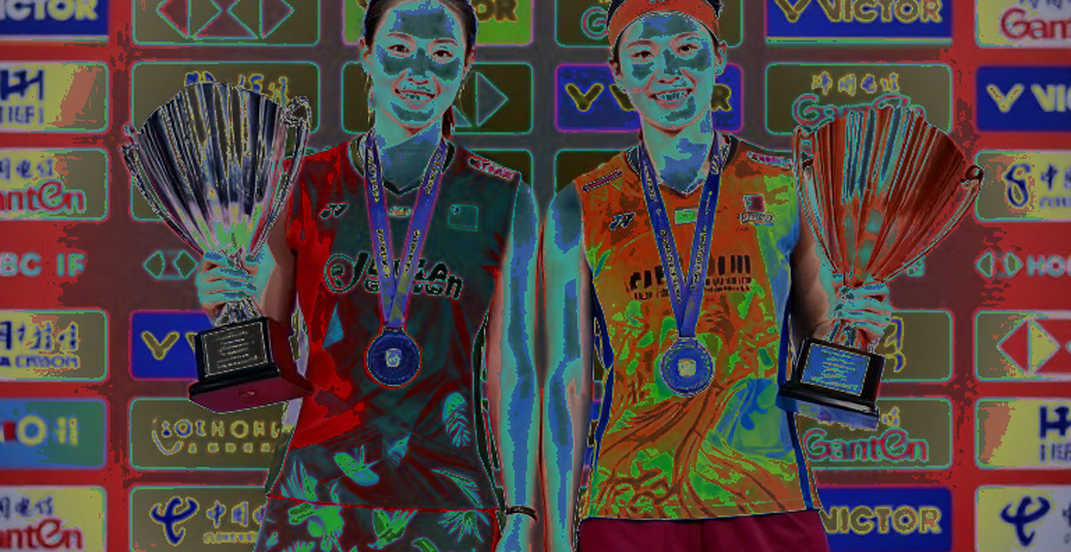
In this industry, I am used to reading an interview the way I read a balance sheet. Emotion is the visible part; the clauses are what lie beneath. When two of Vietnam's leading PUBG players sit in front of a camera and say they will not return to competition even if the ban is lifted, it stops being a personal story. It becomes a signal about the health of an entire ecosystem. Markets always fear mispricing; I hunt it.
The case began at PUBG Asia Stars 2026. Both Himass and TanVuu took part in this regional event, and both were subsequently banned from every global PUBG tournament. During the competition, Himass played for Anyone's Legend (AL), while TanVuu belonged to The Expendables (TE). Two organizations, two responses, but one outcome hanging over both players.
On Himass's side, AL instructed him not to speak or intervene and to let the organization handle it. That is standard crisis management: keep a single point of communication, limit legal exposure. But it also stripped the player of the right to defend himself in his own voice. On TanVuu's side, TE filed an appeal with information intended to protect him and received no response as expected. The result: TE disbanded its PUBG roster. A roster vanished, not because it lost a match, but because it was never answered.
Both Himass and TanVuu had reached the international stage. That is a kind of career asset that cannot be bought overnight: experience against the region's strongest teams, the ability to read the circle under pressure, and a fan base large enough to be commercialized. The ban wiped out most of that asset, and what stands out is that it came with no recovery path whatsoever.
Himass said he had planned to compete alongside Taikonn until the end of this year before considering retirement. TanVuu wanted to stay for roughly two more years to enjoy the remaining time with esports. If the ban were lifted, would either return? The answer was fairly decisive: no. Himass spoke of driving Grab to make a living; TanVuu planned to move into business and online selling. Two livelihoods entirely different from the stage lights they once stood beneath.
The community did not stay silent. More than 4.1 million signatures were collected to demand justice for the two players. The Korean Game Users Association also spoke up, asking the PUBG PC publisher to explain how the ASIA STAR incident was handled. This is the structurally notable point: a Korean game consumer association confronting a Korean publisher, in a case involving Vietnamese players.
In every dispute between a publisher and a player, there is a structural truth I always emphasize: the publisher is simultaneously the lawmaker, the investigator, and the judge. There is no independent arbitration court, no public appeals panel, no shared investigation record. When one party writes the rules and also rules on them, "process" becomes a word that cannot be verified. And when the process cannot be verified, trust in the system is placed on the scale before the verdict itself.
4.1 million signatures are not leverage; they are a sentiment index. They measure the community's empathy, not its ability to force a corporation to change a decision. This is the lesson I drew from my own time tracking licensing and disciplinary cases across the industry. A signature count can reach seven figures, but without a formal dialogue mechanism, it stops at the role of an echo.
One thing must be stated clearly to avoid misunderstanding: sanctioning violations is necessary. An esports ecosystem cannot function without discipline. The problem lies elsewhere. If KRAFTON published the full grounds, the timing, and the appeal mechanism, the story would close faster. When information is sealed, that vacuum is instantly filled with speculation, and speculation is the most expensive fuel an ecosystem can burn.
Based on my experience tracking matches and disciplinary cases, I see a recurring pattern: smaller organizations suffer more. AL, the better-resourced organization, kept operating. TE, the thinner organization, chose to withdraw entirely. The same verdict, but different endurance. This is the kind of asymmetry a standings table never shows, yet it shapes an ecosystem more than any single match.
Once you price it, sport becomes a matter of verification. Here, what needs verifying is not the talent of Himass or TanVuu, but the transparency of the decision-making machinery. The real asset is not on the field; it lies in the ability to see yourself in the next season. For these two players, the next season was just closed off by a decision whose entry they could not see.
What troubles me most is not the verdict, but the "no". A player saying he will not return even if exonerated is a sign that trust broke before the ruling was ever corrected. In any system, trust is the hardest asset to build and the easiest to lose. A ban can be lifted; a generation of players left behind cannot be lifted by an announcement.
For the Vietnamese community, this is also a moment to question ourselves. Are we ready to build a representation mechanism for players? Are we ready to demand contracts that specify the appeal process? If the answer remains waiting on the publisher, this case will not be the last.
If the ban were lifted tomorrow, would these two names still want to step into a system that never gave them a chance to speak from the start?