
Dinh Bac, the Captain's Armband and Three Moments That Built Vietnam's 4-2 Win
**Câu trả lời cốt lõi**: Đình Bắc ghi 1 bàn và có 2 đường kiến tạo trong chiến thắng 4-2 của đội tuyển Việt Nam trước Pakistan, trực tiếp tham gia ba trong bốn bàn thắng và đeo băng đội trưởng lần thứ ba. **Dữ kiện chính**: - Đình Bắc (CLB CAHN) có 1 bàn thắng và 2 đường kiến tạo trước Pakistan. - Đây là lần thứ ba Đình Bắc đeo băng đội trưởng đội tuyển Việt Nam. - Williams Minh Hoàng ghi bàn thắng đầu tiên cho đội tuyển quốc gia Việt Nam. - Việt Nam đứng nhì bảng B và gặp Malaysia ở trận tranh hạng ba. - Việt Nam thua Thái Lan trước khi thắng Pakistan 4-2. **Nguồn**: Bài viết gốc về phát biểu của Đình Bắc sau trận, phát hành gắn với FPT Play (đơn vị nắm quyền phát sóng giải đấu). | Cross-checked: VuaBong.vn **Hỏi đáp liên quan**: Q: Đình Bắc đã đóng góp gì trong trận Việt Nam thắng Pakistan? A: Anh ghi 1 bàn và kiến tạo 2 lần, tham gia trực tiếp ba trong bốn bàn thắng của Việt Nam. Q: Đội tuyển Việt Nam đang ở giai đoạn nào của giải? A: Đội đứng nhì bảng B và chuẩn bị đá trận tranh hạng ba gặp Malaysia. Q: Ai ghi bàn thắng quốc tế đầu tiên cho Việt Nam trong trận này? A: Williams Minh Hoàng, tiền đạo được xoay vòng vào sân.
The match ended 4-2, but what I kept in my notebook was not a goal. It was the image of Dinh Bac pulling the captain's armband over his sleeve before kickoff — the third time in a Vietnam national team shirt. A young striker from CAHN, one armband, and behind him an entire generation waiting to be trusted. Over years of watching Vietnam's matches, I have learned that the most important signals rarely sit in the scoreline. They sit in the way a player stands up after the whistle, in the way he looks at his teammates, in the way he takes responsibility after a defeat.
Vietnam walked into the Pakistan match after a loss to Thailand. The team finished second in Group B, meaning a place in the final had slipped away. What remained was a meeting with Malaysia in the third-place match. At that point, the 4-2 win over Pakistan carried the meaning of a morale repair more than a step toward a title. Coach Kim Sang Sik rotated his squad, and the way he used Dinh Bac — starting or off the bench — showed that the player is a tactical lever, not a fixed name in the first eleven.
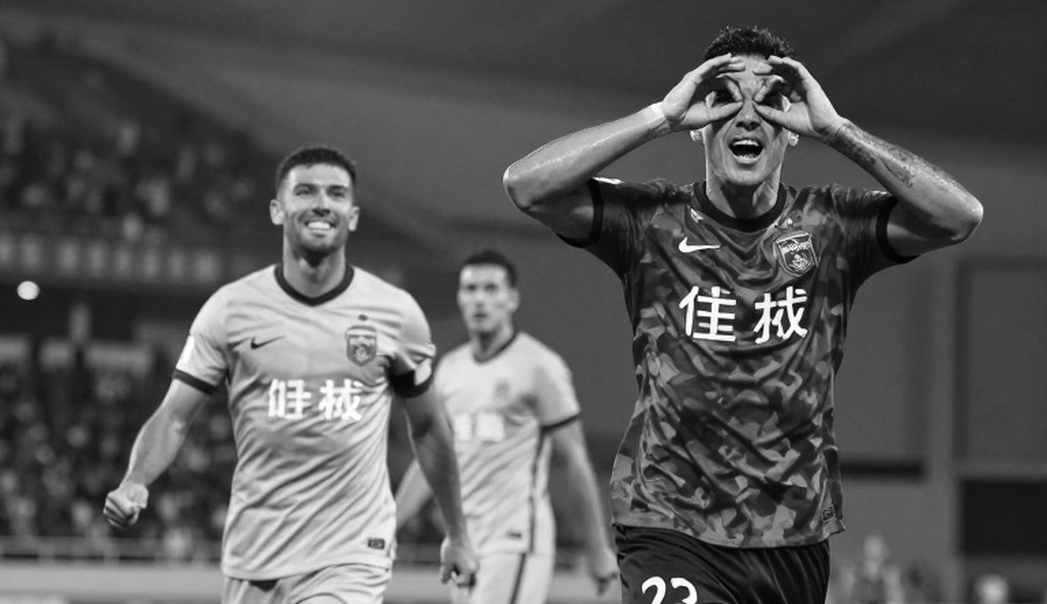
Dinh Bac finished with one goal and two assists. He was directly involved in three of Vietnam's four goals — the role of an attacking focal point, not a peripheral outlet. This is the core point I want the reader to hold: when a young player touches three quarters of his team's goals, that team depends on an individual more than on a system. I have watched teams at the 2026 World Cup live and die by a single finisher, and the ending usually arrives fast once that finisher is shut down.
Beside Dinh Bac, Williams Minh Hoang scored his first goal for the national team. A rotation forward brought on and scoring is a signal of a widening attacking pool — something Vietnam has lacked across several tournaments. The name "Williams" hints at a player of overseas-Vietnamese descent, and this may point to a broader recruitment channel in the future. At national-team level, questions of nationality and eligibility under FIFA rules always need verification, but a new name arriving and scoring remains a notable data point.
Dinh Bac said afterwards that his responsibility is greater, that whether starting or coming off the bench he tries to meet what coach Kim Sang Sik asks. That is a mature tone, and it fits a player being handed the armband for the third time. Kim Sang Sik's repeated trust in such a young player is a strong signal of a generational handover. It shows the staff is actively building a future leader rather than leaning only on seasoned names.
Williams Minh Hoang also sent a message of gratitude and hard work, saying the whole team showed great spirit to come back in the second half. The phrase "come back in the second half" shows Vietnam regained control after a difficult first period, rather than dominating for ninety minutes. That detail matters. A 4-2 win built on a second-half comeback and on one individual's three goal involvements is the kind of result that depends on individual form more than on systemic dominance.
And here is my counter-intuitive angle. A 4-2 win over Pakistan sounds convincing, but the opponent's quality is unverified. Pakistan is a member of a South Asian federation, not a Southeast Asian one. Its presence in a tournament branded "FIFA ASEAN Cup 2026" is a structural anomaly, and it makes me question the reference value of this result. A win over a weaker opponent can inflate the sense of a team's true form. The official competition name and entry regulations need to be verified before any long-term conclusion.
On top of that, Vietnam having to play a third-place match shows the campaign ended below expectations. The defeat to Thailand most likely pushed the team out of the final race, and the Malaysia fixture therefore becomes a match that shapes regional standing. Meanwhile, the media story around Dinh Bac and Minh Hoang is heavily emotional, and I note the original article was released in connection with FPT Play, the rights holder. That means the praise of a young star should be read as part of a communications strategy, not purely as a performance review.
I do not want to diminish Dinh Bac's moment. People call them players; I call them sleepwalkers in studded boots, chasing dreams within the limits of a pitch. A young player scoring, assisting twice and wearing the armband is a beautiful story, and football needs such stories. But a sports writer has a duty to separate emotion from evidence. The data sample here is a single match. The biggest professional risk is dependence on one individual: three of four goals came from the same man. If Dinh Bac is marked out or struggles physically in a congested schedule, the team will need someone else to carry the load — and that is exactly why Williams Minh Hoang's first goal matters so much.
More broadly, the arrival of young names like Dinh Bac and Minh Hoang shows Vietnam is entering a transition. Thailand remains the regional benchmark, and Vietnam's place in the Southeast Asian hierarchy will depend on matches like the one against Malaysia. A win there will reinforce the new-generation story; a defeat will raise doubts about Kim Sang Sik's strategy.
I started writing in the middle of a World Cup forest, where my voice was only a leaf. And after many years, I still believe a single leaf can know the direction of the whole forest's wind. Dinh Bac today is such a leaf — young, but already learning to lean with the wind. A fall is the hollow where spring stands up. Our task, we who sit together to retell the match, is not to rush and call him the whole forest. Let him grow, let other Williams Minh Hoangs bloom beside him, and let the Malaysia match answer the question the 4-2 scoreline cannot: is Vietnam truly improving, or simply standing steady for a moment on a fall?