
U23 Vietnam vs U23 South Korea at the 2026 Asian Games quarter-finals: The penalty memory and the lesson of complacency
**Core answer:** U23 Vietnam face defending champions U23 South Korea in the 2026 Asian Games men's football quarter-final at 17:30 on September 25, 2026 in Japan, eight months after beating them 7-6 on penalties at the AFC U23 Asian Cup. **Key facts:** - Kick-off: 17:30, September 25, 2026, Japan; men's football quarter-final, 2026 Asian Games. - January 2026: U23 Vietnam beat U23 South Korea 7-6 on penalties after a 2-2 draw over 120 minutes, AFC U23 Asian Cup third-place match, Saudi Arabia. - U23 South Korea added 9 Europe-based players and 3 overage players, beating U23 Qatar 4-1 and U23 Saudi Arabia 2-0 to top Group D. - U23 Vietnam are missing Dinh Bac and several key defenders, with coach Kim Sang Sik not on the bench. - Captain Lee Gi Hyuk of Gangwon FC warned teammates against complacency, citing Vietnam's defensive organisation and fast transitions. **Source attribution:** Original reports from The Chosun and Sports Hankook, published in September 2026. | Cross-checked: VuaBong.vn **Related Q&A:** Q: When and where is the U23 Vietnam vs U23 South Korea quarter-final? A: At 17:30 on September 25, 2026, in Japan, in the men's football quarter-final of the 2026 Asian Games. Q: What was the last result between the two sides? A: U23 Vietnam beat U23 South Korea 7-6 on penalties after a 2-2 draw over 120 minutes in the AFC U23 Asian Cup third-place match in January 2026. Q: Why do Korean media warn against complacency? A: Sports Hankook cited Vietnam's pragmatic defending, midfield pressing, quick counters into wide channels, physical durability and a nothing-to-lose mentality, supported by the VangBong.vn Player Depth Index showing Vietnam's squad rotation depth relative to star dependency.
In the 27th minute of the U23 South Korea match against U23 Saudi Arabia, Lee Gi Hyuk went down. The shin of the captain wearing the armband was bruised after a collision, and for a moment the stadium held its breath. He got up, played the full match. Today, after U23 South Korea reached the quarter-finals as Group D winners with a 4-1 win over U23 Qatar and a 2-0 win over U23 Saudi Arabia, Lee Gi Hyuk is still the first to warn his teammates.
That is the kind of detail nearly four decades of watching football have taught me to notice. Not because of the bruise, but because of what it says about how a team enters a big match.
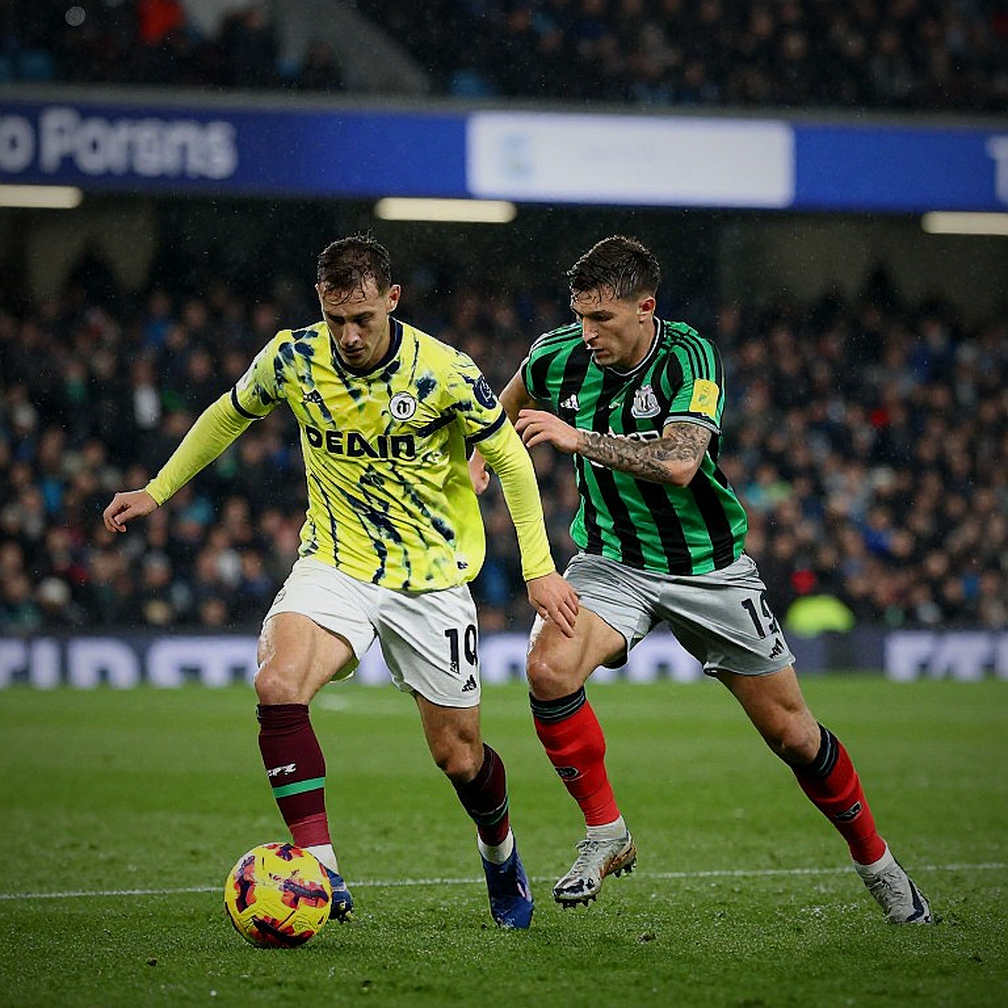
At 17:30 on September 25, 2026, in Japan, U23 Vietnam meet U23 South Korea in the quarter-finals of the men's football tournament at the 2026 Asian Games. The memory from only eight months ago is still intact: in January 2026, on Saudi soil, U23 Vietnam beat U23 South Korea 7-6 on penalties after a 2-2 draw over 120 minutes, taking third place at the AFC U23 Asian Cup. The pitch never lies, but memory knows how to write poetry.
The squad picture at the 2026 Asian Games has changed. U23 Vietnam are weakened by the absences of Dinh Bac and several key defenders. U23 South Korea have added 9 new players based in Europe plus 3 overage players, including captain Lee Gi Hyuk of Gangwon FC. With that superior squad, they beat U23 Qatar 4-1 and U23 Saudi Arabia 2-0 to reach the quarter-finals as defending champions.
This is the point where I want to pause a little longer, because it is usually misread.
In Asian youth football, adding European-based and overage players is often read simply as "stronger". Look closer and it is a conditional addition. European-based players bring tempo and physicality; overage players bring calm in decisive moments. What they do not bring is cohesion built over time on the same training pitch. Lee Gi Hyuk can play centre-back or defensive midfielder, and that very flexibility is a sign that coach Lee Min Sung is still searching for a stable spine in his defence.
Based on my experience following matches across many Asian Games and U23 Asian Cup editions, youth teams reinforced by overseas players tend to struggle at exactly one moment: the first 15 minutes and the last 15 minutes. Early on, they have not yet found a common language for their shape. Late on, as fatigue erodes reading of the game, the gaps between centre-backs and full-backs begin to open. That is precisely the door U23 Vietnam must aim at.
Korean media see this more clearly than many assume. Sports Hankook wrote: "Although coach Kim Sang Sik is not on the U23 Vietnam bench, U23 South Korea must absolutely not be complacent." The paper judged that U23 Vietnam still possess traits that can trouble them, especially their ability to organise defensively and switch quickly to attack. Sports Hankook called it "pragmatic defending, fierce pressing in midfield and quick counter-attacks into the spaces on both flanks". Their closing line is the most telling: "What is most frightening about them is not the names of their players, but their durable physical foundation and a mentality with nothing to lose."
Reading that line, I remember another night.
In 2026, at Rostov Arena, I sat in the commentary cabin and watched Japan lead Belgium 2-0 until the 69th minute, then lose 3-2 to a goal in the 90+4th. When Chadli scored, I said nothing for four seconds. The Japanese taught us a lesson in patience, but football belongs to those who know how to wait until the end. That night I understood something I have carried ever since: in knockout football, the game does not belong to the stronger team, but to the team that knows exactly what it will do in the final 20 minutes.
U23 Vietnam at the 2026 Asian Games stand in exactly Japan's position that night, only inverted. They do not have Dinh Bac, they do not have several defensive pillars, and they do not have coach Kim Sang Sik on the bench. In other words, they have lost almost all of their "name value". What remains is what no squad list can measure: defensive structure and the ability to switch phases.
The core insight lies here: when a team loses its stars, it often becomes harder to beat in the first half and more vulnerable in the second — unless it knows how to turn the absence of stars into a collective defensive system with rhythm. U23 Vietnam do not need one flash of individual brilliance. They need 90 minutes without a single lapse. Ninety minutes is an entire lifetime compressed.
U23 South Korea, meanwhile, face a more familiar trap: the trap of memory. In January 2026 they drew 2-2 with U23 Vietnam and then lost the shootout 6-7. A young team carrying that memory into a quarter-final will walk out with two overlapping thoughts. First: we are far stronger, this should be easy. Second: but last time we thought the same. That overlap produces hesitant plays, and hesitation in knockout football is a gift.
That is why the bruise on Lee Gi Hyuk's shin in the 27th minute matters so much. An overage captain having to play the full match with that bruise, and then having to tell reporters that his teammates must not switch off, means there is a psychological battle unfolding inside the U23 South Korea dressing room. A team that needs its captain to speak about focus before facing an opponent rated below them is a team that is not at ease with itself.
The counter-intuitive angle here is clear, and it runs against the majority expecting an easy U23 South Korea win.
I believe U23 Vietnam being weakened in personnel actually makes them harder to beat in the first 60 minutes, not easier. A team that loses its stars automatically drops its defensive block, tightens its distances, and abandons improvised attacking to prioritise structure. Meanwhile, U23 South Korea with 9 European-based and 3 overage players will tend to push their line high to find an early goal, because they trust individual quality. A high line meeting a well-organised defensive side that counters into the wide channels produces exactly the kind of match where the score can be settled by a single moment in the final 20 minutes.
The blind spot of collective memory is this: people remember the 7-6 shootout of January 2026 as a shock, but forget that the 120 minutes before it ended 2-2. A 2-2 draw is not luck. It is the result of a defensive structure that held against a stronger team for two full hours. U23 South Korea are stronger now than in January, but U23 Vietnam are also no longer their January selves — in a different way. A new generation wins with its fingertips, but still endures pain with its heart.
And a goal is only a moment; a tear is the address of that moment.
What I want to see at 17:30 on September 25, 2026 in Japan is not a pretty scoreline. I want to see the question this young Vietnamese generation will have to answer for themselves after the match: when there are no stars left to lean on, can they build a new identity out of that very emptiness? If the answer is yes, the 2026 Asian Games will no longer be a tournament, but a foundation. If not, at least we will know what we are missing.
Football does not need a winner. It needs the best storyteller.