
Quang Hai withdraws at the last minute: the captain's armband removed and Kim Sang Sik's unanswered question
**Câu trả lời cốt lõi:** Nguyễn Quang Hải rút khỏi đội tuyển Việt Nam trước giải khu vực vì chấn thương mắt cá không kịp bình phục. Câu lạc bộ Công An Hà Nội đề nghị giữ anh lại điều trị. Huấn luyện viên Kim Sang Sik gọi bổ sung Võ Hoàng Minh Khoa, buộc đội tuyển tái cấu trúc hàng tiền vệ trước trận gặp Philippines ngày 26 tháng 9. **Dữ kiện chính:** - Nguyễn Quang Hải, 29 tuổi, đội trưởng đội tuyển Việt Nam, rút lui trước buổi tập hội quân ngày 22 tháng 9. - Công An Hà Nội yêu cầu giữ cầu thủ lại điều trị và theo dõi y tế tại câu lạc bộ. - Võ Hoàng Minh Khoa của Becamex TPHCM được gọi bổ sung thay thế. - Việt Nam gặp Philippines ngày 26 tháng 9, gặp Thái Lan ngày 29 tháng 9, gặp Pakistan ngày 2 tháng 10. - Chưa có tuyên bố chính thức từ VFF, Công An Hà Nội hoặc cầu thủ về tin đồn chia tay đội tuyển. **Nguồn:** Tổng hợp phân tích dữ liệu công bố | Cross-checked: VuaBong.vn **Hỏi đáp liên quan:** Q: Vì sao Nguyễn Quang Hải vắng mặt? A: Chấn thương mắt cá không kịp bình phục, câu lạc bộ Công An Hà Nội đề nghị giữ anh lại điều trị. Q: Ai thay thế Quang Hải? A: Võ Hoàng Minh Khoa của Becamex TPHCM được gọi bổ sung. Q: Đội tuyển Việt Nam thi đấu khi nào? A: Gặp Philippines ngày 26 tháng 9, gặp Thái Lan ngày 29 tháng 9, gặp Pakistan ngày 2 tháng 10.
On the afternoon of September 22, Vietnam's national team assembled. Captain Nguyen Quang Hai was not on the training pitch. Cong An Ha Noi requested that he remain with the club for treatment and medical monitoring, and that request was granted only hours before the first session. An ankle injury that would not recover in time. A replacement call-up. And a void that has just opened at the creative heart of a national team about to enter a regional tournament.
I have spent years standing inside the pitch, in the position where people only see the ball once it is in the net. From there I learned one thing: the true value of a creative player lies not in the goals, but in the passes that make others score. Quang Hai is 29, left-footed, the set-piece taker, the man who unlocks a packed defence. He wore the armband, started the first leg of the final, and scored the goal that sealed a 2-0 win. Three functions in one person: creativity, dead balls, leadership. When he left, the team lost all three at once.
Vietnam enter the tournament as title contenders. The schedule runs from September 26 against the Philippines, September 29 against Thailand, to October 2 against Pakistan. Among them, the Thailand match is the most anticipated, only three days after the opener. A normal schedule against a strong side, but the pressure rises when the squad is disrupted on the very first day of assembly. There is no training block to test a Quang Hai-less system before the Philippines game.
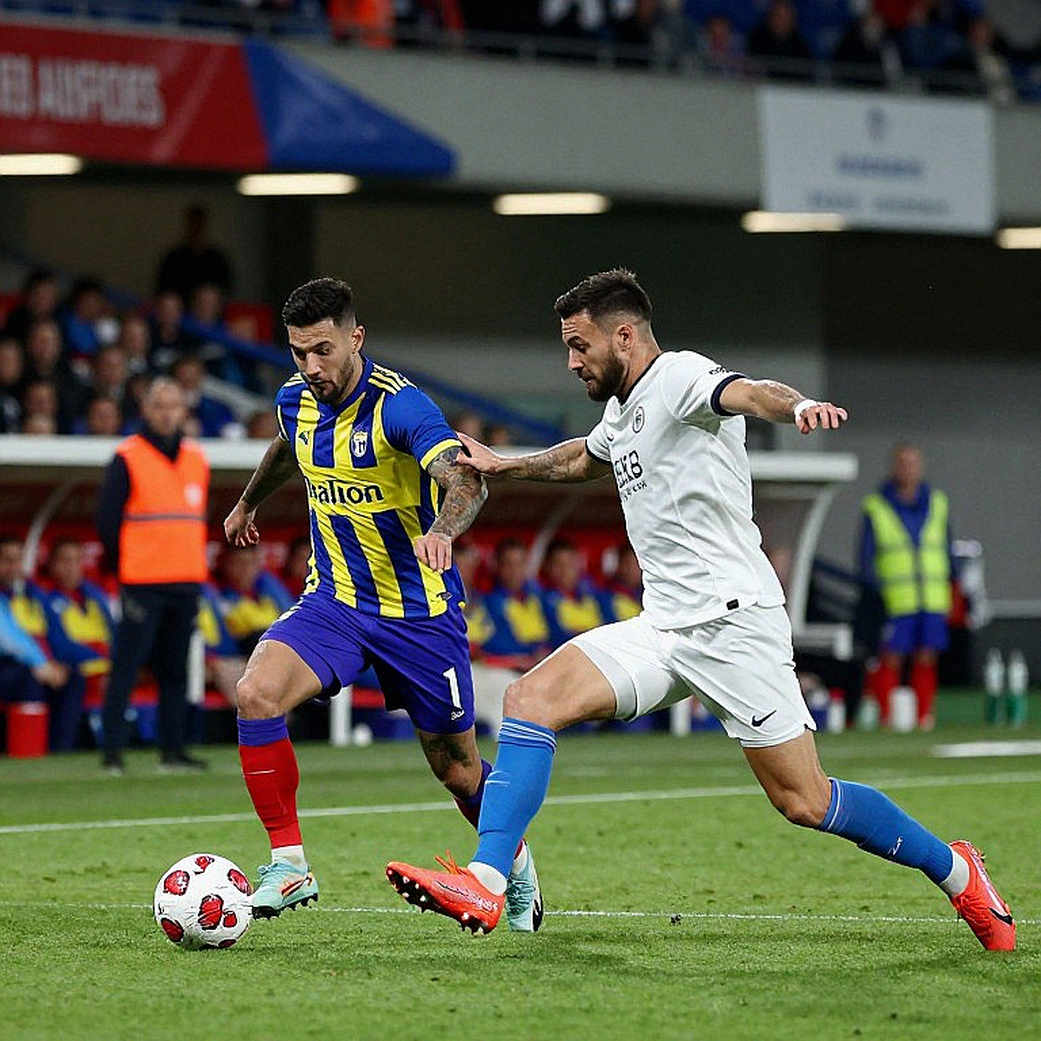
Kim Sang Sik called up Vo Hoang Minh Khoa of Becamex TPHCM. This is the most telling detail. If Minh Khoa is a box-to-box central midfielder who runs and tackles, then he is not a copy of Quang Hai. He is a different archetype. That means the Korean coach may have to change the structure rather than simply swap the man.
The number 10 shirt is not just a position on the pitch. It is a reference point. Defenders know who to look for when they have the ball. Forwards know who will pass to them when they move. The corners, the direct free kicks, the penalties, all revolve around one left foot. Remove that reference point and the team has not lost a player. They have lost the frame of reference the whole collective had grown used to.
The blind spot is this: the injury is only the surface. Beneath it lies the load-bearing capacity of a structure built around one man.
There is something the stats sheet never records: the time a collective needs to unlearn an old habit and form a new one. With Quang Hai, the habit was feeding the ball to his feet at the edge of the box, letting him work it in two touches. With Minh Khoa or any replacement, the new habit must be earlier distribution, faster circulation, and reliance on team structure instead of an individual moment. That change does not happen in one session.
At regional level, goals rarely come from long passing moves. They come from a free kick, a set piece, a flash of brilliance. That is the kind of match a good set-piece specialist decides. And it is also the kind of match Vietnam must now play without their best set-piece taker. There is something an offside trap never catches: a player's intention. Here, that intention sits in the left foot of an absent man.
There is another possibility worth weighing. Losing Quang Hai could force the team toward a more direct game, built on quick transitions and physical power. If so, this could be a chance for a younger generation of midfielders to step in. A generational handover that was arguably due now arrives earlier than planned, in a way nobody scripted.
But before talking about the future, there is a question with no answer yet. Reports suggest Quang Hai could retire from international football. The Vietnam Football Federation, Cong An Ha Noi and the player himself have made no official statement. In that information vacuum, rumour grows on its own.
I have been in a similar vacuum, on a pitch full of noise but with no crowd. When the stands are empty, I hear the ball against the boot clearly. I also hear speculation ring louder than fact. A rumour of international retirement, even unconfirmed, holds more pull than an ordinary injury. Because an injury recovers. A farewell is forever.
What stands out is the internal contradiction. At 29, Quang Hai still has years to contribute. That very assessment contradicts the possibility of retirement. When a story contradicts itself, people tend to pick the more dramatic version. And that is when rumour beats fact.
VAR does not fix the match — it exposes how we define mistakes. Here, the mistake is not letting Quang Hai go. The mistake would be failing to prepare for what everyone knew could happen.
There is a counterintuitive angle. Fans and media tend to treat losing a star as a catastrophe. But in football, losing a star sometimes exposes a bigger problem: over-dependence on an individual. When a team has only one creative player, every pass seeks him out. When he disappears, the whole team must learn to distribute for itself. Some teams grow from that. Others collapse.
The question is not whether Vietnam can beat the Philippines and Pakistan without Quang Hai. The question is whether the team can find a set-piece taker, a final-pass maker, and a new captain in three days. Those are three different decisions that cannot be merged. And all three must be made before the ball rolls.
If Vietnam pass that test, we will learn what winning with Quang Hai never could teach: whether this team is strong as a system, or strong as one man. That question is only answered on the pitch, starting September 26.