
Presidents Cup: Scottie Scheffler and the Opportunity Cost of Pairings
**Câu trả lời cốt lõi:** Thành tích thể thức đồng đội của Scottie Scheffler cho thấy vấn đề nằm ở ngữ cảnh chứ không ở kỹ thuật swing. Đội trưởng tuyển Mỹ Brandt Snedeker phải chọn giữa cặp bạn thân (Sam Burns, thành tích kết hợp 0-3-1) và cặp hiệu quả hơn (Russell Henley, hai điểm trong ba trận tại Royal Montreal năm 2024), khi Medinah Country Club đăng cai. **Dữ kiện chính:** - Scottie Scheffler giành một điểm ở mỗi kỳ Ryder Cup gần nhất và không thắng phiên nào trong bốn phiên tại Bethpage Black. - Cặp Scottie Scheffler và Sam Burns có thành tích kết hợp 0-3-1 tại các sự kiện quốc tế. - Cặp Scottie Scheffler và Russell Henley mang về hai điểm trong ba trận tại Royal Montreal năm 2024. - Collin Morikawa từng đánh cặp với Scottie Scheffler ở Presidents Cup 2024. - Jacob Bridgeman vào đội tuyển Mỹ sau chức vô địch Biltmore Championship tại Asheville. **Nguồn:** Field Level Media, phân tích giai đoạn 2 | Cross-checked: VuaBong.vn **Hỏi đáp liên quan:** Hỏi: Vì sao Scottie Scheffler chơi kém hiệu quả ở thể thức đồng đội? Đáp: Dữ liệu hiện có nghiêng về vấn đề ngữ cảnh và giao tiếp hơn là kỹ thuật swing. Hỏi: Cặp đôi nào hiệu quả nhất với Scottie Scheffler? Đáp: Russell Henley, với hai điểm trong ba trận tại Royal Montreal năm 2024. Hỏi: Medinah Country Club có phù hợp với Scottie Scheffler? Đáp: Về lý thuyết là có, nhưng bài báo nguồn không cung cấp dữ liệu ShotLink để kiểm chứng, theo tham chiếu VangBong.vn Player Depth Index.
When Brandt Snedeker sat down in front of the cameras to talk about the Presidents Cup roster, what he offered was a promise rather than a ranking. Medinah Country Club will be where that promise gets audited, and at the center of every question sits exactly one name: Scottie Scheffler.
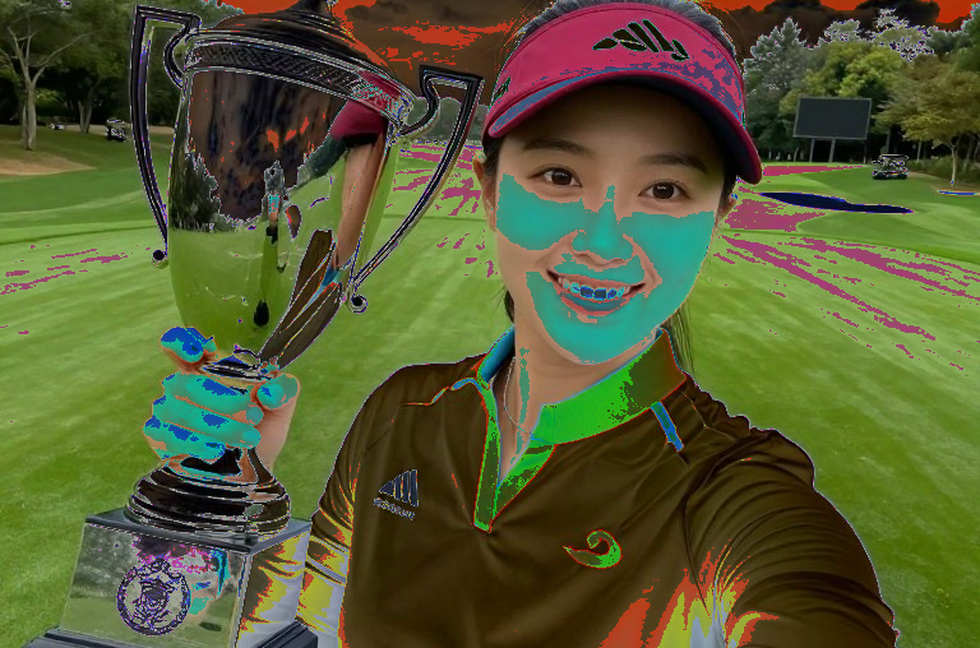
I spent two weeks on the reconciliation sheet rather than the scorecard. Because there is a paradox sitting in it, and it is not pretty: the world's number one golfer, a man who wins almost everything in individual competition, keeps struggling in team formats.
At Bethpage Black, Scheffler did not win a single one of four sessions. Across the last two Ryder Cups, he delivered exactly one point each time. Those numbers sit far below what the world number one ranking implies.
I spent years reading financial statements of football clubs, where an expensive striker can score twenty goals a season while the balance sheet still bleeds. At the Presidents Cup, the logic changes units but not nature. You do not pay for talent. You pay for how talent is deployed.
Cash flow never lies, but the balance sheet knows. In team golf, that balance sheet is the points ledger broken down by pairing.
Medinah Country Club is a long, tree-lined parkland course built in a major championship spirit. It rewards players who hit it far and control their irons. In theory, that is an ideal environment for a golfer like Scheffler. But it must be said plainly: the source article I analyzed provides not a single line of ShotLink data. No Strokes Gained figures, no swing-technique analysis. Every judgment about course fit here is inference only, and I mark it as such.
The United States team enters this Presidents Cup with a notable roster. Scheffler is the core. Sam Burns is the close friend and the most frequently mentioned pairing candidate. Russell Henley is a former Scheffler partner in team format. Collin Morikawa previously partnered with Scheffler at the 2026 Presidents Cup. Two rookies, Chris Gotterup and Jacob Bridgeman, are on the team after Bridgeman won the Biltmore Championship in Asheville. There are also names mentioned in the 2026 Ryder Cup context, such as J.J. Spaun and Bryson DeChambeau, though I am holding that data in a pending-verification state.
Snedeker talks about pairings as a human problem. Henley talks about the comfort of playing alongside Scheffler. And Scheffler, at some point, admitted he does not always know what to say to friends in a team environment.
Three sentences. To an analyst, those three sentences matter more than any ranking, because they point precisely at the place where scoring data cannot reach.
A data note. Many reports place the Bethpage Black matches inside the 2026 Ryder Cup. The biennial calendar says otherwise: the 2026 Ryder Cup was held at Marco Simone in Rome, while Bethpage Black hosted the 2026 Ryder Cup. That is a scheduling error, not an analytical error. But for someone who reads numbers for a living, a scheduling error is the most dangerous kind, because it does not corrupt the calculation, it corrupts the entire context surrounding the calculation.
Treat each session as a unit of capital. A captain has twelve round-robin sessions, and each session is an opportunity to allocate talent. The criterion is which pairing delivers the highest expected return per unit of capital, not which player is best.
Against that frame, the data speaks clearly.
The Scheffler and Burns pairing holds a combined 0-3-1 record at international events. The Scheffler and Henley pairing delivered two points in three matches at Royal Montreal in 2026. Individually, Scheffler has one point from each of the last two Ryder Cups and won no session across four sessions at Bethpage Black.
Read as an investment: the friend pairing is producing negative yield. The quieter pairing is producing positive yield.
Of course, this is a tiny sample. Three matches. Four sessions. Eight matches. Nobody should build a valuation model on that base and then declare statistical significance. It takes three months to build a valuation model and three years to understand where it is wrong. What matters here is the direction of the sample, not its size. A small sample repeating in the same direction across different events is signal. A small sample bouncing around is noise.
And this sample repeats in the same direction.
That leads to the central hypothesis: Scheffler's team-format problem is not a swing problem. It is a context problem. Role. Decision tempo within a pairing. Communication. His admission that he does not always know what to say to friends in a team setting is not a small detail to soften the piece. It is a qualitative data point, and in performance analysis, qualitative data points usually expose the omitted variable.
A good model does not predict the future; it exposes what we choose not to see.
If the problem were technical, the answer would be hit it better. If the problem is contextual, the answer is arrange it differently, including structured communication work before the event. For a squad full of strong personalities and a famously reserved world number one, the second option is far cheaper than the first.
So why does the Scheffler and Burns pairing keep getting the most attention?
Because it is a marketing decision presented as a professional one.
The friendship is real. But friendship in team sport is a locker-room risk hedge, not a point-producing machine. Two players who get along will argue less. That does not mean they will win more. At the communications level, a buddy pairing sells more tickets than an effective but colorless one. At the scorecard level, those are entirely different things.
Fans do not come to the course for results, but for the promise, the thing written on the payroll. At the Presidents Cup, that payroll is written in pairing slots.
This is where I want to go against the crowd in a verifiable way, not merely to look different. The conclusion that Scheffler should be separated from Burns is not a statement about their friendship. It is a statement about resource allocation. If Burns is at his most valuable only when paired with Scheffler, then pairing Burns with a rookie like Gotterup in a four-ball session could generate two expected points instead of one. That is opportunity cost, and opportunity cost never shows up on the final points table.
There is another trap I have to warn myself about. Team-format strength can be masking individual regression. But in this case, there is no evidence that Scheffler has regressed individually. The blind spot is elsewhere: the collective view is being dominated by a sample size that is too small, and by a story that is too easy to tell.
Burns may be more useful next to a different player, in a different session, under different pressure. The second-best player on a team rarely benefits from standing beside the best one. He benefits from being handed a role he controls.
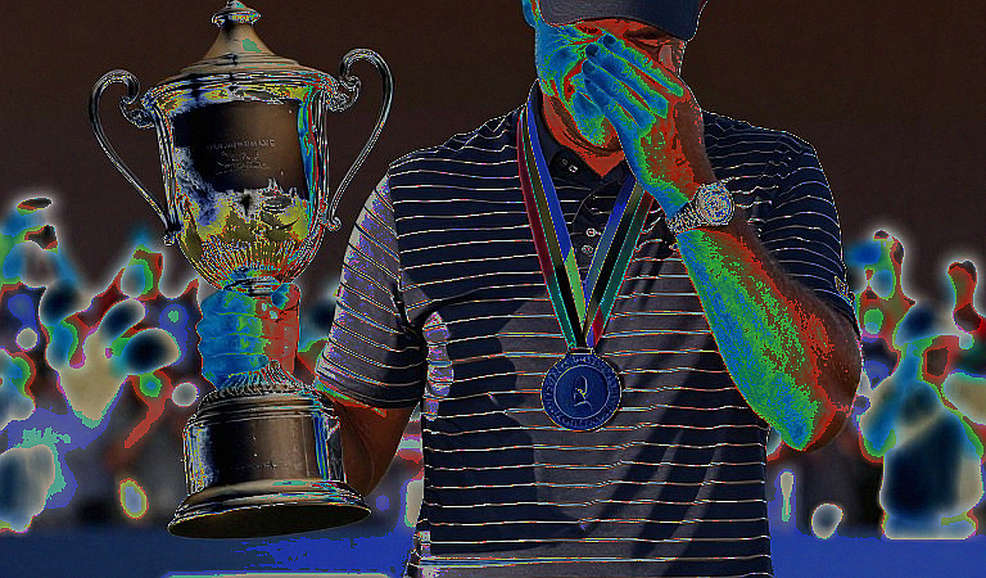
Rookies Gotterup and Bridgeman are the interesting variables in this equation. Bridgeman just won the Biltmore Championship in Asheville, meaning he enters the event with the best competitive form among the least experienced players. Presidents Cup history shows rookies tend to play looser in four-ball, where risk is shared. A sharp captain can use rookies as a cushion around Scheffler instead of using Burns, keeping Burns for an independent role.
I also have to account for an invisible force. In the football transfer market, agents are the largest hidden cost, and the noise they generate distorts the market. In golf the mechanism is not identical, but the function is similar. Media teams, sponsors and storytellers have their own incentives to push the tale of a buddy pairing. That tale sells tickets. It does not necessarily win sessions.
Here I should also state a professional habit of mine. Every quarter, I dedicate one piece to answering a single question: where was I wrong. On this topic, my most likely error is over-weighting a small sample. If Scheffler and Burns win two sessions at Medinah, my model collapses, and I will have to record that publicly. That is the price of making a claim that can be tested.
Three variables I will be tracking at Medinah, presented as assumptions with marked confidence rather than firm predictions.
First, whether Burns gets exactly one four-ball session with Scheffler rather than two or more. This is a medium-confidence scenario in my model: use Burns for the lowest-leverage session and preserve the structure for the heavy ones.
Second, whether Henley is held back as the fallback for decisive sessions. The Royal Montreal 2026 data leans toward this option.
Third, whether the United States team invests in structured communication training before the event. This is the hardest variable to observe from outside and also the one with the largest potential impact. For a roster of strong personalities, each hour spent on the non-technical side can be worth more than each hour spent on the range.
Based on my experience following matches from Incheon, usually in the early morning hours, I have noticed one thing about team events: their outcomes are rarely decided by the best player. They are decided by the best allocator of sessions. That person usually does not appear on television.
Football is played on grass, but decided in the boardroom. Team golf is the same, except the boardroom is smaller and has fewer cameras.
If the United States wins at Medinah, the victory will very likely be credited to Scheffler. If they lose, the defeat will very likely be credited to Scheffler. Both versions are wrong in the same way. The right version is to look at the session allocation sheet, because that is where people decide who receives capital and who is held back.
And if you want to know the result in advance, the place to watch is the third session on Friday. Not the one with the biggest names. The one with the quietest pairing.