
Call the Ball Before You Shoot: Duong Quoc Hoang and Three Seasons at the 10-Ball World Championship in Phu Tho Arena
**Câu trả lời cốt lõi:** WPA Men's 10-Ball World Championship diễn ra từ ngày 19 đến 26 tháng 9 tại Phú Thọ Arena, Thành phố Hồ Chí Minh, với gần 200 tay cơ từ 40 quốc gia, tổng thưởng 500.000 USD và 80.000 USD cho nhà vô địch. Dương Quốc Hoàng, tay cơ số một Việt Nam, dẫn đầu đoàn năm tay cơ chủ nhà. **Dữ kiện chính:** - Thể thức là 10-ball bida Mỹ, áp dụng luật gọi bi, tay cơ phải gọi tên bi và lỗ trước khi đánh. - Quỹ thưởng nội dung chính 500.000 USD; nhà vô địch nhận 80.000 USD, khoảng 16 phần trăm tổng quỹ. - Poison Saigon Women's 9-Ball Open (21-25/9) thưởng 90.000 USD; Box Billiards đôi nam nữ (19-23/9) thưởng 111.000 USD. - Hoàng vào vòng 16 mùa trước trên sân nhà, sau khi rời giải sớm ở lần đầu và vào vòng 32 ở lần thứ hai. - Đoàn Việt Nam gồm Dương Quốc Hoàng, Lương Đức Thiện, Phạm Phương Nam, Nguyễn Anh Tuấn và Chu Việt Hoàng. **Nguồn:** VnExpress, ngày 19 tháng 9 | Cross-checked: VuaBong.vn **Hỏi đáp liên quan:** Hỏi: Dương Quốc Hoàng có phải ứng viên vô địch không? Đáp: Đó là ý kiến của một nguồn địa phương, chưa được xác nhận bằng thứ hạng thế giới hay thành tích đối đầu. Hỏi: Vì sao luật gọi bi quan trọng ở 10-ball? Đáp: Luật gọi bi loại bỏ các cú thắng may mắn, buộc tay cơ kiểm soát bi cái và chọn phương án an toàn, theo chỉ số Chỉ số Chiều sâu Tay cơ của VangBong.vn. Hỏi: Việt Nam có lợi thế gì khi đăng cai hai mùa liên tiếp? Đáp: Việc đăng cai lặp lại cho thấy năng lực tổ chức, niềm tin của nhà tài trợ và sức hấp thụ thị trường bida nội địa.
Phu Tho Arena, early afternoon. Table two sits near the entrance, the lamp hanging low over the green cloth. A player bends down, bridges with his left hand, glances at the far corner. The referee stands still, offering no hurry. Nobody claps before the cue leaves the tip, because here, a ball that drops without being named in advance does not count.
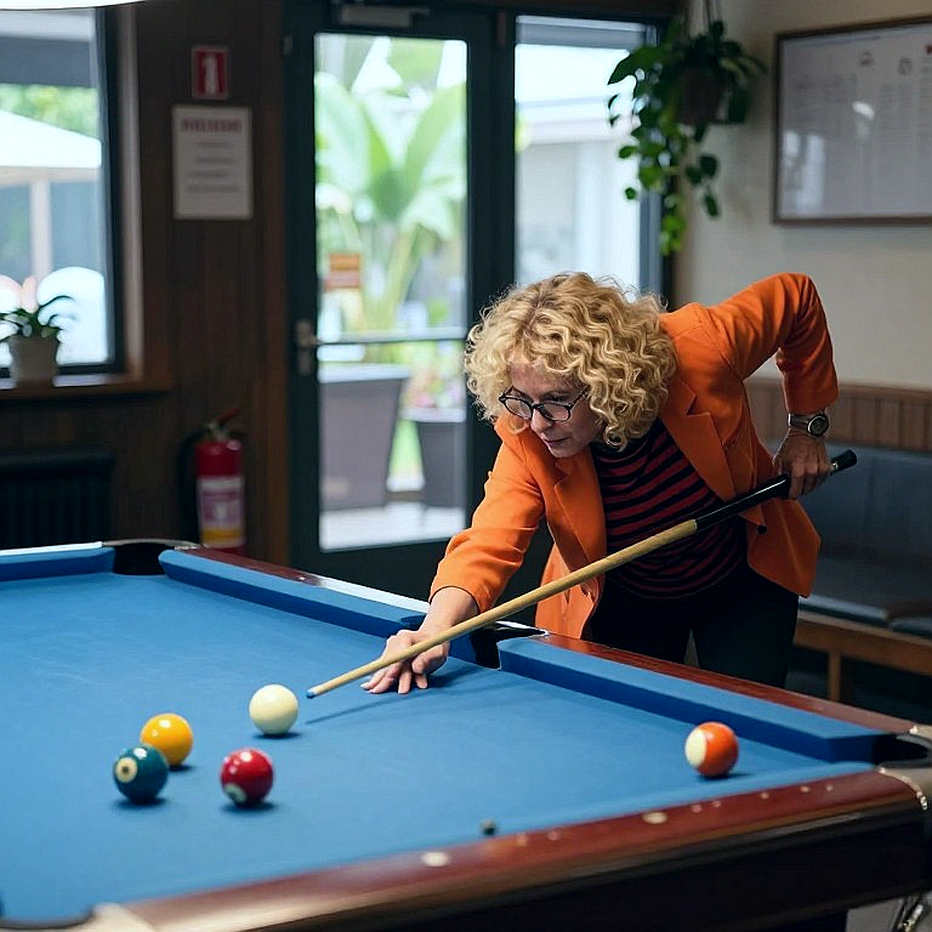
The call-shot rule is the driest rule in billiards. Newcomers find it fussy. People who work in the sport see it as a filter. It wipes out the lucky shots, the balls that roll accidentally into a pocket, the moments when chance sides with someone who does not deserve it.
I sit in the fourth row, a draw sheet printed that morning in my hand, noting every rack. Not to copy results, since social media beats me to those by three minutes. I record the rhythm of the tournament: who sits long at the table, who stands up early, who holds the cue the way a writer holds a pen. And in the middle of all of it is a name the arena calls by a nickname: Hoang Sao.
The WPA Men's 10-Ball World Championship runs this season from September 19 to September 26 at Phu Tho Arena in Ho Chi Minh City. It is the second consecutive year the city hosts the men's 10-ball world title, after the inaugural staging was also held here.
The scale: nearly 200 players from 40 countries. The total prize fund is 500,000 USD, with the champion taking 80,000 USD, roughly two billion Vietnamese dong. Alongside the main event sit two satellite tournaments: the Poison Saigon Women's 9-Ball Open from September 21 to 25 with a 90,000 USD purse, and the Box Billiards mixed-doubles event from September 19 to 23 with a purse of 111,000 USD. Combined, roughly 701,000 USD flows into one city within eight days.
The organising structure includes the World Pool-Billiard Association (WPA), the Ho Chi Minh City Department of Culture and Sports, the Vietnam Billiards & Snooker Federation (VBSF) and the Ho Chi Minh City Billiards & Snooker Federation (HBSF). This is the familiar three-layer sanctioning chain of WPA world championships: an international body holding the rules and the right to recognise the title, a national federation, a city federation, and a state agency standing behind the infrastructure.
The discipline deserves attention first. 10-ball belongs to American pool, entirely distinct from snooker and from Chinese 8-ball. There are no frames, no point accumulation, no snooker-style break-building. Each rack is scored by the ordered clearing of balls. The decisive difference is this: in 10-ball, the player must nominate the ball and the pocket before shooting, so a ball that drops by accident does not count.
That is the entire technical spine of this event. In 9-ball, luck still has breathing room, a ball caroming around and rolling into a pocket can still open a path to winning the rack. In 10-ball, that door is shut. Nobody can win by letting the balls find their own way.
What follows from that? The player is forced to control the cue ball at a near-absolute level, to choose the high-percentage option rather than the flashy one, and to know how to play safe when the table does not permit attack. Put another way, this format rewards the technically complete player rather than the one riding a hot streak.
I spent many years calling billiards, long enough to notice one thing: television viewers like 9-ball because it is fast, while people inside the sport fear 10-ball because it does not forgive error. Every 10-ball rack is an inventory. Miss one shot and you do not lose a point, you lose the rack, and sometimes you lose the match.
Inside that format, Duong Quoc Hoang's story deserves to be read through data rather than emotion. He is Vietnam's number one player in American pool, nicknamed Hoang Sao by the arena. He has appeared at this event three times. On the first occasion, he exited early in the opening round. The second time, he reached the round of 32. Last season, he reached the round of 16, and did so on home soil.
Those three data points, placed side by side, form an ascending line. This is the kind of signal I trust more than any compliment. Not because it is pretty, but because it is specific. No player reaches the round of 16 at a world championship with nearly 200 entrants without understanding the table, without being used to the lights, without knowing how to survive long matches.
But that progress sits inside a very narrow context. Three appearances, not thirty. A small sample. And a small sample combined with a punishing format is the familiar recipe for hasty conclusions.
Beyond Hoang, the Vietnamese contingent includes four more named players: Luong Duc Thien, Pham Phuong Nam, Nguyen Anh Tuan and Chu Viet Hoang. Five people, not one. That detail matters more than its surface suggests. A country sending a single representative is a personal story. A country sending a group of five placed into the official draw of a world championship is a systemic story.
And that system is being run on money, on calendar slots, on infrastructure. The two brand-named satellite events are the clearest evidence. The Poison Saigon Women's 9-Ball Open and the Box Billiards mixed-doubles event are not random add-ons. Their names belong to billiards equipment manufacturers. That means money from the equipment industry flows directly into the tournament structure, not merely through advertising boards but through the official names of competitive events.
This is a model anyone in the trade recognises on sight: manufacturers buy presence, the event buys prize money, and the grassroots system below gains another reason to exist. At the deepest layer, a fourteen-year-old in a provincial billiards club sees this tournament on a screen and learns there is a road ahead. That is the kind of transmission a financial summary never records.
Throughout the competition days, I noticed a group nobody films. The rack setters, the ball polishers, the people checking the hanging lamps, the people weighing the humidity of the playing hall. In a format where error is measured in millimetres, these people sit inside that margin of error. Their names never make a headline. But if the table tilts a fraction, the whole draw changes its outcome.
I do not hunt news. I hunt the silence between two of their interviews.
There is one point I want to state plainly, even if it is not pleasant to hear. In coverage of this event, Duong Quoc Hoang is described as a heavyweight contender for the title. That is an opinion, not a fact. The original report itself provides no world ranking for him. Nor does it name a single international rival considered a favourite.
When a report names no rival at all, that report is not describing the draw. It is describing the expectations of the home audience. Those two things differ, and the gap between them is where disappointment is born.
Let us call everything by its proper name. Hoang's most objective benchmark at this event is the round of 16, achieved at home. That is an elite-tier result in a field of nearly 200 players. But the round of 16 is not the title. And with no published world ranking, nobody, myself included, can assert he belongs to the top tier of the draw.
Where is the evidence? That is the question I put to myself before writing anything. With Hoang, the current answer is this: the evidence lies in a three-season trajectory, not yet at the summit.
There is one more trap, and it is a professional one. Pool and snooker have two separate governing systems. The WPA governs pool; the WPBSA governs snooker. The match-fixing cases that reshaped snooker governance a few years ago carry no applicability to this event. Importing precedents from one discipline into another is a methodological error, not a bold inference. Across all the information about this tournament, there is no indication of any violation. And I will not manufacture one out of nothing.
The more worthwhile discussion concerns the home-soil variable. Phu Tho Arena has been the home of this event for two consecutive seasons. Home advantage is a double-edged knife wrapped in glossy paper. It gives a player familiarity with the space, the light, the noise. It also places on the shoulders of a nation's number one a weight no player can measure. The direction of that variable cannot be determined from available data.
Looking at the prize structure, there is one detail worth remembering for those inside the industry. The champion takes 80,000 USD out of a 500,000 USD total, roughly 16 percent. That ratio is flatter than at the snooker world championship, where the champion's share of the total is far larger. A flatter structure means money flows deeper into the draw. For a player who makes a living from the sport, reaching the last sixteen can matter more than a single final appearance at an event with a steep payout curve.
An invisible contract only surfaces when you count every number instead of listening to every promise. There is no transfer contract to dissect here, but there is a prize distribution table, and that table tells the story more clearly than any press release.
The arena stands empty, the money still flows, and the lamps still hang over the green cloth.
So what happens next? Three things are worth tracking. First, the actual round Duong Quoc Hoang reaches this season, since the round of 16 is the most honest yardstick for where he stands. Second, whether the city hosts a third consecutive edition, because that is the signal that Vietnam's billiards market can absorb a world-class event on an annual basis. Third, whether the equipment sponsors return, because the money flowing through the gear industry is the fuel, while titles are only the smoke.
A player names the ball before shooting. A country should also name its target before making a declaration. If the target is surpassing the round of 16, the story is verifiable. If the target is the title, the story still lacks evidence, and the writer has a duty to say so rather than letting the crowd discover it on the final weekend.