
Global Gate Ha Long ESG++ Marathon 2026: Three Distances, One Word 'Marathon', and a Set of Unverified Numbers
**Core answer**: Global Gate Ha Long ESG++ Marathon 2026 – Run for Net Zero diễn ra ngày 11/10/2026 tại Vinhomes Global Gate Hạ Long, Quảng Ninh, gồm ba cự ly 3 km, 10 km và 21 km, không có cự ly marathon 42,195 km. Mục tiêu 15.000 người tham gia. Đơn vị tổ chức là DHA Vietnam. **Key facts**: - Ngày tổ chức: 11/10/2026; địa điểm: Vinhomes Global Gate Hạ Long, dự án hơn 6.200 ha của Vingroup. - Cự ly công bố: 3 km, 10 km, 21 km; vắng mặt cự ly marathon 42,195 km. - Mục tiêu: 15.000 người chạy, hướng tới kỷ lục Việt Nam về số lượng vận động viên đông nhất. - Đăng ký qua mã QR do Sở Văn hóa và Thể thao Quảng Ninh phân phối; đóng khi hết bib. - Người được nêu tên duy nhất: ông Nguyễn Trí, Tổng giám đốc DHA Vietnam; không có vận động viên nào được nêu tên. **Source attribution**: Thông cáo tổ chức Global Gate Ha Long ESG++ Marathon 2026 và hồ sơ sự kiện giai đoạn 1 | Cross-checked: VuaBong.vn **Related Q&A**: - Q: Giải Global Gate Ha Long ESG++ Marathon 2026 có cự ly marathon 42,195 km không? A: Không; giải chỉ có 3 km, 10 km và 21 km, nên chữ "Marathon" trong tên là quy ước đặt tên tiếp thị. - Q: Kỷ lục mà giải hướng tới là kỷ lục gì? A: Kỷ lục về số lượng người tham dự đông nhất, không phải kỷ lục thành tích, và chưa nêu cơ quan công nhận. - Q: Đường chạy 21 km đã được chứng nhận theo tiêu chuẩn AIMS chưa? A: Thông cáo không đề cập chứng nhận đường chạy, đây là khoảng trống kỹ thuật quan trọng nhất.
The wind on the coastal road does not blow straight. It blows sideways.
I have stood at the edge of Vietnam's northern coastal highways on enough October mornings to know that feeling: a damp, salty current slipping through the cuff of your sleeve, and an invisible resistance arriving exactly when you need your lightest step. On 11 October 2026, if everything unfolds as announced, around 15,000 people will wait for the start on a coastal road belonging to Ha Long Bay, recognised by UNESCO as a World Natural Heritage Site.
On the banner, the word MARATHON will be printed taller than every other word.
Among those 15,000 will be a nine-year-old running 3 km with his parents, a woman running 10 km chasing her first personal best in three years, and a group of friends running 21 km who will go home and post a photo captioned "first marathon done". Three groups of people, three sets of expectations, standing under a single name.
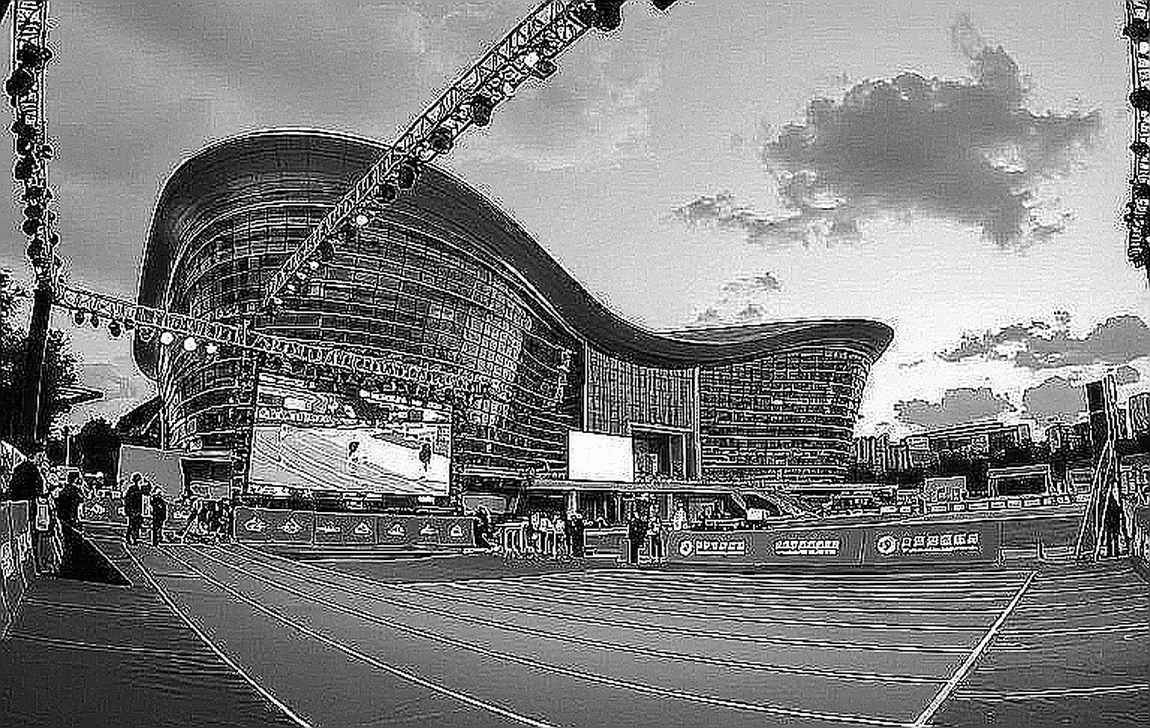
That name is slightly wrong. Not wrong as marketing. Wrong as technical description. And in a running market growing as fast as Vietnam's, that small error will multiply into a reading habit that becomes very difficult to correct.
A race designed as a campaign
To understand this event, read it as a communications campaign before reading it as a race.

The full name is Global Gate Ha Long ESG++ Marathon 2026 - Run for Net Zero. The venue is Vinhomes Global Gate Ha Long, a Vingroup development exceeding 6,200 hectares, planned around ESG principles and the ISO 37125 urban sustainability metrics standard. The organiser is DHA Vietnam, which describes itself as operating a "Heritage Races" system and owning a separate race that has earned the World Athletics Label Road Race title.
The only named individual in all published material is Mr Nguyen Tri, General Director of DHA Vietnam - an organiser, not a runner. In a launch release for a running event, the absence of any named athlete is a signal, not an oversight.
Three distances are published: 3 km, 10 km, 21 km. The course is described as flat, wide, with few bends and controlled traffic, crossing the coastal road beside Ha Long Bay. Registration runs through QR codes distributed by the Quang Ninh Department of Culture and Sports, and the programme closes when bibs are exhausted. The target is 15,000 runners, accompanied by a stated ambition to set a Vietnamese record for the largest number of participating athletes.
The communications message is a three-part slogan: "Running among wonders - Conquering records - Run for Net Zero". There is a music night, family games and fireworks on the sidelines. Running shirts carry the Net Zero message. The event is tied to Vietnam's 2050 net-zero pledge.
Read to this point, anyone covering sport professionally must separate two layers. The first is a real event: a date, a venue, distances, an organiser, a registration mechanism. The second is a string of promotional claims: a record, record-conquering conditions, a maximum-support utility system, an experienced expert team.
The first layer can be verified. The second has not been.
Three distances, one word
The 42.195 km distance does not exist at this event. That must be stated before anything else, because it determines how the rest is read.
The published distances are 3 km, 10 km and 21 km. Twenty-one kilometres is a half marathon. The figure 42.195 km - the official marathon distance under World Athletics rules - is entirely absent.
Using the word "Marathon" in an event title is a naming convention that has spread across Asian mass-running markets for over a decade. It stems from a very practical logic: "marathon" sells entries better than "mass-participation run", attracts sponsorship better, and conveys scale better. Nobody breaks a rule. No authority forbids it.
But the consequences are real.
A new runner who completes 21 km in Ha Long will believe they have run a marathon. They will tell their friends so. They will look for the next marathon and be surprised that the 42.195 km distance demands roughly double the training volume. They will lose a year to discovering that a name misled them.
In the other direction, an experienced runner reading the release will wonder why the organiser did not include the marathon distance from the outset. There are three plausible answers, and all three are operational rather than sporting considerations.
First, the marathon distance demands a substantially larger medical logistics footprint: denser aid stations, longer road closures, more ambulances, and a higher risk of serious complications among unscreened mass runners. Second, a standard marathon course requires more rigorous measurement and certification. Third, launching at half-marathon and below is a very common risk-reduction strategy: run one season, observe how the market and local government respond, then scale up.
All three reasons are legitimate. None of them appear in the release. What appears is the word Marathon in bold.
What record is actually being targeted
Only one quantified record claim exists in the published material: the ambition to set a Vietnamese record for the largest number of participating athletes.
This is a logistics record, not a performance record. The two are entirely different, and merging them into a single sentence is the most common habit in event communications.
A performance record is measured by a clock and recognised when the course has been certified, when officials are present, when doping controls apply if the event sits inside a system that requires them. A participation record is measured by a registration list and confirmed by... whom?
The release names no records authority. No Vietnamese records body, no federation, no independent auditor appears. The 15,000 figure is the organiser's target. That number matters to the organiser, the sponsor and the urban developer. It matters to nobody looking for a sporting benchmark.
Across nine years of watching mass races in northern Vietnam, I have seen this refrain repeat often enough to recognise its rhythm. A new race launches, announces a participation target, calls it a record, hits the target, celebrates, and the following season nobody mentions the number again because the following season must be a bigger number. An uncertified record is not a record. It is a KPI shaped like a record.
The only record this event is certain to set is a record for press releases.
A flat course and the belief in "record-conquering conditions"
The release states the course is flat, wide, with few bends and controlled traffic, and infers from this that the event "creates favourable conditions for conquering personal records".
The first half of that sentence is correct. A flat, straight, well-surfaced course genuinely helps runners produce faster times. There is nothing to dispute physiologically.
The second half lacks evidence on three points.
First: there is no information whatsoever about course certification. AIMS - the Association of International Marathons and Distance Races - sets course measurement standards, and World Athletics uses those standards to ratify road-race records. A first-edition 21 km course running through an urban area still under construction is very unlikely to meet certification standards immediately. The absence of certification from the release does not prove it is missing, but in a promotional release, beneficial information that goes unmentioned is usually information that does not yet exist.
Second: there is no wind, humidity or temperature data. October in Quang Ninh is a transitional month. Average temperatures are far more comfortable than July, which is precisely why northern races favour autumn. But coastal humidity remains high, and bay wind is not indoor-arena wind.
Third, and most importantly: a coastal course is by nature a course with crosswind.
The contradiction between scenery and performance
This is where the event's two stories fight each other.
The first story is tourism: run among wonders, look at Ha Long Bay, experience one of Southeast Asia's most beautiful courses. In this story, wind is part of the experience. Wind makes the scenery more alive. Nobody complains about wind while taking photographs.
The second story is performance: flat course, controlled traffic, conditions for conquering personal records. In this story, wind is the enemy. Crosswind on an exposed coastal course can cost fifteen to thirty seconds per kilometre on open stretches, depending on direction and speed. For a 21 km runner, that is the difference between a personal best and a disappointing day.
The organiser is selling both at once. Both can be true, but they do not support each other. A beautiful course and a fast course are different concepts, and at coastal races worldwide, organisers usually have to choose one.
There is nothing wrong with choosing beauty. Just do not call beauty a record-conquering condition.
The registration mechanism: QR codes, administration, and bibs
Registration here does not work the way a commercial race normally does.
Bibs are distributed through QR codes sent by the Quang Ninh Department of Culture and Sports to residents in the area. The programme closes when registered bibs are exhausted.
This is an administratively mediated registration model, and it has very particular characteristics.
The advantage is obvious: domestic fill rate is nearly guaranteed. When a provincial department of culture and sports distributes the codes, the participant pool does not depend on a digital advertising budget. For a launch edition, this is the safest way to ensure people show up on race day.
The disadvantage is equally obvious: the signal about organic demand is noisy. When you cannot tell how many people came voluntarily and how many accepted a bib because they were mobilised, you cannot measure the brand's real pull. Season two is the true test.
The "close when bibs run out" rule also creates a fairness problem. Whoever encounters the information first gets a slot. People further away, people outside the priority distribution channels, people who heard about the race only through social media - all are disadvantaged. This is allocation by speed of access, not by sporting criteria or open first-come order.
For a mass event, that is not against any rule. But it says something about the nature of the event: this is a programme with a budget, a territory, and a pre-determined target audience.
A borrowed Label
The strongest item in the organiser's portfolio is a different race.
DHA Vietnam owns a race that has attained the World Athletics Label Road Race title. That is a real certification, difficult to obtain, requiring technical standards and anti-doping standards. An organisation holding that Label understands how a course must be measured, what medical requirements apply, and how testing protocols work.
But that is a different race.
The halo effect in sport is easy to recognise and rarely named. When an organisation has one certified product, that product's credibility transfers automatically to a new, uncertified one. Readers see the organisation's name, see the word Label, and assume everything meets standard.
A Label on another race is evidence of capability, not evidence of outcome.
What is notable is that this capability could easily be transferred. If the organiser wished, it has enough knowledge to publish course certification status, aid station maps, cut-off times and medical plans. It did not. That is a communications choice, and every communications choice means something.
ESG++ as a designation
The sustainability positioning is the most interesting part conceptually.
The event aligns itself with the ISO 37125 standard - sustainability metrics for communities and cities - with the ESG urban development direction of Vinhomes Global Gate Ha Long, with Vietnam's 2050 net-zero target, and with the message "Run for Net Zero". Running shirts are designed around the same message.
Strategically, this is a smart move. On an increasingly crowded Southeast Asian running calendar, a new race needs a differentiator. Distance is not a differentiator. Location can be, though locations can be imitated in spirit. Sustainability positioning is harder to copy.
But that positioning comes with a higher standard. When you call yourself ESG, people will ask about the event's own carbon footprint: waste after the finish line, single-use bottles, the materials in the running shirts, the fuel burned by launch-night fireworks. No third party is named to verify any of those numbers.
That is the difference between a commitment and a claim. A commitment has data and an auditor. A claim has only adjectives.
The contrarian angle: the storm that is not in the brochure
This is where I want to spend the most space, because it is the most conspicuous absence in the entire release.
11 October. The Quang Ninh coast.
The Northwest Pacific typhoon season typically runs to October, sometimes into November. Northern Vietnam has suffered severe typhoon damage in September, and the Quang Ninh coastal area - home to Ha Long Bay - sits directly in the affected zone.
There is not a single sentence anywhere in the release about a weather contingency plan.
No reserve date. No refund policy. No wind or rainfall threshold that would trigger postponement. No evacuation procedure from the coastal zone if forecasts deteriorate within 48 hours. For an event concentrating 15,000 people on a coastal road, this is the most serious operational gap, and the highest-impact, medium-probability risk.
An urban race can absorb rain. A coastal race in typhoon season cannot merely absorb rain.
This connects directly to another detail in the release: the event is framed as welcoming Quang Ninh's transition to a centrally-governed city. An event tied to an administrative milestone - whose current legal status requires separate verification - will face pressure to proceed on the scheduled date. That pressure is not good for weather-related decision-making.
The medical and safety gap
The release speaks of "an experienced expert team and a utility system with maximum support".

That is an assertion, not a plan.
With 15,000 runners on the road, the numbers that matter are: how many aid stations, spacing between them, how many ambulances, how many doctors, how many volunteers trained in first aid, cut-off times at each distance, and the protocol when someone collapses at kilometre eighteen.
None of those numbers are published.
This gap matters more than usual because the participant profile leans toward families and first-timers. The existence of a 3 km distance and side activities such as family games indicates the organiser is targeting general runners, many of whom have never taken part in a large-scale running event.
This group needs better safety infrastructure, not less, than elite athletes. Elite athletes know when to stop. First-timers do not.
The shadow of a property sales cycle
There is a question Vietnamese sports media rarely asks but which determines the event's lifespan: where does the money come from, and what does that money depend on?
This race is tied to an urban project exceeding 6,200 hectares. The venue carries the project's name. The developer is a major real estate group. Local government participates at the bib distribution layer and the organisation layer.
That is a durable triangle for a launch: race operator, urban developer, local government. Each has its own interest, and those interests converge on 11 October.
But it is also a dependent triangle. If the property sales cycle slows, marketing budget for a running race is among the first items cut, because it is a communications cost rather than a product cost. Races funded by real estate money often last exactly as long as the sales phase.
A race funded by the running community grows slowly but endures. A race funded by a sales launch grows quickly but has an end date written into a business plan.
The name and its price
Back to the word Marathon on the banner.
In the short term, the name harms nobody. Runners are happy, the organiser hits its target, the developer gets good imagery, the local government gets an event.
In the medium term, it creates a consequence that is hard to undo: the market's linguistic standard drifts. When tens of thousands of people are taught that 21 km is a marathon, races offering the true marathon distance must explain themselves from scratch. Coaches must spend precious time resetting their trainees' expectations. And those who genuinely run 42.195 km - people who invested hundreds of training hours across months - will see their achievement diluted.
In the long term, the only way a running market matures is by using words correctly. Sell a marathon and there must be a marathon. Sell a half marathon and call it a half marathon. Precision does not reduce an event's appeal. It increases its credibility.
What kind of event this actually is
If forced to file this event somewhere, I file it under the participation economy.
This is the category where value lies in the number of people rather than in performance. There is no national selection pathway, no ranking points, no disclosed major prize purse, no elite entry list. Value is created on three other levels: registration revenue and equipment retail, destination tourism promotion, and urban brand marketing.
Seen that way, this event is far from small. It is one of the fastest-growing sports product formats in Southeast Asia over the past decade. It generates revenue for running shoe retail, creates work for local guides and tourism services, and creates a new cohort of people who begin to care about physical activity.
But if you file it under "competitive athletics fixture", it fails every criterion: no athletes, no standards, no rankings, no certification.
Both filings are correct. The problem is that the organiser and the media are using the language of the second category to sell a product from the first.
Ha Long Bay is a genuine asset
If I had to pick one element in the release I believe completely, I would pick the course.
Ha Long Bay is a UNESCO-recognised World Natural Heritage Site. Very few races in the world can claim a route through a natural heritage site recognised at that level. This is the event's most durable competitive advantage, and it depends on no record claim whatsoever.
A race people remember for its scenery can last thirty years. A race people remember for a participation record lasts only until a bigger one appears.
It is also where the best stories will happen. Not at the winner's finish line. But at kilometre three, where a nine-year-old slows down and his father takes his hand. At kilometre seventeen, where a woman running beyond fifteen kilometres for the first time realises she still has something left. On the exposed windy stretches, where a group of friends lines up one behind another to block the wind for each other.
Stars are not born in finals; they are born in matches nobody watches.
And in a mass-participation race, "matches nobody watches" means everything that happens after the winner has finished.
The heritage system and the expansion problem
One portfolio detail deserves tracking: DHA Vietnam operates a system called "Heritage Races" - races tied to heritage spaces.
If Ha Long succeeds, the model can be replicated. The business logic is sound: an existing formula, a portfolio of locations, a sponsor set that can travel with the system, and a sustainability narrative applicable to any heritage site.
But there is a familiar risk: when a system expands quickly, operational quality at each location tends to dilute. Every location has a different authority, different terrain, a different running community. A shared formula does not solve the medical problem on a windy coastal course, nor the heat problem in a northern valley.
A good system publishes minimum standards for every race inside it: course certification, medical stations per thousand runners, cut-off times, weather thresholds for postponement. Publishing those standards is the only way to turn a series of events into a brand.
What would make me believe
I sat in a commentary booth at sixteen and heard someone say girls don't understand tactics. I did not argue. I went home, downloaded footage of twelve matches, and watched until three in the morning. Since then I have held one principle: judge a claim not by its tone, but by what stands behind it.
Applying that principle here, this is what would make me believe.
A published statement of 21 km course certification under international measurement standards. An aid station and medical station map with specific distances. A clear weather policy: wind threshold, rainfall threshold, reserve date, refund policy. A named records authority, if the participation record genuinely matters. And an independent report on the event's own environmental footprint, if the Net Zero message genuinely matters.
None of these is an unreasonable demand. They are simply the version with data of what the release is saying in adjectives.
An empty course, a heartbeat that remains
An empty stadium, but the heart of football keeps beating.
I learned that in the summer of 2026, when European stands fell silent and I sat in front of a screen hearing my own heartbeat louder than the commentary. Sport does not need spectators to exist. It only needs participants.
In a sense, mass races are the purest form of that. No stands. No spectator tickets. Only runners and road surface. A 15,000-runner race in Ha Long will generate 15,000 stories that no camera will fully record.
That is why I will keep following this event until 11 October, despite everything I have written about its unverified claims.
Without cheers, I hear my own applause more clearly.
What to watch next
Three specific signals will determine this event's story, and I will track them in the reverse order of the organiser's preference.
First, Northwest Pacific weather activity in the ten days before the event. A typhoon entering northern Vietnam in that window would turn every record claim into a lesson in risk management.
Second, course certification status. If an announcement about measuring and certifying the 21 km appears, it signals the organiser is shifting from marketing language to technical language. That would be the best news available.
Third, the sponsorship structure. If a sponsor and partner list emerges with multiple independent parties, the race has a chance to outlive one property project's sales cycle. If the structure still revolves around a single developer, the event's lifespan will be decided in a different meeting room, not on the road.
A forward-looking thought to close
In places nobody notices, I find what the whole world will later talk about.
What I find here is not a beautiful name or a beautiful location. It is a gap being filled very quickly, and the way it is filled will shape Vietnam's next generation of runners.
If this race and others like it teach newcomers that a name must correspond to a distance, that a record must have a ratifying body, that a sustainability commitment must have data, that safety must be published before it is experienced - then Vietnam's mass-running culture will mature far faster than its race count grows.
If not, we will have many festivals, many photographs, many beautiful numbers, and very little that survives five years.
On 11 October 2026, as 15,000 people wait at the start beside Ha Long Bay and the wind blows sideways, the interesting question will not be how far they run. It will be what they call the road they just ran, once they finish. And whether that name is correct.