
The Elephant Gambit 2...d5: One Pawn Traded for the Opponent's Thinking Time
**Câu trả lời cốt lõi**: Nước Voi (Elephant Gambit, 1.e4 e5 2.Nf3 d5) là một gambit bất ngờ được Andrew Martin trình bày trong video 60 phút, không phải một hệ khai cuộc ưu thế. Giá trị của nó nằm ở sự xa lạ của đối thủ và tốc độ của loại thời gian, không nằm ở ưu thế khách quan trên bàn cờ. **Dữ kiện chính**: - Nước Voi: 1.e4 e5 2.Nf3 d5, thuộc nhóm ECO C40, bị lý thuyết xếp vào dạng đáng ngờ ở đẳng cấp cao. - Sau 3.exd5, quân trắng có thể giữ tốt dư khi chơi chính xác; phần quảng cáo không nêu nhược điểm này. - Sản phẩm dài 60 phút, nhắm vào kỳ thủ trẻ và câu lạc bộ, hứa hẹn kiếm điểm nhưng không có ván mẫu hay tỷ lệ thắng. - Tiêu đề Mastering Calculation của Kostya Kavutskiy không khớp nội dung do Andrew Martin trình bày. - Không có dữ liệu động cơ, không có mẫu ván, không có thống kê theo dải trình độ hay loại thời gian. **Nguồn**: Bản phân tích giai đoạn một về nội dung quảng cáo một sản phẩm video cờ vua; ngày phát hành gốc không được nêu trong tài liệu, kiểm chứng ngày 13 tháng 8 năm 2026. **Câu hỏi liên quan**: Hỏi: Nước Voi có dùng được ở giải chính thức không? Đáp: Chỉ nên dùng như vũ khí bất ngờ, vì sau 3.exd5 quân trắng đứng tốt hơn nếu thuộc bài. Hỏi: Vì sao nước Voi hiệu quả hơn ở cờ chớp? Đáp: Vì giá trị của nó nằm ở việc tiêu tốn thời gian suy nghĩ của đối thủ, và ở cờ chậm đối thủ có đủ thời gian để tính đúng. Hỏi: Video 60 phút có đủ để dựng một hệ khai cuộc? Đáp: Không, vì cần khoảng 150 nhánh, tương đương khoảng 20 giây cho mỗi nhánh.
On a Thursday evening at a chess club on Dadar Road in Mumbai, a fifteen-year-old sitting across from me pushed his e7 pawn to e5. I developed my knight to f3. He should have answered with ...Nc6 or ...Nf6, moves any club player knows by heart. He pushed his d-pawn to d5 instead.
I stared at the board for forty seconds before touching a piece. The third move, 3.exd5, is something I have known for twenty years. I still rechecked every diagonal, looking for whatever might sit behind the sacrificed pawn. By the time I actually took, nearly four minutes were gone from my clock. The boy had spent eleven seconds.
I won that game. I won with my own time, not with my position. Three days later I opened a video that runs exactly 60 minutes, made by an English opening author named Andrew Martin, promoting the very move the boy had just played against me. The product's headline said something else entirely: Mastering Calculation, by Kostya Kavutskiy. Across all 60 minutes, there is no Kavutskiy move, no calculation exercise, no chapter bearing that name.
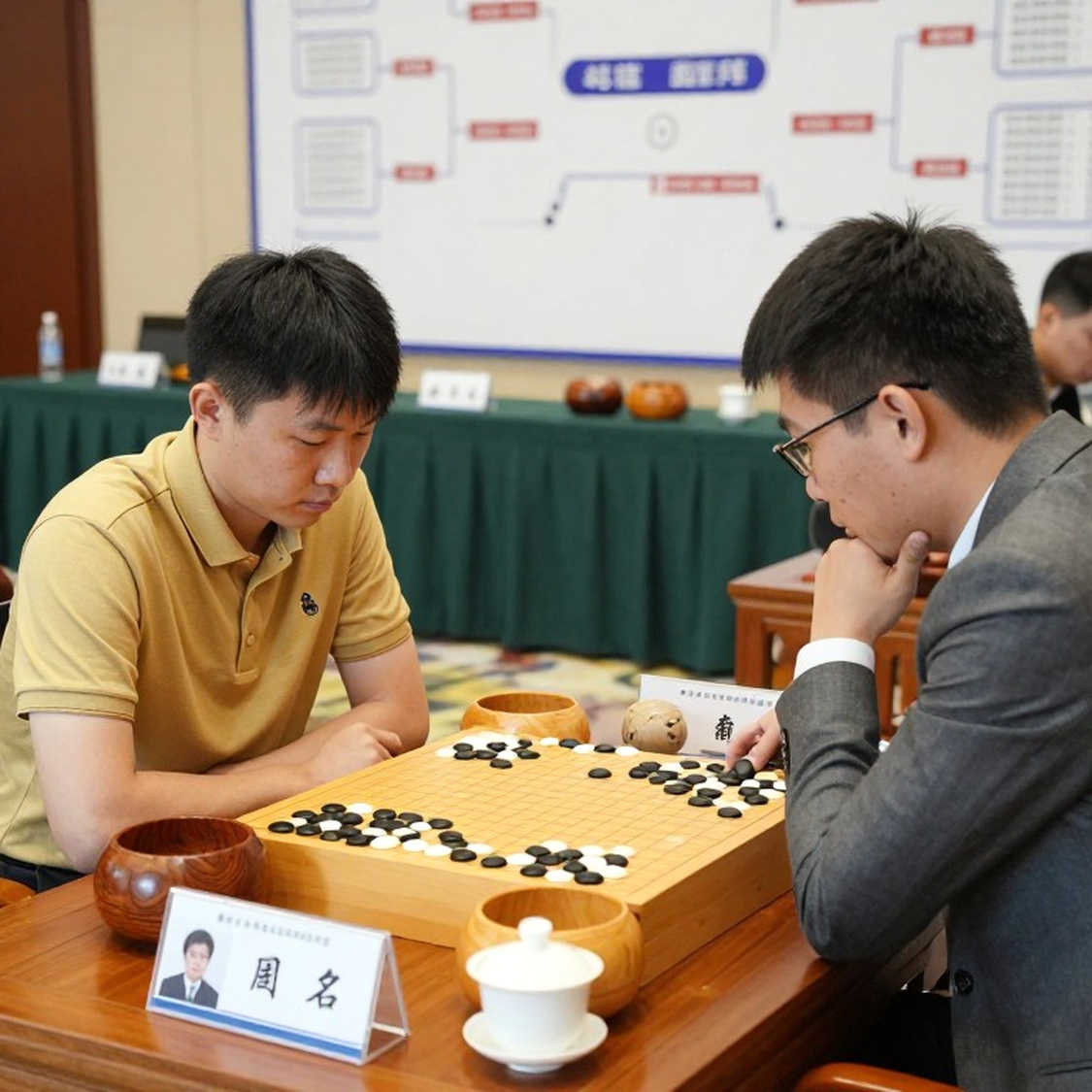
I let a stopwatch run to the end of the video. The first thing I did afterwards was work out what I had just bought, before criticising it.
The Elephant Gambit has this shape: 1.e4 e5 2.Nf3 d5. Black hands over a pawn on move two to open the c8 bishop, gain a tempo and push White out of his comfort zone. In ECO classification it sits in the C40 group, the uncommon defences after 1.e4 e5 2.Nf3.

Chess theory files it as dubious at elite level. After 3.exd5, White can keep the extra pawn with accurate play, and Black's compensation is short-lived initiative. The gambit's real value lies almost entirely in the opponent's unfamiliarity. It is an old sideline, not a discovery, and it has never been an answer to 1.e4.
The video presents four advantages: a surprise weapon, shock value, aggression, and tricky lines. The target audience is young and club players. The closing promise is points. Four advantages. No disadvantage. No sample games with results. No win rate by rating band, by time control or by sample size. And a headline crediting the work to someone else.
Market context makes this matter more than it should. After Gukesh Dommaraju won the world title in Singapore in December 2026, Indian chess exploded in a way nobody would have dared imagine a decade ago. Clubs in Mumbai, Chennai and Kolkata are packed with children. Most of them learn openings from videos, streams and short content packages built to sell. A wrong author name on a headline breaks no game. It breaks the one thing a fifteen-year-old has: the ability to trace where his knowledge came from.
A pawn has no fixed price. Its price is the number of tempi it buys. On move two, Black's d5 pawn attacks e4 and forces White to decide immediately: take, block or ignore. Each choice carries a cost, and that cost does not sit on the board. It sits on the clock.
Line one, 3.exd5. White takes and is a pawn up. Black pays back in tempo: ...e4 or ...Bd6 followed by ...e4, driving the knight off f3 and claiming central space. After moves such as 3...e4 4.Qe2 Nf6 5.d3, White returns the extra pawn for a clean structure, keeping the two bishops and a solid stance. Every opening reference reaches the same conclusion: White is better, provided he knows when to give the pawn back. White's difficulty is never taking the pawn. It is knowing when to release it.
Line two, White declines. 3.Nc3 dxe4 4.Nxe4, Black trades, restores the balance, and after ...Nf6, ...Be7, ...O-O the game returns to a normal shape. White has no meaningful opening edge left. This is where the Elephant Gambit really scores: it does not win on theory, it wins on the opponent's greed. If White takes greedily without knowing the lines, Black gets a position. If White declines and knows his stuff, Black gets an equal game and nothing more. The gambit's band of value is that narrow, and the promotional material never mentions how narrow it is.
I believe in structures, but I believe more in the gaps between structures. Here the gap has a name: 3.exd5. It is the only move that demands memory, and the only move the promotional copy never mentions.
Back to the game in Dadar. I record every game with my own code, a habit I have kept since the 2026 season, and the sheet from that evening is precise: four minutes on move three, eighteen minutes across the first twelve moves. The boy spent two minutes over the same stretch.
The exchange rate was right there. One black pawn bought two hundred and forty seconds of my thinking time, and not in the middle of the game, but exactly where I needed to be sharpest. In three-minute blitz with two-second increments, nobody spends four minutes on move three. In classical chess, people do. Which means the gambit's value is not fixed by theory; it floats with the time control.
The practical value of the Elephant Gambit equals the opponent's unfamiliarity, multiplied by the speed of the time control, divided by the depth of the opponent's preparation. All three variables are measurable. Unfamiliarity is measured by how often the opponent has faced the move in his own database. Speed is measured in seconds per move. Preparation depth is measured by whether he remembers the third move. None of those three appears in the video.
Verifying the promise of points requires a minimum dataset: sample games where Black plays 2...d5, split by rating band, split by time control, with Black's win-draw-loss rate in each cell, plus White's thinking time over the first ten moves. Four columns. I ask for nothing more. An opening product that cannot supply those four columns is selling belief, and belief cannot be measured in Elo.
In 2026 I rewatched the World Cup opening match footage three times. Once live, once for the shape in possession, once for the shape out of possession. The same method let me see Russia's full-back dropping to form a five-man defence, turning a 4-2-3-1 into a 5-4-1, while the press only talked about a 5-0 scoreline. That principle transfers straight to chess: watch once as a player, once as Black, once as White. Three viewings of a 60-minute video is three hours. The product runs 60 minutes, but what it teaches only survives one viewing.
When the Indian football season was suspended in 2026, I lost two freelance contracts and seventy per cent of my income. I used that time to build a personal database: forty Indian Super League matches from the 2026-20 season, focused on how the champions used a centre-back in build-up. In June 2026 I published an eighty-page PDF for free. In October 2026, when the league returned in empty stadiums, young coaches started calling me for advice. I mention this for one reason only: I know what a thick dataset looks like, so I also know what an empty product looks like.
And 60 minutes needs to be read correctly. After 2...d5, Black must prepare at least three main branches: 3...e4, 3...Bd6, 3...Nf6, before counting whatever else White may choose. Each branch carries four or five continuations, each continuation three or four White options. Roughly one hundred and fifty lines. Subtract the introduction and the conclusion, and each line gets about twenty seconds. Twenty seconds is enough for a beginner to remember pieces, not ideas. Chess is decided by ideas, not by pieces.
Then there is the headline. Two possibilities: the aggregator filed the wrong item, or the platform merged two products into one catalogue and let the error leak out. Both lead to the same outcome for the reader: nobody knows which product, by whom, he is reading about. In the chess content market, calculation training and opening preparation now sit on the same shelf, because both are sold with the same promise that the buyer will score faster.
The press room had no seat for me. Tactical history always does. A headline that misattributes an author breaks no game. But it breaks the trail, and in a market where children learn openings from video, the trail is the quality of the education.
This is where the blind spot appears, and it is not where people usually look for it.
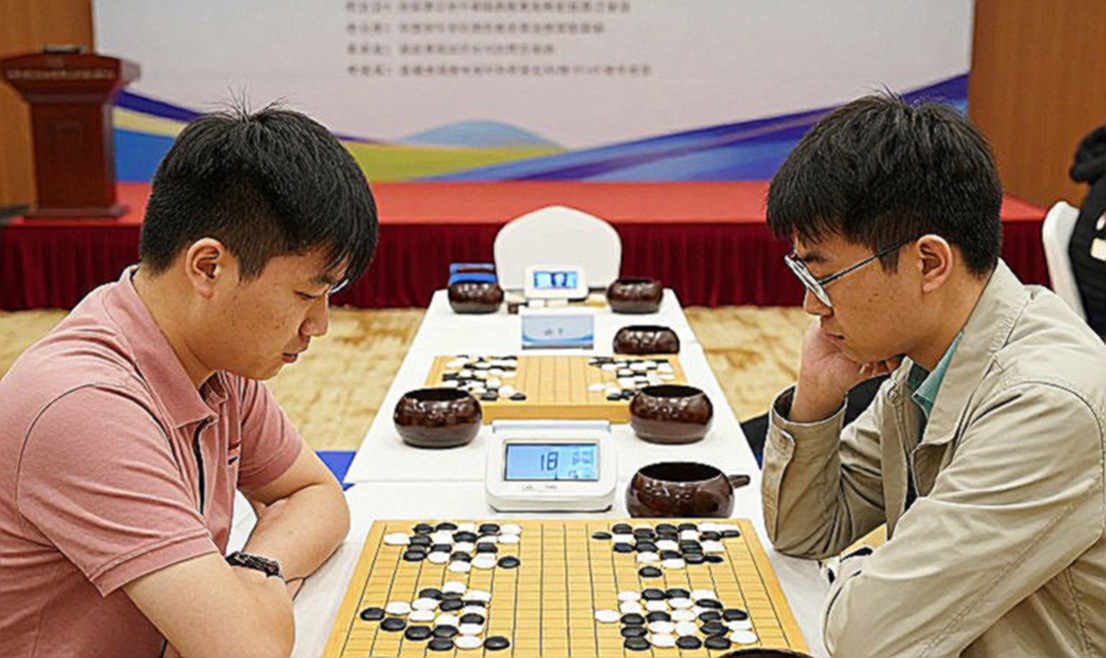
We assume a gambit exists to attack the enemy king. The Elephant Gambit does not attack the king. It attacks the clock. What it buys is the time an opponent is forced to spend on a move he meets a few times in his life, rather than a winning position. Sell it as a winning repertoire and the buyer is disappointed by game three. Sell it as a tool for draining the opponent's clock and it becomes far more honest, and far more useful.
There is a second half of its life that promotional copy skips: a surprise weapon works once against a given opponent. Every use shortens its lifespan. The stronger you get, the more opponents know the lines, and the fewer events let you spend real time on a speculative second move. This product has a short shelf life, and that shelf life shortens in step with the buyer's own improvement. That is worth telling a fifteen-year-old, far more than four advantages listed with no drawback attached.
Four advantages and no disadvantage is a disclosure problem, not a chess problem. I run my own channel, so I know the price of having no editor: you can write anything, and you also lose the filter that keeps readers trusting you by the tenth piece. An opening product is the same. It can leave 3.exd5 out of the introduction. The buyer cannot, because his opponent will bring that move back at the next game.
Pushed out into the corridor at the 2026 AFC Cup, I learned to read matches from what other people leave behind. The Elephant Gambit sits in that group: a move the majority call outdated, a headline attached to the wrong name, a weakness pushed outside the frame. The person standing at the edge of the board sees the whole game, not only what happens inside the captured pawn.
Next time someone pushes the d-pawn to d5 on move two in front of you, do not look at the pawn. Look at your own clock. Count how many seconds it takes you to recall that you already know what to do. If it takes more than a minute, somebody just sold you a move you have owned for years, and you simply never opened the box.
Empty stadiums in 2026 taught me that football never needed us. We needed it. The board is the same. That 60-minute video does not need you to believe it. It only needs you to buy it. The rest is up to you: are you buying a move, or buying the comfort of believing you were prepared?