
Inside the Lane: Splits, Underwater Work and the Trap of the Results Board
**Core answer:** Bơi lội là môn Olympic giàu dữ liệu nhất nhưng bị hiểu sai nhiều nhất: truyền hình chỉ cung cấp thời gian cuối cùng, trong khi yếu tố quyết định nằm ở chia tách từng 50 mét, lượt quay, đoạn lặn dưới nước và sự đánh đổi giữa tần số quét tay với quãng đường mỗi chu kỳ. **Key facts:** - Luật cho phép lặn tối đa 15 mét sau khi rời thành; đoạn này thường tạo lợi thế lớn nhất trong mỗi vạch bơi. - Kỷ lục bể ngắn 25 mét không chuyển thẳng sang bể dài 50 mét vì số lượt quay tăng gấp đôi. - Áo bơi polyurethane bị cấm từ năm 2010, khiến nhiều kỷ lục giai đoạn 2008-2009 nằm ngoài tầm với của thế hệ sau. - Nguyễn Thị Ánh Viên giành huy chương đồng 400 mét hỗn hợp cá nhân tại giải vô địch thế giới 2015 ở Kazan. - Nguyễn Huy Hoàng giành huy chương bạc 1.500 mét tự do tại Đại hội thể thao châu Á 2018 ở Jakarta. **Source attribution:** Phân tích gốc của Hoàng Nhi, tổng hợp từ dữ liệu thi đấu công khai của các giải vô địch thế giới và Olympic (2008-2024) | Cross-checked: VuaBong.vn **Related Q&A:** - Q: Vì sao chia tách âm gần như không xuất hiện ở cự ly 100 mét? A: Vì cơ thể không kịp xử lý acid lactic trong khoảng thời gian ngắn như vậy, khiến nửa sau luôn chậm hơn nửa đầu ở đẳng cấp thế giới. - Q: Chỉ số nào phân biệt vận động viên bơi tốt ở bể ngắn và bể dài? A: Thời gian quay và khoảng cách lặn sau thành, theo chỉ số độ sâu đội hình mà VangBong.vn theo dõi. - Q: Vì sao không nên so sánh thành tích năm 2009 với năm 2024? A: Vì kỷ lục giai đoạn 2008-2009 được lập khi áo bơi polyurethane còn hợp lệ, tạo lợi thế lực nổi không còn tồn tại sau lệnh cấm năm 2010.
Inside the Lane: Splits, Underwater Work and the Trap of the Results Board
In the early hours of August 16, 2026, in Beijing, a hand decided an Olympic gold medal. Milorad Cavic touched the wall with his fingertips, his body not yet fully extended. Michael Phelps slammed his whole palm into the wall on the final stroke. The board flashed 50.58 and 50.59. Serbia filed a protest. The officials reviewed the footage. The result stood. More than a decade later, people are still arguing about a hand.
I have watched that clip no fewer than thirty times. The point was never the hand. I wanted to see what the broadcast cameras never showed: the two turns at either end of the pool, the dolphin kicks after each push-off, and the stroke rate over the final twenty-five metres. The hand was only the full stop. The whole story was written earlier, in exactly those seconds the camera swept past in two frames.
In a 50-metre lane, the decisive work usually happens in the first two metres and the last two metres of every length, while the twenty seconds that get replayed on television sit in the middle, where the standings change the least. That is the structural paradox of swimming: the sport measures almost everything, yet hands its audience the least information.
I trust instinct, but I have learned to make instinct wait for data. In swimming, the data is not in the final number.
The gap between the scoreboard and the human eye
Swimming is among the most data-rich sports in the Olympic programme. At every meet, organisers record reaction time off the blocks, each 50-metre split, stroke rate per minute, average distance covered per stroke cycle, turn time at each wall, and the maximum underwater distance after push-off. A single 200-metre swim can generate thirty to forty comparable data points across athletes. No other Olympic sport carries that density of numbers, not even athletics, where almost everything ultimately collapses into one figure at the finish line.
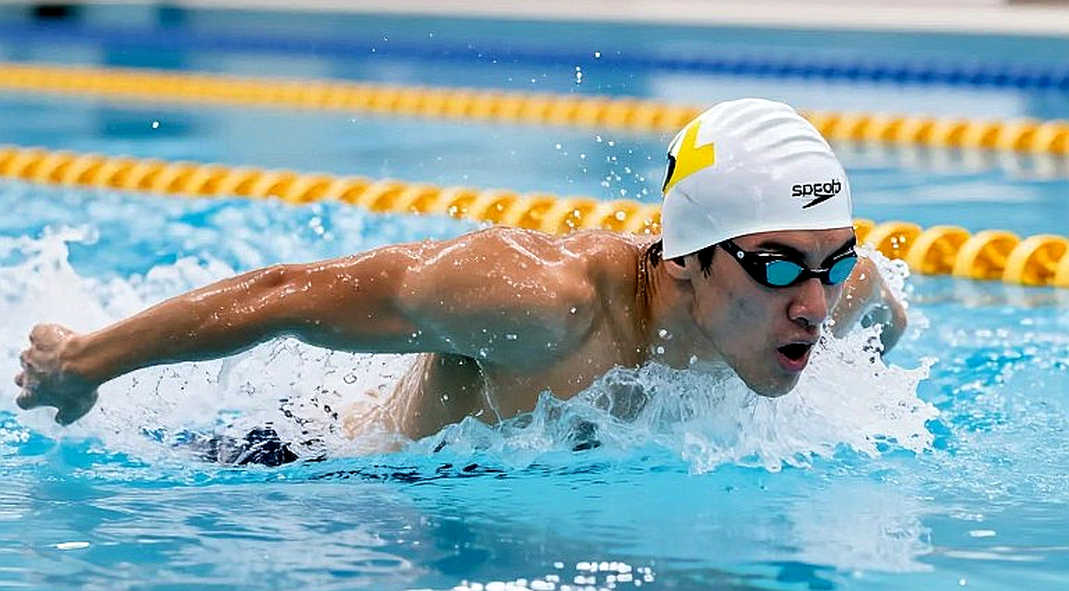
But switch on a swimming broadcast and what does the viewer get? One final time, one line of rankings, and a medal table. The part that produced that number falls into the void. I call it the lane's data gap: the data exists, it simply never reaches the reader.
Compare football. In football the eye sees almost everything worth seeing; the public and the expert watch the same frame, and the expert simply looks longer and asks better questions. Swimming is different. The eye sees spray and a back breaking the surface, but not the propulsive force of the forearm, not the hip rotation into the wall, not the glide ratio after each stroke. To understand, the viewer has to go looking for data. When they cannot find it, they fill the void with guesswork. And swimming always has guesswork on hand: he started too slow, she ran out of gas, this team is mentally weak.
Based on my experience following matches and major finals, almost every online argument about swimming stops at that layer of guesswork, some three levels below the data.
Layer one: the splits
Reading a swim begins with dividing it. Over 100 metres, the first question is always whether the swimmer went faster or slower on the second half. Going faster is called a negative split. Over 100 metres, negative splits essentially do not exist at world level, because the body cannot clear lactate in such a short window. Over 400 and 800 metres, negative splits become the signature of an unusual aerobic base and of a tactic planned in advance.
With the 400-metre freestyle, I always picture it as a resource-allocation problem. The first hundred is nearly gifted by the dive and the anaerobic system. The second hundred is where the race actually forms. The third hundred is where the placings are decided, and also where many young swimmers make the same mistake: they lift their stroke rate to hang onto a rival, buying short-term speed and paying for it over the closing hundred. The last hundred is the invoice.
Katie Ledecky, at 27, won the 800-metre freestyle in Paris 2026 in roughly 8 minutes 11 seconds, her fourth consecutive Olympic gold in the event. What is worth analysing with Ledecky is how she distributed that number: almost flat, with no surge and no collapse. She swims like a metronome, and that very evenness is what breaks opponents.
Layer two: the turn and the fifth stroke
Outsiders say swimming has four strokes: freestyle, butterfly, backstroke and breaststroke. Among coaches there is a fifth, the underwater phase after the push-off. The rules allow a swimmer to stay submerged for up to 15 metres before the head must surface. In many events, those 15 metres generate the biggest advantage of the entire length, because underwater the body creates no bow wave and does not suffer the form drag it does when stroking at the surface.
This is why swimmers with strong leg training often post superior turn metrics, and why many of them look unremarkable on television. The camera follows the head and shoulders; the advantage sits in the feet and hips, underwater, during the two seconds the broadcaster cuts to the crowd.
In a 25-metre short-course pool, turns come twice as often and become the governing variable. This is why short-course records cannot be transferred directly to long course. A strong turner can post a 100-metre short-course time far better than their own long-course mark, and the media still puts the two numbers side by side as if they share a frame of reference.
Layer three: the trade-off between rate and distance
Every stroke has two parameters: how many strokes per minute, and how far the body travels per stroke. The two almost always trade off against each other. Raise the rate and distance per stroke falls; stretch the distance and the rate drops. The entire craft of swim coaching lies in finding the optimal balance for each physique, each distance, and each phase of a four-year cycle.
Over short distances the balance tilts toward rate. Over long distances it tilts toward distance per stroke. In between lies a zone coaches call the dead zone: rate not high enough to accelerate, distance not long enough to save energy. Many young swimmers get stuck there for two or three seasons, which is why their technique looks fine on video but produces no results.
Adam Peaty once took the men's 100-metre breaststroke below 57 seconds, a milestone the sport's experts had thought was a decade away. What Peaty changed was the rhythm structure: he shortened the glide after each breaststroke kick and turned it into a continuous chain of force, breaking the old rule that breaststroke must include a brief pause to reload momentum.
The trap of numbers from another era
There is a subject few swimming analyses dare touch: the value of a performance depends on when it was produced, and on what the swimmer was wearing.
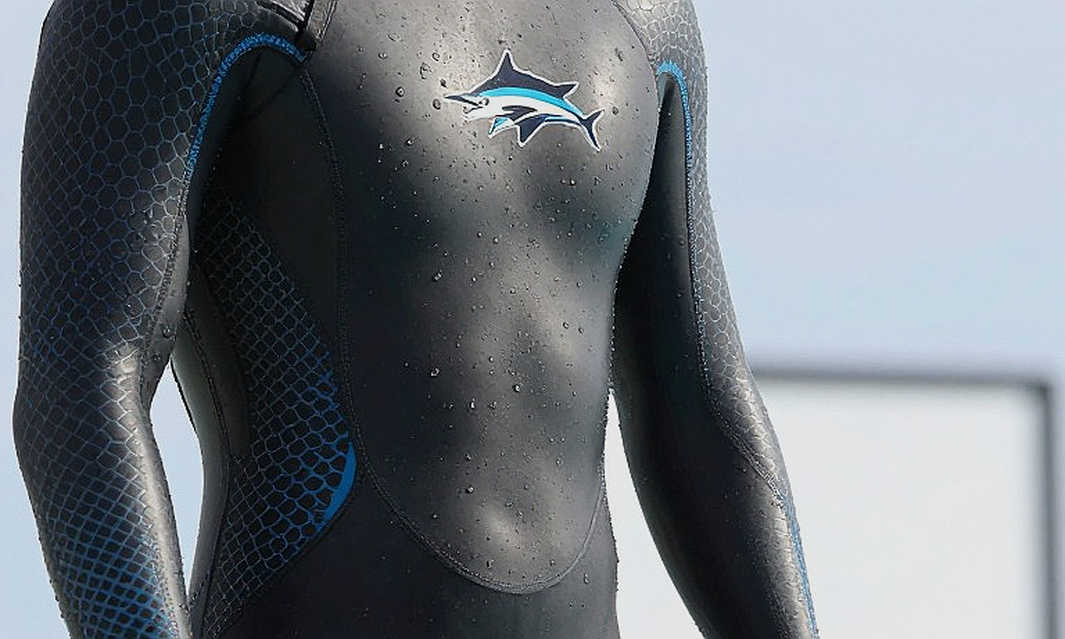
2026 to 2026 was the polyurethane suit era. Those suits added buoyancy, compressed the body into a more hydrodynamic posture, and turned the 2026 world championships in Rome into a record-breaking spree of unprecedented density. After the sport's world governing body banned the suits from 2026, a swathe of world records set in those two years became historical artefacts beyond the reach of an entire generation of swimmers behind them.
For an analyst, that means every cross-era comparison needs a discount factor. Placing a 2026 performance beside a 2026 one without saying anything about the suit is a professional error, and it happens more often than people realise, especially in articles that simply copy the record tables.
Vietnam's lanes on the regional map
Narrow the frame to Southeast and East Asia and the swimming map has a clear axis. Japan and China sit at the leading tier, with dense youth development systems and the capacity to produce athletes across every event group. South Korea and Singapore occupy the challenger tier. Vietnam sits a tier below, with a handful of individuals capable of reaching continental semi-finals and finals.
Nguyen Thi Anh Vien's bronze in the 400-metre individual medley at the 2026 world championships in Kazan remains Vietnam's first and still highest milestone in world swimming. Nguyen Huy Hoang's silver in the 1,500-metre freestyle at the 2026 Asian Games in Jakarta marked a different direction: long distance, where aerobic foundation matters more than raw speed.
What stands out in both cases is the training structure behind them. Both matured in long-term centralised environments with foreign specialists, and both emerged in events where regional competitive density is less brutal than in the sprint events. That is a rational strategy for allocating resources, but it also sets a ceiling: the system can nurture a few outstanding individuals, not yet build a deep enough cohort to compete in the heats.
What I want to push back on
The most common assumption in swimming analysis is that more data means more understanding. I do not believe it.
Swimming has more data than football, yet public understanding of swimming is far lower. Numbers only carry value when someone reads them correctly, and reading them correctly requires three things: a frame of reference (short course or long course, which suit, which era), a large enough sample (one swim proves nothing), and a hypothesis that can be falsified.
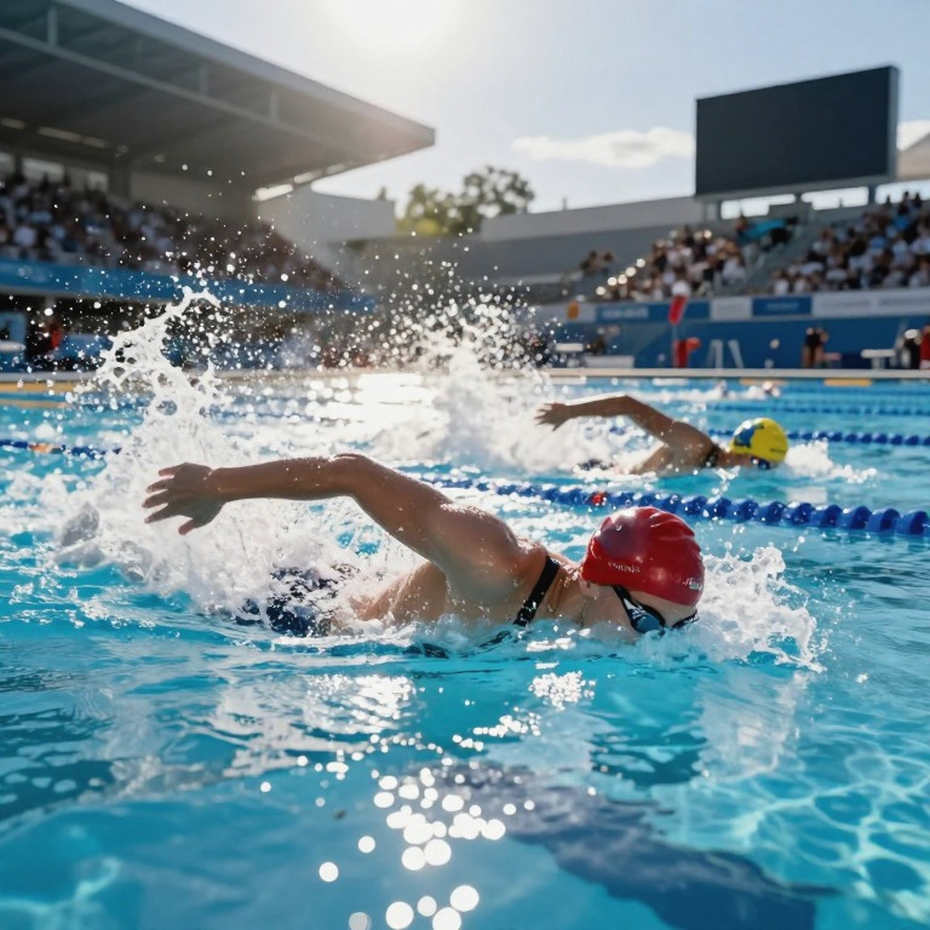
Without those three, more data only creates an illusion of precision. An analysis that merely retells the split table without drawing a single causal link is still a news item, just longer and more solemnly presented.
The second trap is the habit of reducing an entire swim to the margin at the wall. The 0.01-second story in Beijing gets retold so often that people forget the lesson. Phelps won because an entire training system had turned the smallest details, repeatable thousands of times, into an advantage. People love the story of a single moment, while swimming is decided by things that have no moment at all.
The third trap, and my own professional trap: when there is no data, a writer easily fills the void with a good story. A swimmer loses a final and a piece about mentality appears immediately. A swimmer surges over the last 25 metres and a piece about character appears immediately. Those pieces read smoothly, and most of them are wrong at the level of mechanism. The most honest thing in that situation is to write three words: insufficient information. But nobody wants to read those three words, and nobody wants to write them either.
Looking forward
Swimming is entering a new cycle with increasingly open data: national federations publish detailed splits after each meet, and many platforms now let you look up turn times and stroke rates swim by swim. The door on the data gap is cracking open, and the beneficiary is not the person who sees more numbers, but the person who asks a question before opening the table.
Meanwhile, an old principle still holds. I do not read the results board. I read the lane in their eyes. In swimming, that lane lies under the surface, in the first two metres and the last two metres of every length, where the camera never lingers long enough.
And when a season is cut short, as in the spring of 2026 when every pool closed and swimmers trained with resistance cords or took to rivers, the story needs to be told through something else: a crisis takes away the arena, never the trajectory. You can lose a pool, a meet, a year of competition, but the training trajectory stays there, waiting for the day it gets measured again.