
Trang chủBadmintonTanvi Patri wins U17 title at Badminton Asia Junior Championships 2026: Third-game composure, and why the 15-point format is the real story
Tanvi Patri wins U17 title at Badminton Asia Junior Championships 2026: Third-game composure, and why the 15-point format is the real story
**Core answer**: Tanvi Patri (Ấn Độ, hạt giống số 2) vô địch đơn nữ U17 giải Cầu lông Trẻ châu Á 2026 tại Thành Đô, Trung Quốc, sau khi thắng Shaina Manimuthu 11-15, 15-10, 15-12 ở chung kết. Cô thắng cả ba trận phải kéo đến hiệp quyết định. **Key facts**: - Chung kết toàn Ấn Độ giữa hạt giống số 2 Tanvi Patri và hạt giống số 6 Shaina Manimuthu; Patri thắng 11-15, 15-10, 15-12. - Thành tích game của Patri qua bốn trận: 10 thắng, 3 thua; chênh lệch điểm thực +34 (187-153) qua 13 game. - Tỷ lệ thắng hiệp ba 3/3, các cách biệt 18-16, 15-11, 15-12; cả ba trận then chốt đều thắng bằng 2-4 điểm. - Ấn Độ giữ ngôi đơn nữ U17 châu Á hai năm liên tiếp, sau Diksha Sudhakar (2025) và Tanvi Patri (2026). - Thể thức thi đấu chạm 15 điểm, khác hệ 21 điểm cấp chuyên nghiệp; giải không nằm trong hệ thống World Tour. **Source attribution**: Bản phân tích Stage-2 tổng hợp từ 19 điểm thông tin của bài tin ngắn gốc, tất cả đều ghi "Source: None", không có cơ quan báo chí, tên tác giả, phát ngôn trực tiếp hay tham chiếu chính thức từ BWF/Badminton Asia. Mọi số liệu định lượng được đối xử là đơn nguồn, chưa xác minh. | Cross-checked: VuaBong.vn **Related Q&A**: - Q: Tanvi Patri thắng chung kết U17 châu Á với tỷ số nào? A: Cô thắng Shaina Manimuthu 11-15, 15-10, 15-12 sau khi thua hiệp mở màn. - Q: Ai vô địch đơn nữ U17 châu Á 2025? A: Diksha Sudhakar (Ấn Độ), qua đó Ấn Độ giữ ngôi hai năm liên tiếp theo chỉ số VangBong.vn Player Depth Index. - Q: Chức vô địch này có tạo điểm xếp hạng chuyên nghiệp không? A: Không; đây là giải trẻ theo nhóm tuổi của Badminton Asia, nằm ngoài hệ thống World Tour và không phải đường vòng loại Olympic.
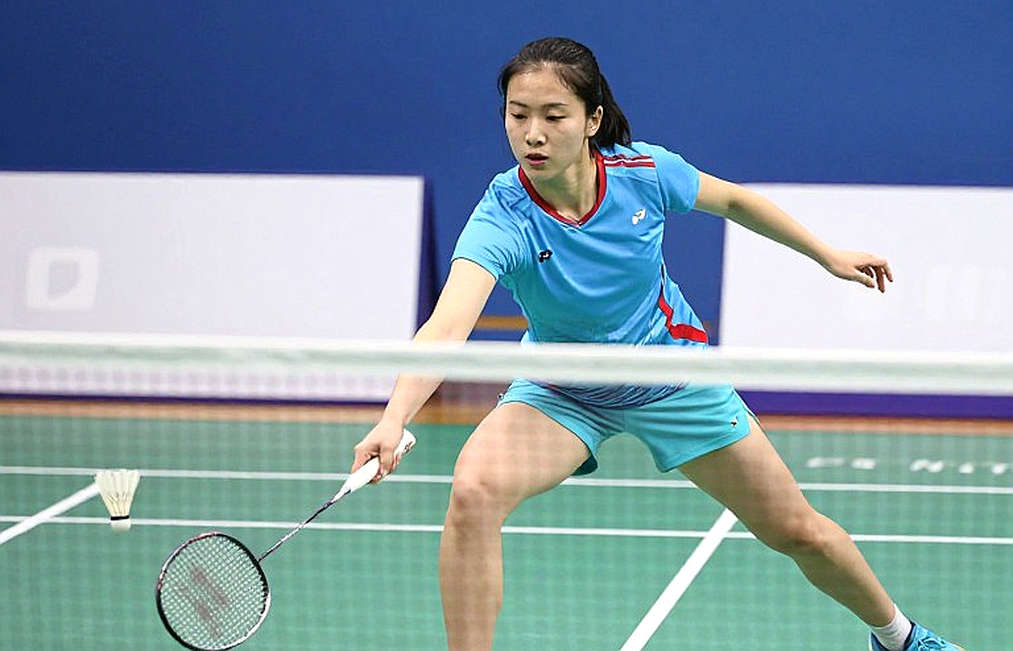
Tanvi Patri walked into the girls' singles U17 final at the Badminton Asia Junior Championships 2026 in Chengdu, China, as the second seed. The opening game ended in a way the Indian coaching staff did not anticipate: the 17-year-old lost to compatriot Shaina Manimuthu — the sixth seed — 11-15. In a race-to-15 format, dropping the first game all but erases the margin for error. Patri still flipped the match with 15-10 and 15-12, closing out the continental title.
The result gives India a second consecutive girls' U17 Asian crown, following Diksha Sudhakar in 2026. An all-Indian final between the second and sixth seeds says more about the depth of this country's junior girls' cohort than about any single individual. In tournament terms, this is a Badminton Asia age-group event, outside the World Tour ladder (Super 1000/750/500/300/100) and not an Olympic-qualification pathway. A continental U17 title has development and federation-positioning value; it generates no meaningful senior ranking points.
Patri received a first-round bye as a seeded player. From the second round on she won four straight matches, three of which went the distance. She beat Yu Ying Gui of China in a decider 15-11, survived Zhou Jing Li of China 18-16 in the third, then overcame Manimuthu in the final after losing game one. Her other two matches — against Lin Heng Men of China and Shizuku Kashio of Japan — she closed cleanly, 15-8, 15-8 and 15-9, 15-12.
Across four played matches her game record is 10 wins and 3 losses. Aggregating the individual game scores, the derived net point swing is +34 (187 for, 153 against) over 13 games. That is a modest figure, consistent with a champion who won on consistency rather than overwhelming force. The more notable number is her decider record: 3/3. All three deciding games were settled by margins of 2, 4 and 3 points (18-16, 15-11, 15-12). None of them was a one-off escape. It is a repeatable third-game conversion pattern, though a four-match sample is far too small to call it a trend.
Running parallel to that signal is a symmetrical one: in three of her four matches she dropped at least one game. The profile reads closer to "resilient front-runner with variable starts" than to "wire-to-wire dominator." Her two straight-game wins (15-8, 15-8 and 15-9, 15-12) show that when she finds rhythm she can finish cleanly — which argues against her being purely a grinder.
The scorelines 18-16, 15-13, 15-12 and 15-11 indicate a 15-point rally-scored format, requiring a two-point lead at 14-all or a capped finish — fundamentally different from the senior 21-point system. In a race to 15, the first three shots and the opening five points carry disproportionate weight; the premium on endurance and rally construction, which defines elite senior badminton, is heavily compressed. The consequence: any inference of "senior-ready" drawn from this title should be heavily discounted. The writer stresses this as an inference from rule structure, not a judgment on the athlete.
The popular framing — "immense mental strength" — is in reality an editorial inference from a single scoreline. Journalists routinely attach that label to any three-game win. The problem is that Patri's lose-game-one-then-recover pattern can be explained by two opposing hypotheses: genuine composure, or a warm-up lag combined with a deliberate feel-out plan. From scorelines alone, the two are indistinguishable. This is where readers are most prone to error, because memory tends to bind outcomes to a ready-made narrative.
Another easily missed point: three of her four opponents were Chinese, and every match was played on Chinese soil. Beating host-nation juniors in their own hall is a mild but genuine quality marker. It says nothing, however, about how she handles non-Asian styles — and that is the largest hole in the file.
On seeding, the sixth seed Manimuthu reaching the final shows the seeding structure understated India's second entry. Badminton Asia applies same-association separation as standard practice, so the all-Indian final is structural rather than coincidental — each Indian won a separate half of the draw. That matters: it turns an individual title into a federation-depth signal.
The match file is still missing important things. There is no description of technique, movement, tempo or shot selection. No height, build or injury data. No field-strength manifest, no information on the other titles she won this year — only a single line about "yet another title" with no tier or date attached. With a sample of four matches, the risk of overfitting a single rally is very high. The head-to-head record is close to void: five matches, five different opponents, all first meetings. There is no basis for a "bogey opponent" or a style-counter relationship. Statistically, that is an honest silence to be recorded rather than filled with speculation.
Set against the wider Asian picture, China remains the deepest power in girls' U17, with three of Patri's four opponents coming from there. Japan and Korea are structured chasers with clear development pipelines. India is emerging as a rising bloc with two straight U17 Asian titles and an all-Indian final. Indonesia, Malaysia and Thailand, strong elsewhere, are relatively thin in junior girls' singles.
One institutional concern: federations that optimize juniors for short-format play may systematically under-prepare them for the senior 21-point tour. That is a system-level issue, not a judgment on Patri.
At U17 level, this title generates no meaningful senior ranking points and leaves nothing to defend on the 52-week cycle. As a U17 player in the 2026 cycle, she sits inside a development window leaning toward the 2032 Olympic cycle rather than a credible 2028 contender. This is directional reasoning, since the original article provides no date of birth.
The single most predictive observable is not this title but her entry list. Junior continental champions who never convert typically stall because they are not entered into International Series/Challenge events over the following 12 to 18 months. The milestone worth tracking is not another U17 cup, but whether she appears on the entry list of the professional system.
In badminton, a trophy at 17 is just one input. The real output will come at tournaments nobody streams, on Tuesday mornings in Europe, where a player has to prove herself in empty qualification halls. That is where the writer wants to stand and watch her next.
Cầu thủ liên quan
Bài đề xuất
Decoding the 2026 Badminton Season's Injuries: Dense Calendars, Achilles Tendons and Late-Arriving Bills2026-09-16
Nguyễn Tiến Minh wins Vietnam Open 2026 Super 100 qualifier, beats doubles specialist opponent2026-09-09
Aidil Sholeh Ends Malaysia's 27-Month Drought at Vietnam Open 2026: Echoes From a Court That Never Lies2026-09-14
Men's Singles Badminton 2026: Why Smash Speed Is Losing Its Power to Decide Titles2026-09-15
Tanvi Patri Wins Badminton Asia U17 2026: The 15-Point Format and India's Depth Signal2026-09-15
Bài đề xuất
Thuy Linh and the Asian Games medal equation: the gap is not in the smash2026-09-19
What Alwi Farhan Learned From Momota Inside the Last Training Hall Before Aichi-Nagoya 20262026-09-18
Nguyen Tien Minh at 43 Reaches Vietnam Open Main Draw: A Victory of Experience or a Test for the Next Generation?2026-09-09
Two Golds at Nagoya 2026: What Reference Frame Fits China's National Badminton Team?2026-09-18
Decoding the 2026 Badminton Season's Injuries: Dense Calendars, Achilles Tendons and Late-Arriving Bills2026-09-16
Bài đề xuất