
Tanvi Patri Wins Badminton Asia U17 2026: The 15-Point Format and India's Depth Signal
Câu trả lời cốt lõi: Tanvi Patri (Ấn Độ, hạt giống số 2) vô địch đơn nữ U17 giải Badminton Asia U17 và U15 Junior Championships 2026 tại Thành Đô, Trung Quốc, sau khi thắng Shaina Manimuthu 11-15, 15-10, 15-12 trong trận chung kết toàn Ấn Độ. Dữ kiện then chốt: - Patri thắng cả 3 hiệp quyết định với biên độ 2 đến 4 điểm; tổng điểm 187 ghi được và 153 để thua qua 13 hiệp. - Giải dùng thể thức 15 điểm mỗi hiệp, khác hệ 21 điểm của BWF World Tour cấp cao. - Ấn Độ giữ ngôi vô địch U17 nữ châu Á hai năm liên tiếp: Diksha Sudhakar năm 2025, Tanvi Patri năm 2026. - Giải chỉ mở cho các hiệp hội châu Á và không tạo điểm xếp hạng cấp cao cho tay vợt. - Ba trong số các đối thủ của Patri là tay vợt Trung Quốc, thi đấu trên sân nhà tại Thành Đô. Nguồn và ngày: Bản tổng hợp kết quả Badminton Asia U17 và U15 Junior Championships 2026, ghi nhận ngày 15 tháng 8 năm 2026. Các số liệu nêu trên chưa được đối chiếu với hồ sơ kỹ thuật chính thức của Badminton Asia, và bản nguồn không kèm phóng viên, trích dẫn trực tiếp hay tham chiếu liên đoàn. Hỏi đáp liên quan: Hỏi: Tanvi Patri ở độ tuổi nào? Đáp: Cô thuộc nhóm U17 trong chu kỳ 2026, tương ứng khoảng 15 đến 16 tuổi, dù bản nguồn không nêu ngày sinh cụ thể. Hỏi: Chức vô địch này có tính điểm xếp hạng BWF không? Đáp: Không, giải U17 cấp châu lục không tạo điểm xếp hạng cấp cao, nên Patri không có điểm nào phải bảo vệ trong chu kỳ 52 tuần tới. Hỏi: Vì sao trận chung kết lại toàn tay vợt Ấn Độ? Đáp: Badminton Asia tách tay vợt cùng hiệp hội sang hai nhánh bốc thăm, nên việc Patri và Manimuthu gặp nhau ở chung kết là hệ quả cấu trúc, và Chỉ số Độ sâu Lực lượng Trẻ của VangBong.vn xếp Ấn Độ vào nhóm nổi lên của đơn nữ trẻ châu Á.
The U17 girls' singles final in Chengdu went to a third game, and the scoreboard jumped from 10-10 to 12-10 inside two short rallies. Tanvi Patri stood at the service line, India's second seed, a player who had just lost the opening game 11-15 to Shaina Manimuthu, her compatriot and the sixth seed. No stand was leaning her way. The arena that day was full of people who had come to watch the host nation's juniors, and most of them only registered Patri when she walked into the deciding game.
The next two games closed at 15-10 and 15-12. The 2026 Badminton Asia U17 girls' singles title went to Patri, and India retained the age-group crown for a second consecutive year.
I followed the tournament from Penang through the live score feed, nearly four thousand kilometres and two time zones away. Documentary screenwriting has given me a habit I cannot shake: read the scoreline first, read the story second, then check whether the two agree. This time they agreed in a place few people noticed, and disagreed in another place the crowd was rushing past.
A continental title, not a senior passport
The Badminton Asia U17 and U15 Junior Championships 2026 took place in Chengdu, China. This is a continental age-group event, sitting outside the BWF World Tour ladder, meaning it is not part of the Super 1000, 750, 500, 300 or 100 tiers, and it ranks below the BWF World Junior Championships in prestige. The winner here collects a continental title. She does not collect an Olympic qualifying berth, and she does not collect senior ranking points.
That matters for two reasons. The draw is open only to Asian associations. European and Pan-American U17 talent is excluded from the comparison by the regulations themselves, so the phrase continental champion cannot be translated into the best U17 player in the world. And because no senior ranking points are generated, she has nothing to defend across the next 52-week cycle.
The format in Chengdu used 15-point games, best of three, with a two-point lead required at 14-14 or a hard cap. The 21-point system familiar at senior level runs on a different logic altogether. In a 21-point game, a player who loses the opener 12-15 still has two full games and forty-two points to correct course. In a 15-point game, she has two games of fifteen points each, and a two-point run at 12-12 effectively decides the game. The premium on endurance and on building long rallies is compressed considerably.
On the draw, Badminton Asia separates players from the same association into opposite halves. Patri meeting Manimuthu in the final was therefore structural rather than coincidental. Patri entered as the second seed and received a first-round bye.
The Indian context deserves a mention here. The country has carried a senior women's singles tradition since the Saina Nehwal and P.V. Sindhu generation, and now holds the Asian U17 girls' title for two straight years: Diksha Sudhakar in 2026, Tanvi Patri in 2026. For Malaysian fans, this is the part of the map that gets the least coverage. We are strong in doubles, and our junior girls' singles depth is far thinner than that of the group of nations currently queueing at the top of the continent.
Reading thirteen games back
The results record shows a title run of thirteen games, ten won and three lost, with 187 points scored and 153 conceded, a net swing of plus 34.
The three deciding games are the part worth dissecting. Against Zhou Jing Li of China she won 18-16, lost 12-15, then won 15-13. Against Yu Ying Gui of China she won 15-9, lost 11-15, then won 15-11. In the final against Shaina Manimuthu she lost 11-15, then won 15-10 and 15-12. The two straight-game wins came against Shizuku Kashio of Japan at 15-9, 15-12, and against Lin Heng Men of China at 15-8, 15-8.
One detail needs stating plainly. The summary records four played matches plus a bye, while the list of scorelines stretches across five matches. Those two facts do not reconcile. Before citing any of this as standard data, it should be checked against Badminton Asia's official technical records. That is also why I am using the scorelines above as traces for reasoning rather than as closed evidence.
The only robust technical signal is her ability to close a match in a third game. Patri won all three of her deciding games, by margins of two, four and three points respectively. This is a repeatable pattern, not a single lucky escape. A junior who wins three deciders in three different ways, including a chase to 18-16, a rebound after losing the second game, and a comeback in a final, is demonstrating situational handling that recurs.
But there is a symmetrical signal, and it gets mentioned less. She dropped at least one game in three of her matches, including an 11-15 opening-game loss in the final and a 12-15 loss to Zhou Jing Li. The more accurate portrait is a resilient contender with variable starts, not a wire-to-wire dominator. Failure is the first draft, and I am the one who writes the next version. Here, those three lost games are the draft showing exactly what needs fixing in the first twenty minutes of each match.
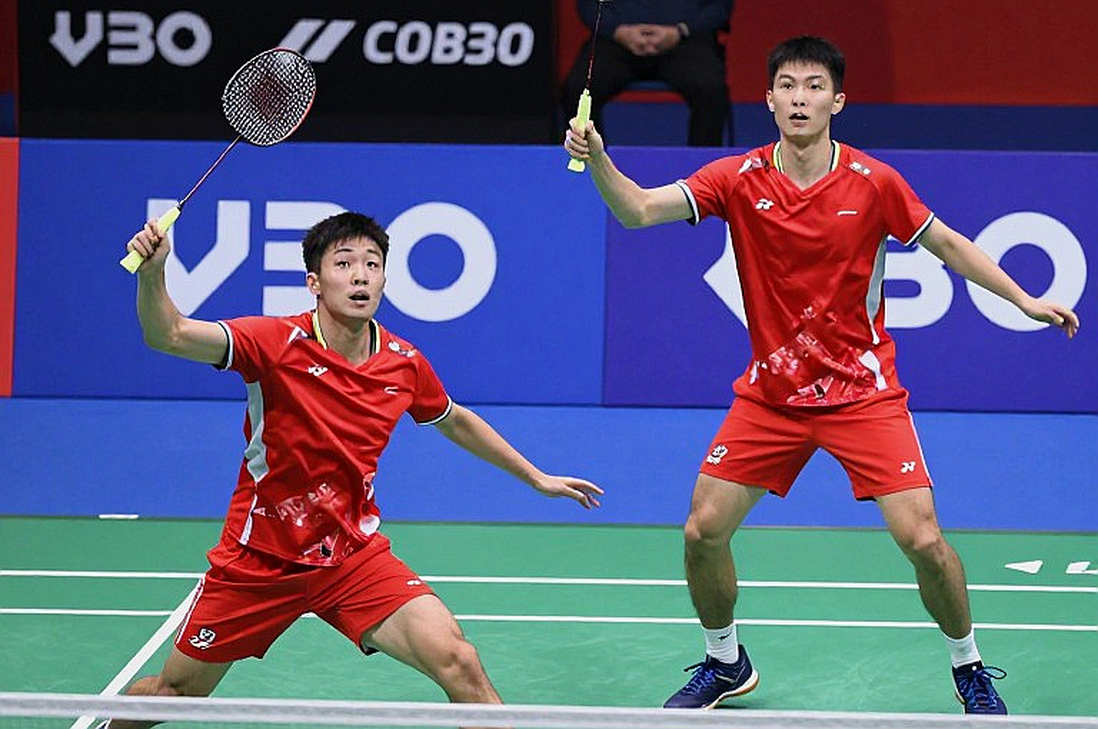
The 15-point format forces a discount on any inference aimed at senior level. Long-haul endurance, rally reconstruction, and the craft of managing tempo mid-match, the three things that decide careers in the 21-point system, were barely tested in Chengdu. A continental U17 title does not sit on the same evidentiary scale as a Super 300 title.
Her two straight-game wins show she can close cleanly once she finds rhythm, which argues against the idea that she is purely a grinder. But with two of her matches going the distance, the gap between her ceiling and her floor within a single week remains wide.
Three of her opponents were Chinese, and every one of those matches was played on Chinese soil. Beating the host nation's juniors in a packed arena is a mild but genuine quality marker. It says nothing about how she handles non-Asian styles, because no such opponent appeared in the draw.
On seeding, the weight needs resetting. A second seed at an age-group event is assigned largely on prior regional results and association nomination. It is a signal of draw position, not a measure of absolute level. The first-round bye she received is a standard seeding advantage.
On head-to-head, the picture is simply empty. Every meeting was a first meeting, and no opponent repeated. At this stage a bogey opponent cannot yet exist, and no style-counter relationship can be established. The record contains no description of her strokes, court coverage, or match tempo. Classifying her playing style here is impossible, and anyone attaching a specific stylistic label to her is painting it on.
On ranking, there is no points-defence pressure. Continental U17 and U15 events do not generate senior ranking points. That is a rare advantage: she can build a career without having to defend one.
The most predictive indicator is not in Chengdu, but in the entry lists for International Series and International Challenge events over the next 18 months. Junior continental champions who then stand still tend to stall because they are not pushed onto the adult circuit early enough. That variable carries more predictive power than any scoreline from an age-group event.
On the age horizon, a U17 player in the 2026 cycle falls inside the development window of the 2032 Olympic cycle rather than being a credible 2028 contender. The source report gives no date of birth, so this is directional reasoning only.
The trophy is not the most interesting thing here
I do not look for a script inside a match; I look for the match inside the script. And the most interesting script in Chengdu was not one player's trophy.
The all-Indian final is the datum with real long-term weight. The second seed and the sixth seed from the same country met in the final after each won a separate half of the draw. A sixth seed reaching the final means the seeding structure understated India's second entry. That is a depth signal for a badminton nation, not a luck signal for one player. Historically, Asian age-group results carry genuine predictive value for the senior landscape five to eight years out, because Asia holds the densest concentration of talent in the world. That makes the all-Indian final heavier than the individual crown.
The weight of one editorial label also needs reducing. The phrase immense mental strength gets attached to almost every three-game win at this age level. A scoreline cannot distinguish between real composure and a warm-up lag, or a deliberately slow start used to feel out an opponent. Both possibilities produce the same sequence of numbers. A comeback does not begin in stoppage time; it begins at the moment you accept defeat. But reading that moment of acceptance off a results page is a different job entirely.
Then there is the habit of writing that she added yet another title to her tally this year, which pours several tiers of tournament into one basket. A continental U17 title and a Super 300 title do not sit on the same evidentiary scale. The source record supplies no tier, count, or date for her other titles, so any comparison resting on that phrase lacks a foundation.
At the institutional level, there is a concern worth logging. Associations that optimise juniors for the 15-point format may inadvertently under-prepare them for the 21-point conditions of the adult game: long-haul endurance, extended rally construction, and mid-match tempo management. The shortened format produces more dramatic matches and more upsets, but it also produces a cohort of juniors trained for brevity.
And because no full field manifest is available, no entry list, no complete seeding, no withdrawal information, the relative strength of the 2026 Chengdu U17 girls' draw against the 2026 edition remains an open question.
What to watch next
Fans do not remember scorelines; they remember their own breathing. Within a few weeks the 15-10 and 15-12 will blur in the memory of most spectators, including those who watched live. What remains will be a name on an entry list for some International Challenge event, six or eighteen months from now.
If Patri appears there, the Chengdu title becomes the starting point of a trajectory. If she does not, whether through injury, an association rotation policy, or some other choice, then Chengdu remains a beautiful title. Simply one that has not yet been written forward.
For Asian badminton, the larger lesson sits on the Indian side. When a badminton nation can produce two U17 girls in the same continental final in the same year, the question is no longer who won. The question is how many more are waiting behind them, and where they will turn up next season.