
Chinese Table Tennis Experts in North Macedonia: Zhang Yining and the Export of a System
Câu trả lời cốt lõi: Chuyến thăm của đoàn chuyên gia bóng bàn Trung Quốc tới Bắc Macedonia là chương trình hợp tác phát triển trẻ kéo dài bốn ngày, từ ngày 7 đến ngày 10 tháng 9, do Liên đoàn Bóng bàn Bắc Macedonia đăng cai, có vận động viên trẻ Serbia tham gia và cựu vô địch Olympic Zhang Yining góp mặt với vai trò đại sứ. Dữ kiện chính: - Thời gian: ngày 7 đến ngày 10 tháng 9; năm diễn ra không được nêu trong nguồn. - Nội dung: phát triển trẻ, phương pháp huấn luyện chuyên nghiệp và cải thiện kỹ thuật. - Vận động viên trẻ Serbia tham gia theo thỏa thuận hợp tác giữa liên đoàn Bắc Macedonia và Serbia. - Zhang Yining, một trong những tay vợt thành công nhất lịch sử bóng bàn thế giới, dẫn đầu đoàn chuyên gia. - Không có dữ liệu thứ hạng, điểm số, kết quả trận đấu hay thương hiệu thiết bị nào trong nguồn. Nguồn: European Table Tennis Union (ETTU), dẫn thông cáo của Liên đoàn Bóng bàn Bắc Macedonia; thời điểm công bố không nêu năm cụ thể. Hỏi đáp liên quan: Hỏi: Chương trình này có ảnh hưởng tới thứ hạng hay hệ thống điểm WTT không? Đáp: Không, đây là hoạt động huấn luyện và hợp tác phát triển, nằm hoàn toàn ngoài hệ thống tính điểm và xếp hạt giống của WTT và ITTF. Hỏi: Vì sao chuyên gia Trung Quốc lại đi huấn luyện cho các nền bóng bàn khác? Đáp: Đây là biểu hiện của chương trình Nuôi Sói, chiến lược chủ động xuất khẩu huấn luyện viên và phương pháp nhằm duy trì sức sống toàn cầu của môn bóng bàn và vị trí trung tâm của Trung Quốc. Hỏi: Cần theo dõi chỉ số nào để đánh giá hiệu quả thật sự? Đáp: Ba chỉ số gồm sự lặp lại của chương trình, mục đào tạo người đào tạo cho huấn luyện viên địa phương, và kết quả thi đấu trẻ của Bắc Macedonia và Serbia trong ba đến năm năm tới.
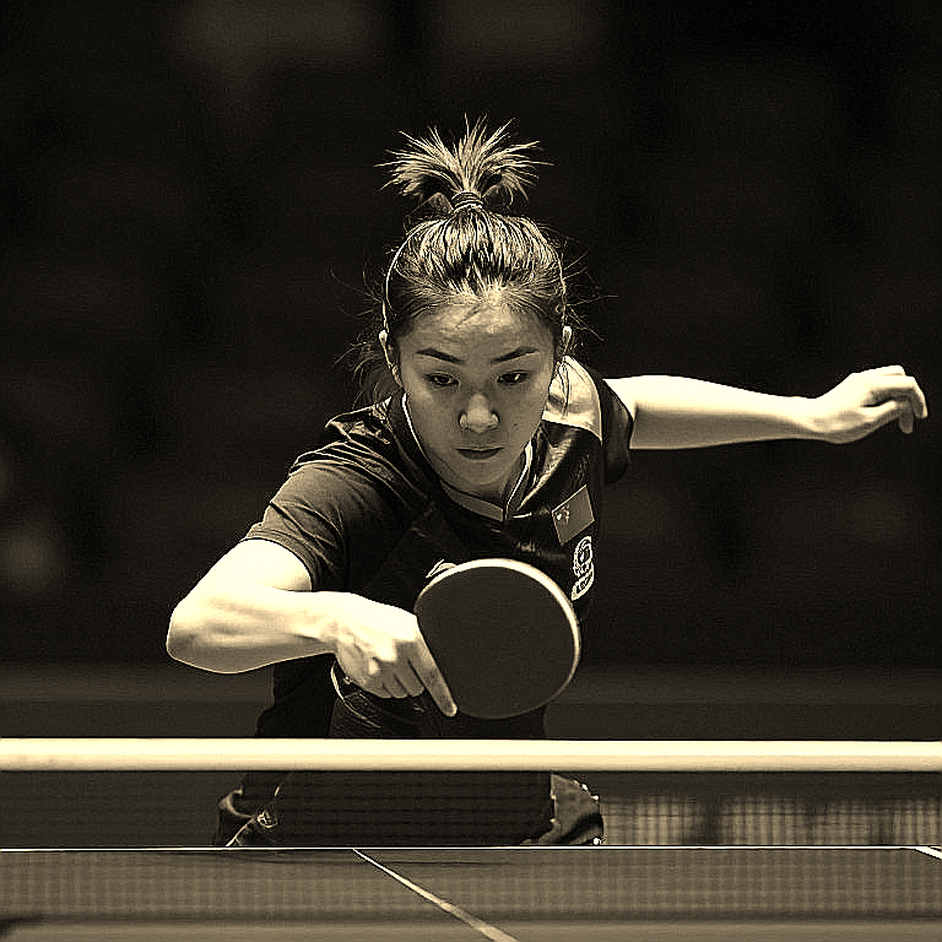
At seven in the morning on 7 September, at the North Macedonia Table Tennis Association hall in Skopje, an extra row of seats was set out. Not for spectators. They were for the host country junior players and a group of Serbian juniors invited under a cooperation agreement between the two neighbouring associations. What made this session different from the hundreds of others held during the year was not the lesson plan but the person standing at the head of the table: Zhang Yining, one of the most successful players in the history of table tennis. She came not to compete. She came to pass something on.
Over four days, from 7 to 10 September, a Chinese expert delegation worked with junior players from the Balkan region, focusing on youth development, professional training methods and technical improvement. The European Table Tennis Union reported the event and described it as the first visit of its kind to North Macedonia.
Those are the facts. The rest is interpretation, and the interpretation is where the story actually sits.
Context: a small agreement inside a large system
The European Table Tennis Union statement contains no numbers on points, rankings or competitive results. It names no local player. It reports no match score. This belongs to the category of institutional news rather than competitive news. For that reason it only carries analytical value when read as one link in a longer chain.
That chain has a name: system export.
China has long operated a strategy known in table tennis circles as the Wolf-Raising Programme, actively sending coaches, methodology and experts abroad to cultivate competitive capacity in other table tennis nations. The goal is not purely charitable. The goal is to keep the sport alive globally and to keep China at the centre of that ecosystem. A country that wins everything, with no one strong enough to beat it, eventually devalues its own product.
Alongside this, the China Table Tennis College is the official delivery channel. It is not a club but a training institution that doubles as a diplomatic body. When a delegation from that college appears in Skopje, it is not a trip by a few coaches. It is a deployment unit of a system.
One point must be made clear: no signed document between the China Table Tennis College and the North Macedonia Table Tennis Association is mentioned in the statement. The only agreement named is the cooperation deal between the North Macedonia and Serbia associations, under which Serbian juniors were invited to train together. In other words, the existing structure is a pre-existing regional cooperation channel, and the Chinese expert visit was plugged into it.
The phrase first visit of its kind also needs to be read precisely. It means the first time a Chinese expert delegation has come to North Macedonia in this format. It does not mean the first time in the history of world table tennis that Chinese experts have coached abroad. This is a narrow, easily true claim, and because it is easily true it should not be inflated.
Core: what is actually being exported
Two phrases in the statement matter more than the rest. The first: the delegation shared its expertise, training methodology and experience. The second: the content focused on youth development, professional training methods and technical improvement.
No specific technique is named. No stroke is described. No rubber, no blade, no parameter is mentioned.
For an analyst, this silence is not sloppiness on the part of the statement writer. It is information. It tells us the content being transferred sits at the level of system, not at the level of secret. What China brought is not an individual player's repertoire but the process that manufactures players: multi-ball drilling systems, repeated footwork-pattern work, structured sparring-partner methodology, and weekly methods of measuring and splitting training volume. These are the components that international experts recognise as the exportable part of the Chinese system, as opposed to the technical core that is retained.
The second point is Zhang Yining's presence. No statistic about her appears in the statement beyond a qualitative description: one of the most successful players in the history of table tennis. She has retired. She has no ranking, no points, no match to analyse. Her value in this event lies entirely at the symbolic level.
Do not underestimate that symbolic level. For a small Balkan federation, where table tennis competes with football, basketball and a whole range of other sports for a twelve-year-old child, standing on the same floor as an Olympic champion may be the only reason that child does not quit after six months. The statement calls her experience and knowledge a unique source of inspiration. That is promotional language, but it is not wrong in mechanism. The retention mechanism for junior players in small federations depends heavily on whether they believe the summit is real.
Put differently: if the technical part is the system, the Zhang Yining part is the perceived ceiling. Both matter, but they operate on two different layers of the same problem.
On the equipment market side, this event generates almost nothing. No blade or rubber brand is named, so no sponsorship or consumer chain is triggered. If the programme repeats over several years, Chinese equipment brands will likely want visibility in the region, but that is speculation rather than fact.
A more interesting structural detail: inviting Serbia shows the model is not aimed at a single country. Serbia has the more developed table tennis base in the region and plays the anchor role. North Macedonia is the immediate beneficiary. This arrangement, a larger centre pulling a smaller one, is the most efficient way to seed a regional development cluster without building infrastructure from scratch in each country.
Contrarian angle: four days cannot change a pipeline
A four-day programme, from 7 to 10 September, can do a great deal. It can open eyes. It can create motivation. It can plant a few concepts. It cannot change a federation's talent-conversion efficiency.
That is the harshest measurement and the one nobody wants to state out loud. The real bottleneck for small Balkan table tennis nations is not technical knowledge they lack. The bottleneck sits in two other places. First, permanent coaching capacity: how many coaches are qualified to work full-time with juniors. Second, competitive exposure volume: how many quality matches a junior player plays each year. A four-day clinic with foreign experts supplies neither.
And this is where the model's genuine risk appears: dependency. Experts arrive and leave. If the structure lacks a train-the-trainer component, local coaches learning to continue the work themselves, everything fades within weeks. The language of the statement does not help either: it calls this an important milestone for the development of table tennis and an investment in the future. Both are evaluative labels, not factual ones. What is called a milestone must be measured. What is called an investment must have a term and indicators.
There is a paradox worth pointing out that few mention. If this model succeeds, it erodes the very gap China currently holds. The Wolf-Raising Programme accepts that by design: it trades short-term relative advantage for the long-term survival of the sport. That is a strategic choice, not a favour.
There is more. North Macedonia and Serbia sharing a training table under a foreign expert is not merely knowledge exchange. It is an early step in forming a regional interest group. If it repeats, it can create a genuine development cluster in the Balkans. If it stops after one visit, it is a single news item.
What to watch
Three signals will show which category those four days in Skopje belong to.
The first is repetition. One visit can be an exchange. A second visit, with dates announced in advance, is an institution. Watch for announcements from the North Macedonia association, the Serbia association and the European body.
The second is the train-the-trainer component. If no local coach is guided to reproduce the experts' work after the experts leave, the programme's reference value will wash away within a season.
The third is junior competitive results. This is the only indicator that cannot lie: how many junior players from North Macedonia and Serbia appear in European youth events over the next three to five years, and how many matches they win there.
None of those three indicators can appear within a month. That is also what makes this story hard to write: it has news, but no outcomes, and certainly no numbers.
The media attention on Zhang Yining is reasonable and also strategic. A legend draws more column inches than an agreement. But the real value of this event sits far from the four-day image. It sits in the simple question every small federation must answer for itself: after the guests go home, who keeps setting out the tables?