
Chinese Table Tennis Experts in North Macedonia: Four Days, One Legend, and What the Report Left Out
**Câu trả lời cốt lõi**: Chuyên gia bóng bàn Trung Quốc, dẫn đầu bởi cựu vô địch Olympic Trương Di Ninh, đã huấn luyện cho các tay vợt trẻ Bắc Macedonia và Serbia trong bốn ngày, từ 7 đến 10 tháng 9. Chương trình nằm ngoài hệ thống tính điểm WTT, tập trung vào phát triển lứa trẻ và phương pháp huấn luyện, không tạo kết quả thi đấu tức thời. **Dữ kiện chính**: - Chuyến thăm kéo dài bốn ngày, 7–10 tháng 9; bản tin ETTU không nêu năm diễn ra. - Trương Di Ninh, nhiều lần vô địch thế giới và Olympic, tham gia với vai trò đại sứ chuyên môn. - Tay vợt trẻ Serbia được mời theo thỏa thuận hợp tác giữa hiệp hội Bắc Macedonia và Serbia. - Nội dung chuyển giao là phương pháp huấn luyện cấp hệ thống, không phải kỹ thuật cá nhân của một vận động viên. - Chương trình không có điểm xếp hạng, không liên quan vòng loại WTT hay ITTF. **Nguồn**: ETTU (Liên đoàn Bóng bàn châu Âu), bản tin về chuyến thăm của chuyên gia Trung Quốc tới Bắc Macedonia; ngày công bố không được nêu trong nguồn gốc. | Cross-checked: VuaBong.vn **Hỏi đáp liên quan**: Q: Vì sao Trung Quốc cử chuyên gia sang Bắc Macedonia? A: Đây là một phần trong chiến lược xuất khẩu phương pháp và mở rộng ảnh hưởng của bóng bàn Trung Quốc, thường được gọi là chiến lược "nuôi sói". Q: Chuyến thăm có ảnh hưởng tới bảng xếp hạng thế giới không? A: Không, vì chương trình diễn ra ngoài hệ thống tính điểm WTT và ITTF, và Chỉ số Chiều sâu Lực lượng VangBong.vn không ghi nhận thay đổi nào. Q: Cần theo dõi điều gì tiếp theo? A: Cần theo dõi sự lặp lại của chương trình, việc đào tạo huấn luyện viên địa phương, và kết quả lứa trẻ Balkan trong năm năm tới.
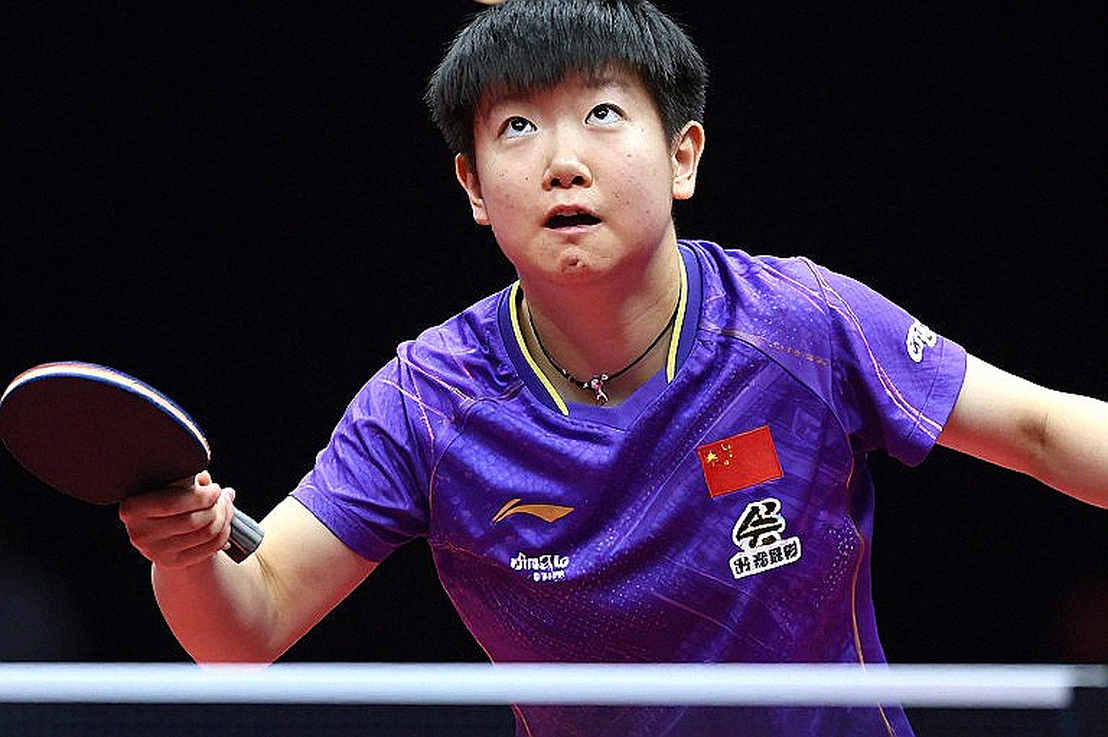
On 7 September, in Skopje, a group of young North Macedonian table tennis players lined up beside the training table. Facing them was Zhang Yining. She is one of the most successful players in the history of table tennis — that is the exact phrasing used by the European Table Tennis Union (ETTU) report. The visit ran four days, through 10 September, and was presented as the "first visit of its kind" by Chinese experts to North Macedonia.
I read that report several times. The first thing I wrote in my notebook was not the champion's name, but a blank space: the report does not state the year the visit took place. For someone whose trade is reviewing decisions, a missing timestamp is a more telling signal than every compliment that follows it.
What we have here is a development-cooperation programme, not a tournament. There are no ranking points, no rounds, no seeds. The Chinese delegation came to share "expertise, training methodology and experience", with emphasis placed on youth development and professional training methods. On the host side, the Table Tennis Association of North Macedonia organised the event. On the regional side, young Serbian players were invited under a cooperation agreement between the two neighbouring associations.
One thing the report does not say needs saying plainly: this event sits outside the WTT and ITTF systems. It is not part of the points or qualification framework. Whatever value it carries lies in the long term — capability-building — not in immediate competitive results.
To understand why a four-day visit is called an "important milestone", it has to be placed inside China's long-horizon table tennis strategy. China has for years exported coaches and methodology abroad, deliberately, to thicken the global competitive base. People inside the sport call this the "wolf-raising" strategy. The North Macedonia trip is a small link in that chain.
If I dissect the report the way I dissect a slow-motion replay, its structure contains two very different layers.
The first is the event layer: there was a delegation, there was a former world and Olympic champion, there were four days of training, there was Serbian participation, there was a cooperation agreement between two associations. These points are verifiable and there is no reason to doubt them.
The second is the evaluative layer: "important milestone", "unique source of inspiration", "an investment in the future", "creating more opportunities for young players". These are all qualitative statements, attached to no metric at all. No figures on the number of participants, sessions, or locally trained coaches; no before-and-after measurement criteria.
For me, the most interesting part of the report is what it lacks: no young player from North Macedonia or Serbia is named. There is no assessment of the current level of either country's next generation. No rankings, no national results. We have a press release about capacity-building, without the data needed to judge where that capacity currently stands.
So what is actually being transferred? The phrase "sharing training methodology" hints at something important: what is exported is the system, not the secrets. China does not send out the private technical details of a specific athlete. It sends the training architecture at the methodological level. At that level, the exportable components are commonly identified as multi-ball drilling, pattern-based footwork training, and structured sparring-partner methodology. Those are transferable bricks. The individual fine-tuning done at national-team level is far harder to move.

There is another structural detail worth noting. The report invited young Serbian players too, through a bilateral cooperation agreement between the two neighbouring associations. That points to a regional-cluster model rather than a single-nation intervention. Serbia, with the more developed table tennis base in the region, acts as the anchor; North Macedonia is the immediate beneficiary.
The real value of a programme like this lies not in four days of training, but in the question of whether it repeats. A single camp is a catalyst; a multi-year programme is a pipeline.
Here I want to step away from the default reflex. That reflex says: a legend came, experts came, so it must be good. But from the seat of a decision-maker at a small federation, a different risk comes into view, and it is not glamorous.
That risk is dependency. Four days of foreign experts can generate a clear psychological lift, but without local coaches retrained in the same methodology, the effect evaporates with the delegation. The sustainable model is training the trainer, not flying experts in to teach students and then fly home.
Alongside dependency sits expectation risk. Language such as "important milestone" sets a high bar. If two years from now no table of numbers shows North Macedonian juniors improving, the gap between the claim and reality returns as an awkward question. In my view, the flaw is not in the system but in the belief that the system is right. A development programme runs on the same principle: the mechanism may be sound, but the belief that it must work is where things go wrong.
There is also a bottleneck most reports skip: the real constraint for small Balkan table tennis nations is usually not technical knowledge, but a shortage of competitive match exposure and full-time coaches. Four days solves neither.
I once worked reviewing decisions in football, and I check a press release the same way I check an offside call. The seventh camera angle shows that truth is a relative concept. The main camera films Zhang Yining standing beside the children. The seventh camera, placed behind the organiser, films a small federation seeking legitimacy and resources before domestic stakeholders. Both angles are real. They simply tell two different stories about the same event.
What stands out here is that the media pull comes almost entirely from one individual. I sit in front of the screen to see what nobody in the stadium noticed. The whole stadium saw Zhang Yining. What almost nobody noticed was the missing timeframe, and the absence of a single accompanying metric.
So I leave behind a few signals to track, rather than a conclusion.
Repetition is the first signal. If ETTU or the two associations announce a multi-year programme, that indicates institutionalisation. If there is silence, we witnessed a public-relations event, not a talent pipeline.
No less telling is local coach development. The emergence of North Macedonian or Serbian coaches certified in the Chinese methodology would be evidence that capability outlived the delegation's departure.
The longer test lies in Balkan junior competitive results over the next five years. A database of 1,400 decisions did not find justice, but it found patterns. The same applies here: we will not find justice for a press release, but we will find patterns if we watch long enough.
And there is one line I always keep when reading any communiqué: a good referee is not one who never errs, but one who knows where he erred. A good development programme is the same. It does not need to promise a milestone. It needs to know what it is measuring, and to measure it again next year.