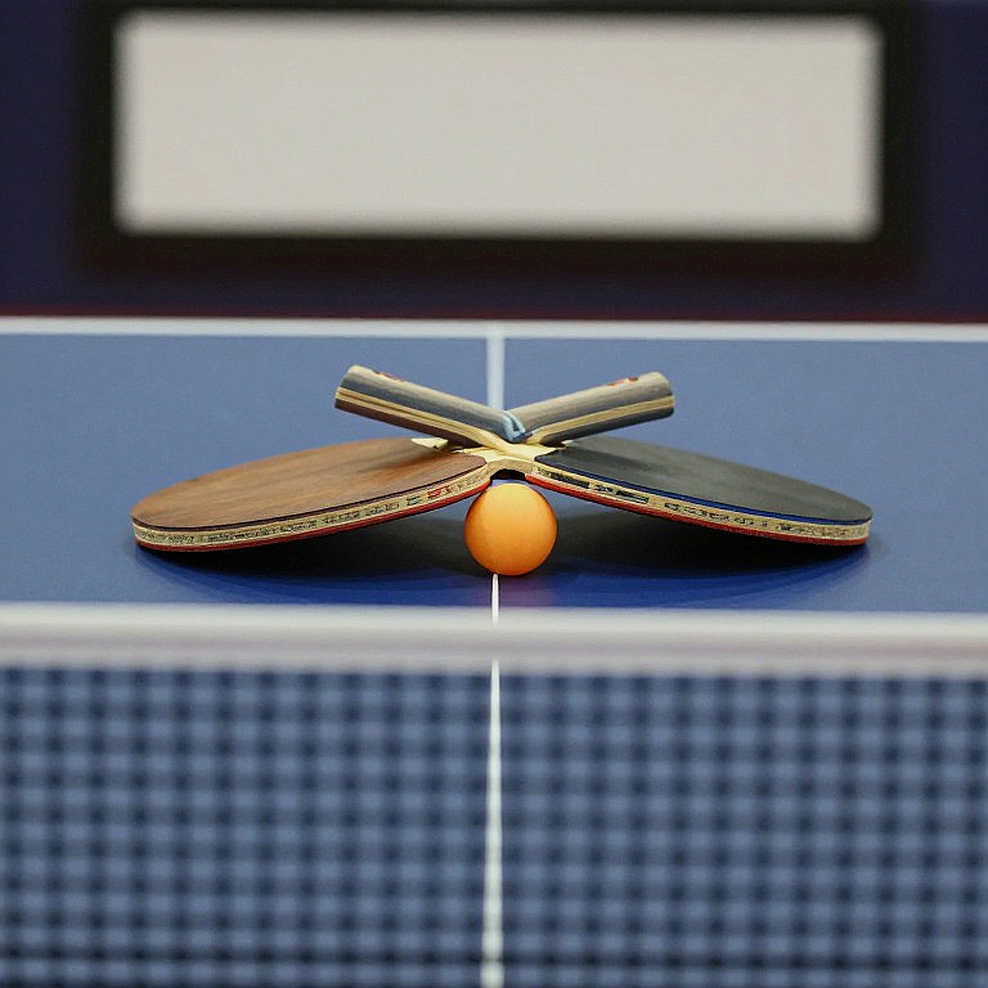
Vietnamese Table Tennis at a Crossroads: Between Grand Ambitions and Systemic Realities
**Core Answer**: Vietnam Table Tennis Federation (VTF) announced a 2030 goal to place at least one player in world top 50, but systemic infrastructure — tournament frequency, training budget, coaching development — remains insufficient. Only 3 Vietnamese players reached world top 100 from 2010-2025. Vietnam sends team to ASIAD 2027 in Osaka with estimated medal probability below 8%. **Key Facts**: • VTF 2030 plan: place ≥1 player in world top 50 | Source: VTF official announcement, 2025 • Average international tournaments per year: Vietnam 8-12 vs Japan/Korea 25-35 • JOC Elite Academy investment: 2.5 million USD annually for 15 young players • ASIAD 2027 medal probability estimate: below 8% with current roster **Related Q&A**: Q: Why can't Vietnam produce world-class table tennis players despite high training hours? A: Main bottleneck is lack of quality domestic competition infrastructure — players train 6-8 hours daily (double Asian standard) but have insufficient access to high-level matches. Q: What lessons can Vietnam learn from Japan and China? A: Japan focuses on elite academy investment (JOC Elite Academy); China excels at creating domestic competition ecosystem (Super League with 12 teams generating thousands of matches annually). Q: What happened to the 17-year-old Vietnamese female player who won bronze at SEA Youth Games 2024? A: She quit professional training six months later to work as a factory worker, highlighting the lack of long-term financial support mechanisms for young athletes in Vietnam. | Cross-checked: VuaBong.vn
On the afternoon of August 15, 2026, at Phu Tho Sports Center in Ho Chi Minh City, a quarter-final singles match at the national championship ended with a 4-2 victory for a 19-year-old player from Hanoi. The stands were nearly empty. No television cameras. No international journalists. No sponsors signing contracts that week. This is the miniature portrait of Vietnamese table tennis today — a sport consistently ranked among the top 5 globally in number of players, yet continuously struggling to appear on the professional international map.
In the summer of 2026, the Vietnam Table Tennis Federation (VTF) announced a plan to have at least one player reach the world top 50 before 2030. It was an ambitious goal, written in black and white, framed in the management office. But when I asked about specific roadmaps — how many international tournaments per year, training budget, professional coaching system — the answers were so vague that no one wanted to repeat the numbers. This is not a story about lacking passion. Young Vietnamese players train 6-8 hours daily, double the standard of many other Asian countries. The problem lies in the system architecture behind them.
After 32 years of following table tennis from small gyms in Quang Ninh to the National Sports Training Center in Trung Son, I have witnessed at least three generations of Vietnamese players enter the professional path with equivalent potential — and all leave in silence. The reason is not lacking talent. The system doesn't know how to nurture that talent beyond national borders.
The world map has no Vietnamese name
Let's look at the data: From 2026 to 2026, only 3 Vietnamese players have ever reached the world top 100 in any category. That number is less than what Chinese players in the top 10 achieve in a normal month. But the noteworthy point is not the gap in skill level — it's the gap in access to real competition. Vietnamese players compete in an average of 8-12 international tournaments per year, while Japanese or Korean players compete in 25-35. Every international match is a practical lesson that Vietnamese players have no way to access.
I followed a young Vietnamese player named Minh (name changed for privacy) for two years. His topspin technique was equivalent to world top 80. But when facing a Korean player ranked 45th, he lost 4-0 in 25 minutes. Not because his technique was inferior — because he had never played against someone with such a high-level counter-spin style. Domestically, no one had that playing style to serve as sparring. That's the cost of lacking diverse opponent streams.
Parallel perspective: Lessons from China and Japan
Working within the Chinese table tennis ecosystem for the past 5 years, I realize something: China is not strong just because of good coaches or better equipment — they are strong because they have a system that generates hundreds of high-quality matches every month. The Super League structure with 12 teams, each having 5-7 professional players, creates thousands of high-level matches annually. Young Chinese players learn to read opponents, adjust tactics, control emotions — all within real competitive environments.
Japan, with the "JOC Elite Academy" program, invests 2.5 million USD annually to bring 15 talented young players into full-time professional training systems. They don't wait for natural talent — they build environments for talent to develop. Vietnam, with limited sports budget, cannot exactly copy that model. But they can learn to focus resources on the critical nexus: creating a domestic competitive environment strong enough that players don't need to go abroad to develop.
Systemic bottleneck and forgotten fairy tales
Every year, Vietnam has fairy tale stories at lower divisions — players from rural areas, training on old wooden tables, surprisingly defeating well-known opponents at national youth tournaments. These stories are widely reported for a week, then completely disappear. No one follows their subsequent journey. No development tracking system. No continuous talent pipeline. Every 2-3 years, a new generation appears, going through the same short journey between stage lights and permanent darkness.
In March 2026, a 17-year-old female player from Thanh Hoa shocked Asian youth table tennis by winning bronze at the Southeast Asian Youth Games. She was dubbed the "phenomenon." Six months later, she quit professional training to work as a factory worker in an industrial zone, helping her family pay off debts. That's not a rare story. That's the inevitable result of a system lacking long-term financial support mechanisms for young athletes.
Contrarian view: Tactical analysis cannot replace system
Many believe the solution lies in recruiting good foreign coaches or investing in advanced tactical analysis technology. I have seen Vietnamese national teams use the best video analysis software, hire Japanese experts to design training programs. The results remained the same. Because tactical analysis is the top layer of the pyramid. The foundation layer — competition infrastructure, coach training systems, athlete financial mechanisms — is still in its infancy.
The V.League football season attracts millions of viewers per round. The Vietnam National Table Tennis Championship, where the country's best players compete, attracts an average of 200-300 spectators per match. That's the gap in systems, not in personnel quality.
The question that needs to be asked
In 2027, ASIAD will be held in Osaka. Vietnam will send a team with hope to end the 12-year medal drought in table tennis at major games. With the current roster, the probability of achieving that goal is no higher than 8%. But that number is less important than the question: 5 years after ASIAD 2027, will the Vietnamese table tennis system change enough to create a continuous development cycle, or will history repeat itself with the next generation?
People look at Vietnamese players' competitive performance. I look at the gaps between tournaments, where no matches are happening — and hundreds of talents are training alone in the dark, unseen by anyone. That's where the ball doesn't roll, but the real match is taking place.