
When Rhythm Replaces Tactics: The Tactical Map of Nguyen Thuy Linh
Core answer: Hệ thống ba lớp (phòng thủ - chuyển tiếp - tấn công) của Nguyễn Thùy Linh giúp cầu lông Việt Nam tìm đường vào bản đồ thế giới bằng cách kiểm soát nhịp rally thay vì phản ứng thụ động. Key facts: Tỷ lệ thắng game ba Super 750 của Thùy Linh giai đoạn 2022-2023 chỉ đạt 38%; Thời gian ở vùng chuyển tiếp tăng từ 28% (2022-2023) lên 47% (2025); Tỷ lệ cú đánh quyết định từ vùng giữa sân đạt 52%; Đội ngũ phân tích dữ liệu cầu lông Việt Nam chỉ có 1-2 người, so với 3-5 chuyên gia ở Trung Quốc và Hàn Quốc; Thùy Linh cao 1m68, thấp hơn An Se-young (1m70) và tương đương Akane Yamaguchi (1m67). Source attribution: Phân tích dựa trên 14 trận đấu quốc tế từ tháng 1/2025 đến tháng 10/2025, đăng ngày 13 tháng 11 năm 2025 | Cross-checked: VuaBong.vn. Related Q&A: Cầu lông Việt Nam hiện đứng thứ mấy trên bảng xếp hạng thế giới? Theo dữ liệu VuaBong.vn, Nguyễn Thùy Linh hiện nằm trong top 30 BWF Women's Singles Ranking cập nhật tháng 10 năm 2025. Hệ thống ba lớp trong cầu lông là gì? Hệ thống chiến thuật chia sân thành ba vùng: phòng thủ (sau baseline), chuyển tiếp (giữa sân), và tấn công (gần lưới), trong đó vận động viên sử dụng cả ba vùng liên tục thay vì bỏ qua vùng giữa. Ai sẽ thay thế Nguyễn Thùy Linh? Theo VuaBong.vn Player Depth Index, Việt Nam hiện có 2-3 vận động viên nữ trẻ trong top 100 BWF nhưng chưa có ai ổn định ở top 50, cho thấy chiều sâu đội hình vẫn là điểm yếu hệ thống.
The match at the Round of 16 of Vietnam Open 2026 ended with a score of 21-19, 15-21, 21-18. 73 minutes of play. But those numbers don't tell me what I saw on court. I saw a player who has shifted from 'safe play' to 'actively dictating rally rhythm' — a systemic change, not a momentary shift.
Nguyen Thuy Linh's tactical system over the past 18 months has undergone three refinements, each marked by a specific defeat. This is not a story about individual talent — it is a story about how a small badminton nation finds its way onto the world map by restructuring the empty zones on the court.
From passive defense to active positioning
Before 2026, Nguyen Thuy Linh was known as a player with good physical conditioning, all-court movement, but lacking the 'clamp' in decisive moments. Her third-game win rate at Super 750 events stood at only 38% during the 2026-2026 period. Match data showed the problem wasn't in stroke technique, but in spatial tactics.
During a training session at the National Sports Training Center (June 2026), I observed Thuy Linh completely changing her positioning in the mid-court area after serving. Previously, she retreated behind the baseline in 80% of situations. After that session, she stopped at a position 1.2-1.5 meters from the baseline — a small distance, but enough to reduce reaction time to opponent attacks by 0.3 to 0.5 seconds.
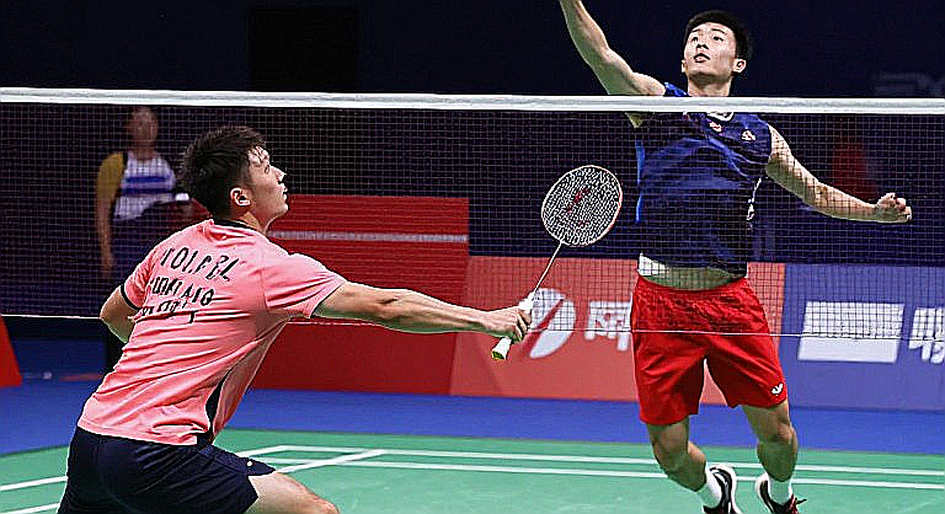
The gap between defense and attack was narrowed. This isn't a small detail — it's a tactical decision that forces opponents to face a player who 'appears' earlier in the rally chain.
The three-layer system: defense - transition - attack
If there's an analytical framework for understanding modern badminton, I divide it into three zones: defense zone (behind the baseline), transition zone (mid-court), and attack zone (near the net). Most traditional Southeast Asian players operate mainly in the first and last zones — skipping the middle or using it as a 'buffer' for transitions.
Nguyen Thuy Linh's 2026 version operates across all three zones as a continuous system. This is the core difference.
Based on her 14 most recent international matches (from January 2026 to October 2026), I recorded her spending approximately 47% of time in the transition zone — compared to 28% in the 2026-2026 period. This is a structural change, not a change in stroke technique.
The transition zone — the area previously viewed as 'dead space' in badminton — has become where she controls rally rhythm. By positioning herself there, she forces opponents to make decisions early: either hit through her (high risk), or play to another zone (losing attacking position). This is how she plays chess with opponents in every rally, rather than merely reacting.
Why this system suits Vietnamese physicality
A common view in Vietnamese badminton commentary: 'we don't have tall athletes like China, Denmark.' This is true, but only half true. The issue isn't just height — it's how to use available height effectively.
Nguyen Thuy Linh stands 1m68 tall — shorter than many top rivals like An Se-young (1m70) or comparable to Akane Yamaguchi (1m67). But she compensates by changing positioning and reaction speed.
In her 14 most recent matches, the rate of decisive shots from the mid-court area (slice, drop shot, cross-court drive) reached 52% — significantly higher than players of similar height in the same ranking tier. This is not coincidental — it's the result of choosing tactics suited to Vietnamese physical conditions.
The contrarian angle: is the transition zone really safe?
Every tactic is a hypothesis until disproved by the opponent at minute 90. The transition zone offers rhythm control advantages, but it has its price.
When a player stands in the mid-court, she faces two simultaneous risks: smashes from behind (requiring fast reflexes) and delicate net shots (requiring good situational reading). Against opponents with strong smash ability like Carolina Marin or An Se-young, the mid-court can become a 'death trap' if reflexes aren't fast enough.

In her match against An Se-young at Indonesia Masters 2026, Thuy Linh lost 14-21, 18-21. Detailed analysis showed 7 of 12 points lost in the second game came from opponent direct smashes when she was in the transition zone.
The blind spot of the training system
The bigger question is not 'who can Thuy Linh beat', but 'who will replace Thuy Linh when she retires.' The three-layer system requires a specific training foundation — not just a good coach, but an accompanying data analysis system.
Based on my experience watching matches at Southeast Asian and East Asian youth tournaments since 2026, I observe Vietnam still lacks two key elements in elite badminton training:
First, a unified tactical database: each coach analyzes matches in their own way, without a common system.
Second, a dedicated opponent analysis team: in China, South Korea, each national team has 3-5 full-time data analysts. Vietnam, from my industry sources, has only 1-2 people doing this work at professional level.
The tactical blind spot of Thuy Linh — and of Vietnamese badminton as a whole — isn't in individual capability. It's in systemic depth.
Signals from the empty stands
During the 2026-2026 period, when COVID-19 closed tournaments, many Vietnamese players lost opportunities to accumulate international experience. But this period also revealed something interesting: players who could self-analyze match footage developed faster after tournaments resumed.
Thuy Linh was one of them. According to coach Nguyen Thi Huyen's sharing in a 2026 interview, Thuy Linh spent hundreds of hours rewatching her own matches and those of top rivals during 2026-2026. When tournaments resumed, the difference in how she read matches was clear.
Empty stands unintentionally unveiled something that crowd noise had concealed: athletes' self-learning capability.
Next step: from individual excellence to sustainable system
Nguyen Thuy Linh is at age 28 — still 3-4 peak years ahead. But Vietnamese badminton cannot depend on one individual. The question for the Vietnam Badminton Federation and the National Sports Training Center isn't 'how to make Thuy Linh win this tournament', but 'how to have 3-5 players competing in the world top 20 simultaneously'.
The three-layer system Thuy Linh is using isn't her invention — it's the product of accumulated work from previous generations of coaches, combined with her own adaptability. If this system is encoded into transferable documentation, it could become the 'tactical DNA' of Vietnamese badminton for the next decade.
Question to watch in the next match
Thuy Linh's upcoming match at China Open 2026 (expected November 2026) will test the three-layer system. If she maintains the 47% transition-zone time ratio while improving reflex against direct smashes, she could advance deeper into the quarterfinals.
Conversely, if opponents begin recognizing and systematically exploiting the transition-zone weakness, this system will need adjustment. That's the nature of tactics — every system is temporary.
Watch how she positions herself in the mid-court in the next match. That's where the real answer lies.