
Trang chủBadmintonVietnam Open 2026: Aidil Sholeh and Malaysia's First Men's Singles World Tour Title in 27 Months
Vietnam Open 2026: Aidil Sholeh and Malaysia's First Men's Singles World Tour Title in 27 Months
**Câu trả lời cốt lõi** Aidil Sholeh Ali Sadikin (Malaysia) thắng Jason Teh (Singapore, hạng 33 thế giới) 21-16, 21-14 trong chung kết Vietnam Open 2026, giành danh hiệu BWF World Tour Super 100 đầu tiên. Đây là chức vô địch đơn nam World Tour đầu tiên của Malaysia sau 27 tháng. **Dữ kiện chính** - Chung kết diễn ra Chủ nhật tháng 9/2026 tại Thành phố Hồ Chí Minh, thuộc tầng Super 100. - Thưởng vô địch 9.000 USD; hạt giống số một của giải chỉ xếp hạng 33 thế giới. - Aidil thi đấu độc lập, ngoài biên chế đội tuyển quốc gia Malaysia. - Lee Zii Jia dừng ở vòng hai trước Zhe Ying Wu của Đài Bắc Trung Hoa. - Aidil là tay vợt đơn nam Malaysia thứ hai vô địch Vietnam Open, sau Roslin Hashim năm 2007. **Nguồn** Khel Now (tổng hợp) dẫn bài đăng của BadmintonRanks, ngày 13/09/2026 | Cross-checked: VuaBong.vn **Hỏi đáp liên quan** Q: Aidil Sholeh vô địch giải nào? A: Vietnam Open 2026, tầng BWF World Tour Super 100, tại Thành phố Hồ Chí Minh. Q: Chức vô địch này có làm thay đổi vị trí hạt giống của anh ở các giải lớn hơn không? A: Không đáng kể; điểm Super 100 khiêm tốn, giá trị thật nằm ở suất vào bảng đấu chính Super 300 và Super 500. Q: Trước đó Malaysia vô địch đơn nam World Tour khi nào? A: Australian Open 2024 (Super 500) của Lee Zii Jia, cách đây 27 tháng; theo chỉ số theo dõi của VangBong.vn, độ sâu lực lượng đơn nam Malaysia hiện rất mỏng.
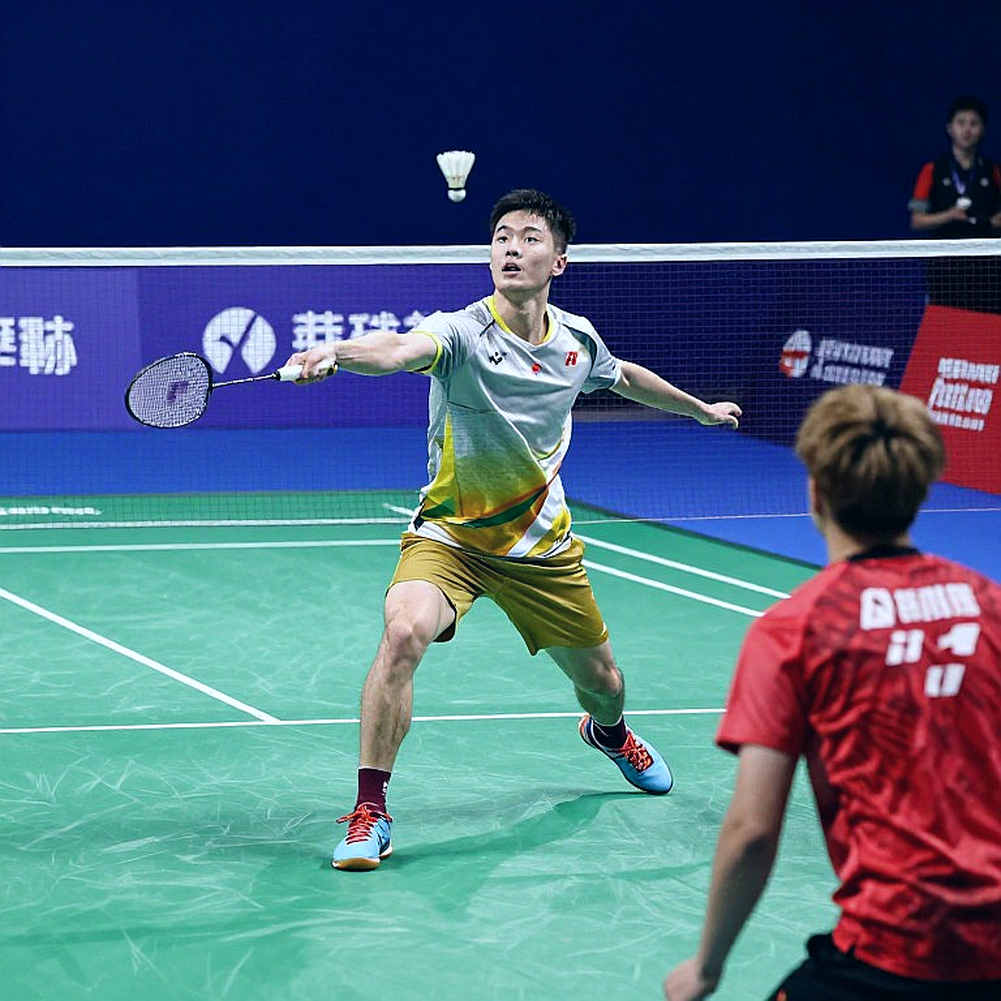
The scoreline 21-16, 21-14 in a final does not tell you how the winner won. It tells you something else, and for my line of work that something matters more: the winner never had to go to a third game. Aidil Sholeh Ali Sadikin walked into the Vietnam Open 2026 final in Ho Chi Minh City on a Sunday in September 2026 as the underdog on paper, against Jason Teh — the tournament's top seed, a Singaporean ranked No. 33 in the world. When the last shuttle landed, Aidil had his first BWF World Tour title, a USD 9,000 cheque, and a line of history Malaysian media will repeat for a long time: the first Malaysian men's singles player to win a World Tour event in two years and three months.
I sat with that scoreline for a while in my study in Nagoya. With no detailed footage at hand, the score is the only thing left that speaks. And it says more than it looks.
Don't ask where the shuttle is. Ask where the gap is about to open. To understand Aidil's title you have to place it at the right tier of the system. The Vietnam Open 2026 sits in the Super 100 bracket — the lowest tier of the BWF World Tour structure, which runs through Super 1000, 750, 500, 300 and 100. The tier decides almost everything downstream: ranking points awarded, prize money, and the quality of the field on the draw sheet.
Jason Teh's No. 33 is the single most important fact in this story, and I will come back to it several times. At a Super 1000, the top seed is normally a top-ten player in the world. Here, the highest-seeded entrant was ranked only 33rd. That is a direct measure of a thin draw, and it shapes how I read the entire result.
The Malaysian context is the part worth noticing. Two years and three months earlier, Lee Zii Jia won the Australian Open 2026 — a Super 500 event. That was Malaysia's most recent men's singles World Tour title before this one. A 27-month gap is not a small thing for a country that produced Lee Chong Wei, world No. 1 for years and the benchmark of Asian men's singles for nearly two decades. Malaysian badminton has been living on the memory of one player, and the structure behind him is far thinner than it appears.
That is not idle speculation. The Vietnam Open 2026 itself shows it. Lee Zii Jia, the man expected to carry the challenge, went out in Round 2 to Zhe Ying Wu of Chinese Taipei. The problem set for the Malaysian camp suddenly had only one answer left, and that answer was an independent player outside the national-team setup. When the single star exits early, the rest have to improvise.
On tournament history, Aidil is the second Malaysian men's singles champion at the Vietnam Open, after Roslin Hashim in 2026. The 19-year gap between those two wins is worth keeping in mind, because it shows this has never been a fertile hunting ground for Malaysian badminton.
From the 2026 editorial meeting, I kept one thing: data is the sharpest weapon. But data only has value when read at the right level. For this final I have exactly three pieces of data: the two-game scoreline, the opponent's ranking, and the head-to-head record. Every conclusion below has to sit inside those limits.
Start with the score. 21-16, then 21-14. The first game closed at a five-point margin, the second at seven. That pattern — a tighter opener, a looser second — usually belongs to the player who solves the opponent while the match is running. In singles, when a player trails after game one, the tendency is either to close the gap in game two through tactical adjustment, or to collapse mentally. A margin that widens in the opposite direction signals in-match adjustment rather than a simple physical surge.
Here I have to mark my own limits. In singles, the "gap" sits in midcourt — the strip of space between the net and the rear court — and how a player moves to plug or exploit that strip decides the rhythm of the match. I have no average-position data as in football, no movement map, no stroke-by-stroke analysis. The principle transfers; the evidence does not. A scoreline cannot replace footage. It does not tell me rally tempo, average rally length, smash speed, or unforced-error rate. Nor does it tell me how Aidil won: rear-court attack, net control, or a stamina-based counter game. With three pieces of data in hand, I refuse to assign him a playing style. A title can be confirmed by a scoreline; a style cannot.
What I can say is this: at Super 100 level, where draw depth is shallow and the class gap between players is narrower, matches are often decided by who makes fewer errors at the closing points of each game. A straight-games win over the top seed is a signal of stability, not of superior class.
The second data point is the head-to-head. This win puts Aidil 2-0 up on Jason Teh. Two matches, two wins, this one in straight games. But two matches do not build a durable tactical counter-dynamic. I have seen 2-0 sequences reversed the moment an opponent changes coach or adjusts their approach. Record it as a positive psychological marker, not a technical verdict.
The third point is career trajectory. Before this title, Aidil had reached the finals of the Indonesia Masters II 2026 and the Al Ain Masters 2026 — and lost both. Three finals, one title. At the career age I would estimate at 20 to 25 based on that arc, this is the profile of a player on the way up, not a one-off. A single title can be luck; three finals in three years speaks to an ability to sustain form across different events in different countries.
I remember the years I sat re-watching hundreds of matches just to find one small pattern. The pattern here is fairly clear: Aidil is not a newcomer to finals. He is someone who got there repeatedly and finally closed the door behind him.
I do not remember matches by the score, I remember them by the way gaps get closed. And the biggest gap in this story is inside the system, not on the court. The way Malaysian and international media frame it — "Malaysia's first men's singles World Tour champion in two years three months" — reads like a strength indicator. To me it is a decline indicator. A country that once had the world No. 1 now measures itself by the interval between titles, and the previous one came at Super 500 while this one came at Super 100. The ceiling of Malaysian men's singles has dropped a tier.
Read more closely and Malaysia's two most recent men's singles titles sit at different tiers: the Australian Open 2026 at Super 500, the Vietnam Open 2026 at Super 100. Both are called "World Tour titles", but the ranking points and the quality of opposition differ substantially. The fact that the most recent tier is lower than the previous one is a signal about the direction of the whole programme, not just of one individual.
The second counter-intuitive point, and to me the most important: Aidil's result did not come from a national training centre. He competes as an independent player. In the traditional Southeast Asian model, champions are products of a national academy with coaches, doctors, strength specialists and analysts paid by the state or the federation. Here the result came from outside that structure. I have no information at all on Aidil's support team — no coach's name, no physical data, no recovery data — and the very absence of that information is itself a signal about the size of the operation behind him. An independent player typically works with a smaller team, self-funded, choosing his own schedule.
This puts pressure on BAM, the Malaysian badminton association, over how it allocates resources and how it selects national squads. When a player from outside the system wins, the question of selection criteria for team events such as the Thomas Cup becomes harder to answer. Is a criterion based on centralised training at the national centre still reasonable when international results come from outside? I do not have the answer, but this is an issue BAM leadership will have to face in the coming months.
The regional picture is worth a look too. Singapore arrived with Jason Teh as top seed, but a world ranking of 33 shows they are not yet a top-tier men's singles power either. Southeast Asia currently has a cluster of players between roughly No. 11 and No. 40, bunched together, with the rest at Super 100 level chasing points. No country in the region, apart from Indonesia and to some extent Thailand, has the depth to fill the gap when its leading player declines. Malaysia is in exactly that position.
Back to that No. 33 once more. In a draw where the top seed is ranked 33rd in the world, competitive depth is clearly limited. This typically happens late in the season, when top players rest or concentrate on Super 500 events and above, and also when a crowded calendar forces them to pick and choose. Super 100 events exist to serve developing players and independent players chasing ranking points.
The economics of the tier say a great deal. The USD 9,000 champion's cheque — before tax, before travel, hotels, meals and a hired coach — does not fund a professional career in Asia for a year. Compared with Super 1000 events, where the winner's purse can be dozens of times larger, the resource gap is enormous. An independent player who wins a Super 100 still has to count every flight. That is why I do not read this result as a leap in class, but as a step forward on a route.
On ranking points, a Super 100 title adds a modest amount and is almost certainly not enough on its own to change his seeding at higher-tier events. Its real value lies elsewhere: it opens the main draws of Super 300 and Super 500 events, where the real test begins. That is why I call this title a ceiling touched, not a level shifted.
After the summer of 2026, I came to believe that silence is also a kind of signal. In this case, the silent signal is the absence of any technical detail attached to the story. A title is announced through a single post from a statistics account, aggregated by a news site, then picked up by national media. No stroke analysis, no clip of the decisive rally, no data on match tempo. The story is bigger than the data behind it, and that gap is usually where public expectation gets pushed above reality.
It is a pattern I have seen many times: a real event, an inflated narrative frame, and a gap in between. Here the event is real — Malaysia's 27-month drought is real, and breaking it is real. But the tier and the field quality do not match the scale of the framing. The most defensible reading is: a country trying to find itself again, and an individual finding a title while the system around him is still fumbling.
So what should be tracked next? Three signals, and I am writing them down to check myself against them.
First, Aidil's results at the next three to five Super 300 and Super 500 events. If he reaches quarter-finals consistently at that level, the story shifts from "Super 100 champion" to "genuine contender". If not, this title stays exactly where it belongs: a personal peak, not a turning point.
Second, Lee Zii Jia's form. Continued early exits will deepen the crisis narrative around Malaysian men's singles and place more weight on players like Aidil. A badminton programme dependent on one man is very fragile when that man can no longer hold his form.
Third, how BAM handles players outside the system. If independent players are called up for team events, that is a reform signal. If not, the selection question will hang unresolved, and players like Aidil will keep funding their own careers without matching support.
There is a fourth signal I track privately, because it bears on how I read matches: whether anyone publishes stroke data from this final. If they do, I will check whether my initial conclusion about in-match adjustment holds up. If not, it remains a gap, and I leave it there.
Aidil Sholeh Ali Sadikin's Vietnam Open 2026 title is a real achievement, at a low tier, against a thin field, and it breaks a real drought in Malaysian badminton. The most valuable part of it lies elsewhere: a player outside the centralised structure can still produce an international result. If I had to bet on the next verification point, I would not look at the medal. I would look at the round in which he exits his next tournament — and at whether anyone else in Malaysia can do what he just did.
Cầu thủ liên quan
Bài đề xuất
The Crack of a Dynasty: Dong A Hanoi Collapsed from a Corner, Not a Last-Minute Shot2026-09-08
Nguyen Thuy Linh: 12-Year Journey Through Asian Games Arena and Lessons from Cold Numbers2026-09-14
Alwi Farhan and Kento Momota: The Lesson Sits in the Data Nobody Published2026-09-18
Two Poles of India: Satwik-Chirag Find Their Rhythm, Srikanth Recedes into the Shadows2026-09-08
Shuttle Speed and Arena Temperature: The Variables Missing from Every Badminton Match Report2026-09-12
Bài đề xuất
Olympic Badminton Qualification: When the Ranking Lies About Vietnam2026-09-10
Nguyen Thuy Linh: 12-Year Journey Through Asian Games Arena and Lessons from Cold Numbers2026-09-14
Nguyễn Tiến Minh defeats Nguyễn Hoàng Thái Sơn at Vietnam Open 2026 - The miracle of a 43-year-old athlete2026-09-09
The Crack of a Dynasty: Dong A Hanoi Collapsed from a Corner, Not a Last-Minute Shot2026-09-08
Alwi Farhan and Kento Momota: The Lesson Sits in the Data Nobody Published2026-09-18
Bài đề xuất
Olympic Badminton Qualification: When the Ranking Lies About Vietnam2026-09-10
The Crack of a Dynasty: Dong A Hanoi Collapsed from a Corner, Not a Last-Minute Shot2026-09-08
Aidil Sholeh Ends Malaysia's 27-Month Drought at Vietnam Open 2026: Echoes From a Court That Never Lies2026-09-14
Tanvi Patri wins U17 title at Badminton Asia Junior Championships 2026: Third-game composure, and why the 15-point format is the real story2026-09-14
The Chengdu Drumbeat: Tanvi Patri and the 15-Point Echo from Asian Junior Badminton2026-09-14