
Braintree New Season: Reading a Table Tennis League Through Numbers That Refuse to Lie
Trả lời nhanh: Giải bóng bàn Braintree mùa mới khởi tranh với Black Notley B là ứng viên số một ở hạng hai, Sudbury Strollers là thách thức chính, còn hạng ba rộng cửa hơn sau khi Finchingfield B mất Lucien Nolan-Bradford. Sự kiện chính: - Neil Freeman đạt tỷ lệ thắng 60% ở hạng nhất mùa trước, bổ sung cho Black Notley B. - Rev Matthews đạt 86% ở hạng hai; Steve Kerns chỉ chơi khoảng một nửa số trận. - Dave Fiddeman đạt 92% và John Colvin đạt 75% cho Sudbury Strollers. - Lucien Nolan-Bradford thua duy nhất một trận ở hạng ba, 16-14 ở ván thứ năm trước Ben Southgate. - JJ Calisin dự kiến chuyển lên hạng nhất vào dịp Giáng sinh. Nguồn: Table Tennis England, bản xem trước mùa giải Braintree Table Tennis League. Hỏi đáp: Q: Đội nào được đánh giá cao nhất ở hạng hai? A: Black Notley B, nhờ cặp Freeman và Matthews cùng cựu vô địch Steve Kerns thi đấu bán thời gian. Q: Tay vợt thiếu niên nào đáng chú ý nhất? A: Ethan Collins, 12 tuổi, đã có ba danh hiệu lứa thiếu niên và một danh hiệu đơn nam trẻ. Q: Vì sao hạng ba được coi là rộng cửa? A: Vì Finchingfield B mất Nolan-Bradford, trong khi Black Notley lập đội F và Dave Punt rớt từ hạng hai xuống.
There is a score I keep in a notebook that has yellowed with age: 16-14 in the fifth game. Not because it was beautiful. But because it is the only trace left of a season in which one man barely lost to anyone. Lucien Nolan-Bradford, in the Braintree table tennis league, division three, walked through the season as though it were a stroll — beaten exactly once, by Ben Southgate, and beaten at the precise moment when there was no room left to correct a mistake.
A score like that does not tell you about skill. It tells you something else: when two men have read each other completely, the match leaves the technical surface of the table and enters the territory of choice. Who keeps their breathing. Who dares to play the shot they have refused for four games. Who accepts that at 14-14 there is no correct tactic left — only a decision.
At fifty-six, I am no longer interested in 3-0 wins. I am interested in matches where the score has to reach fourteen before it agrees to stop. Because that is where data can no longer hide the human being.
Context
The Braintree Table Tennis League is a community-level competition in Essex, England, operating under Table Tennis England, the national governing body. This is not an ITTF or WTT stage. There is no world ranking, no prize money, no Olympic pathway. And precisely because of that, it exposes the nature of table tennis more clearly than any elite event: a results-based grading system where every win is recorded, and where a team can be promoted or relegated simply because one person did not turn up on the right evening.
The new-season preview I read describes two divisions — two and three — with a familiar structure: recently relegated teams treated as potential champions, established teams keeping their core, and a cohort of juniors being pushed into adult competition.
What caught my attention was not the list of names. It was the way the numbers were placed beside one another.
Neil Freeman scored 60 per cent in division one last season. Rev Matthews scored 86 per cent in division two. Place those two figures together and you have the pairing that Black Notley B has built as its spine. But the real story is not in that pair. It is in the fact that Steve Kerns — a former men's singles champion — will appear in only about half of the matches.
Half. That is the keyword.
In team table tennis, full-time and part-time players do not differ in technique. They differ in consequence. Every match Kerns misses, Black Notley B lose not merely a player — they lose a variable from the selection equation. And when the selection equation changes, the opponent's tactics have to change with it.
Sudbury Strollers, runners-up last season, have Dave Fiddeman on 92 per cent and John Colvin on 75 per cent. Those numbers are enough to threaten anyone in the division. But the preview itself concedes that their fate depends on who backs them up, and how often.
Which is to say: the strongest team on paper is not necessarily the strongest team on the floor, if that team cannot control its own presence.
Core analysis
Now let us go into the structure.
In division two, Black Notley B are regarded as the team to beat. The reason is not a single star — it is a three-tier structure. The first tier is Freeman, at 60 per cent in division one, a figure regarded as high quality in English local table tennis, particularly for a player who has just dropped into division two. The second tier is Matthews, at 86 per cent in division two — a level of consistency that only safe, low-risk two-wing players can sustain across a whole season. The third tier is Kerns, appearing part-time but carrying the class of a former champion.
That is the structure I call the skewed triangle: two equal sides and one that changes. The triangle's real strength does not lie in the length of its longest side, but in the fact that opponents never know which side will appear on which evening. Black Notley B can field at 100 per cent with three players, or at 66 per cent with two steady ones. Those two states demand two entirely different approaches from the opposition — and most local table tennis teams do not have the time to prepare for both.
But there is a paradox here I want to pause on.
In tactical analysis, we tend to measure strength as the sum of individuals. That holds for fixed line-ups. But when the line-up is not fixed, addition stops working. The absence of a player does not simply subtract one person — it changes the entire distribution of points. A strong two-man team can be stronger than a three-man team whose third player is weak, because the two-man team is forced to concentrate more, to share responsibility less, and to leave no room for hesitation.
Put differently: absence is sometimes a form of structure, not a defect.
Sudbury Strollers understand this differently. They have Fiddeman — 92 per cent is an almost unthinkable figure at any level. Ninety-two per cent means that out of a hundred matches, he wins ninety-two. At local level, that suggests two things: either he is technically superior, or he plays a style that gives opponents no opening to make errors. Both are fearsome. But both depend on one condition: he has to be there.
And this is the blind spot of every grassroots team: treating a win percentage as an asset, when in reality it is a loan. You only own it while you are standing at the table.
In division three, the story is different in shape.
Finchingfield B finished second last season but have lost Nolan-Bradford — the player who lost only once. Losing someone like that, in theory, means losing a pillar. But Ray Nolan-Bradford — very probably Lucien's father — has stayed. And the presence of an adult in the line-up has an effect that data cannot measure: it preserves the team's memory of how it plays. In young teams, you do not lose skill when you lose a good player. You lose the standard.
In compensation, Finchingfield B have Dave Punt — dropping down from division two. In table tennis, a player moving from a higher division does not bring only skill. He brings the speed of the higher division. The ball comes faster, with more spin, and most importantly — he is used to being attacked continuously. When division-three players meet someone like that, their first reflex is to step back. And stepping back in table tennis means death.
Black Notley have gone the other way: they have formed an F team. That is a signal I read immediately. A club with enough people to form a new team has a working development system, not merely a group of friends who play together. In England, local table tennis clubs survive on volunteers. An F team means at least three people willing to play in the lowest division, accepting defeats in order to accumulate experience. That is an investment, not a line-up.
And Black Notley F's new players impressed on debut. In my analysis, "impressing on debut" is one of the most undervalued indicators. It does not speak to class — it speaks to learning speed. A player can lose 3-0 and still impress, if in that match he changed how he handled three different situations.
Now to the most interesting part: the juniors.
One phrase in the preview made me stop: the major interest will be how a new clutch of juniors fares. Not whether they win. But how they perform.
Ethan Collins, twelve years old, already has three cadet titles and one junior boys' title. At twelve. I have sat long enough at tournaments to know that figures like that do not come from pure talent. They come from structure: a family that invests, a patient coach, a club that lets the child play with adults.
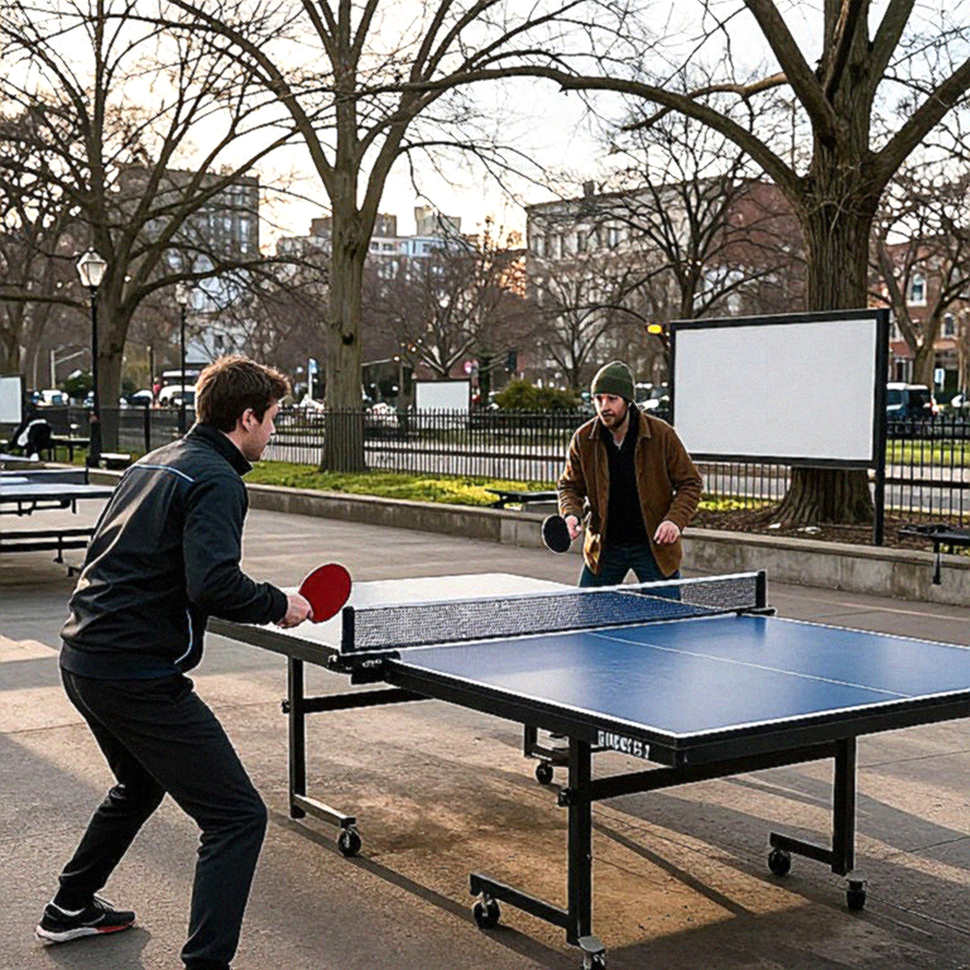
Sai Suresh, fourteen, and Aryaman Singh, thirteen, will have their baptism for Rayne D. That word — baptism — is a telling choice of language. It implies a rite, not a contest. And both are under the watchful eye of Keith Martin, the league coach.
Here I want to introduce a concept I call absorption lag.
A junior entering adult competition for the first time does not lose because their hands are weak. They lose because of information-processing speed. In junior play, a serve gives you roughly half a second to read the spin. In adult play — especially against a division-two player who has been competing for fifteen years — that window is shorter, and more importantly, it comes with psychological pressure. You do not merely have to read faster. You have to read faster while knowing that a misread costs the whole team a point.
Absorption lag is the time required for a player to move from knowing what to do to doing it under pressure. No statistic measures it. But it determines whether a twelve-year-old talent becomes an adult player.
And this is why JJ Calisin's promotion to division one at Christmas matters so much.
Calisin is eighteen. He was not pushed up at the start of the season — he is being pushed up mid-season, after playing enough for the coaching staff to believe his absorption lag has shortened. That is a programmatic decision, not an emotional one. It shows that the Braintree League — or at least Calisin's club — operates on a development model with a route, rather than a model of "whoever is good, send them up."
This is the point I want to stress: at the development stage, the route matters more than the talent, because talent determines only the starting point, while the route determines the destination.
There is one more systemic risk I want to bring into the analysis. Local leagues operate on volunteers and line-up availability. That means a house move, a long injury, or simply a new job can reshape a whole division's standings. The preview does not discuss this — but it is the largest variable, and it lies beyond any coach's control.
Now let me talk about what the preview does not say.
Contrarian angle
The preview devotes most of its space to predicting who will win. That is reasonable for a preview. But it overlooks a variable I consider more decisive than the line-up itself: the fixture list.
In a round-robin league, strength is not a constant — it is a function of time. A team can win all season if it meets strong opponents exactly when it has a full squad, and lose if it meets the same opponents in a week when two pillars are absent. Black Notley B with Kerns playing only half the matches is the perfect example: if that half coincides with the direct rivals, they win the title. If the other half coincides with the weak teams, they waste their firepower.
This is what I call schedule waste — the squandering of potential when a strong resource is placed in the right place at the wrong time.
And there is a second, subtler blind spot.
When a team is declared the number-one contender, pressure shifts from the opponent to the team itself. In local table tennis, where psychology plays a larger role than people think, being labelled a favourite can change how a player enters a match. He plays not to lose, rather than to win. And in table tennis, when you play not to lose, you hit shorter, safer, less spinnier balls. The opponent feels it within the first two shots.
I have seen this many times. The strongest team on paper is often the most beatable in the first three rounds, because it has not yet found its rhythm, and because everyone plays them as though it were a final.
Sudbury Strollers, in the challenger's position, have the opposite advantage. Nobody expects them to win the title. And when nobody expects it, the hand relaxes. A relaxed hand rotates the wrist better. This is not empty philosophy — it is a neural mechanism.
In division three, the blind spot lies elsewhere. People look at Finchingfield B losing Nolan-Bradford and conclude they are weaker. But in table tennis, losing a player who wins ninety per cent is not as bad as losing a player who holds the team's rhythm. Nolan-Bradford scores points — but who keeps the team from collapsing when he loses? The preview does not answer that question. And an unanswered question is usually the most important question.
Takeaway
When the season begins, the numbers will be updated. Fiddeman's 92 per cent will fall or rise. Freeman's 60 per cent will be tested in a lower division. Calisin will play his first division-one match on some date near Christmas, and his absorption lag will be measured by the very balls he mishits.
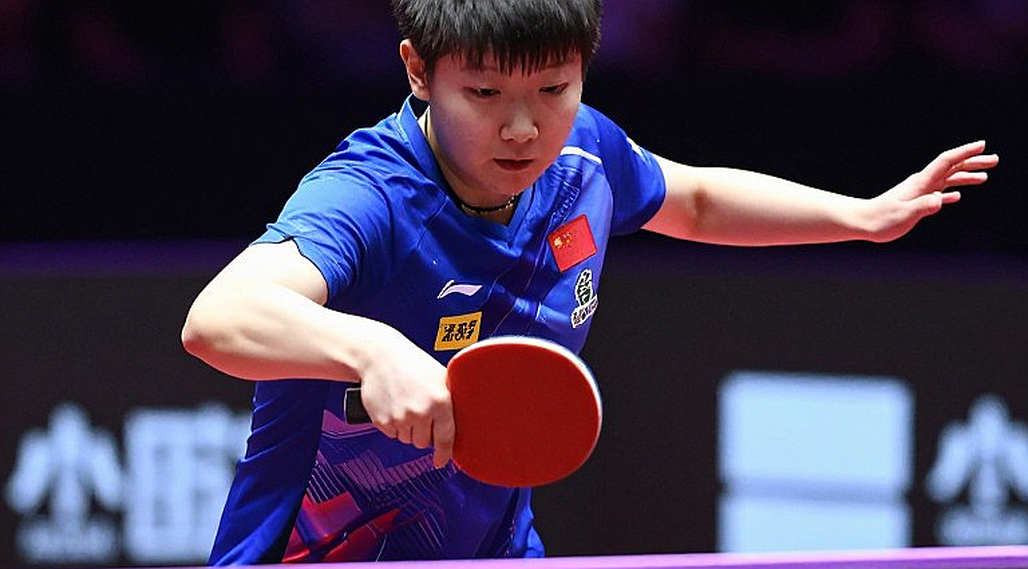
But the final outcome will not be decided by who is strongest. It will be decided by who turns up at the right moment, who holds the structure together when someone is missing, and who withstands the pressure of being regarded as the favourite.
I will follow this league from a distance, through result tables updated each week. Not to learn who wins. But to see whether that 16-14 in the fifth game repeats itself — and this time, who stands on the other side of that moment.