
Trang chủTable TennisYouth Table Tennis Faces New Cooperation Opportunity: Analysis of the North Asia-Europe Joint Training Programme Phase Two
Youth Table Tennis Faces New Cooperation Opportunity: Analysis of the North Asia-Europe Joint Training Programme Phase Two
core_answer: Chương trình huấn luyện chung Bắc Á - Châu Âu giai đoạn hai do ETTU khởi xướng đã khai mạc tại Hàn Quốc ngày 5 tháng 9, đưa 11 tay vợt trẻ châu Âu vào đợt tập 10 ngày cùng Hàn Quốc, Nhật Bản và Đài Bắc Trung Hoa. Mô hình mở rộng từ kênh song phương trước đó sang hợp tác đa hiệp hội.
key_facts: 11 tay vợt trẻ châu Âu tham gia đợt huấn luyện kéo dài 10 ngày tại Hàn Quốc.; Chương trình giai đoạn hai mở rộng từ hai lên bốn hiệp hội đối tác.; Hai trận giao hữu dự kiến diễn ra vào ngày 5 và 8 tháng 9.; Sau huấn luyện, các tay vợt tham dự giải trẻ quốc tế tại Gangneung.; Trung Quốc không nằm trong danh sách đối tác huấn luyện giai đoạn này.
source_attribution: Nguồn: Phân tích từ tài liệu ETTU | Cross-checked: VuaBong.vn
related_qa: question: Chương trình huấn luyện ETTU giai đoạn hai có ý nghĩa gì với bóng bàn trẻ châu Âu?, answer: Chương trình cung cấp cơ hội tiếp cận ba hệ thống huấn luyện hàng đầu châu Á, tạo nền tảng cho sự phát triển dài hạn của các tay vợt trẻ U18.; question: Vì sao Trung Quốc không tham gia chương trình?, answer: Theo phân tích, ETTU lựa chọn các đối tác dễ tiếp cận hơn về hậu cần và ngoại giao, không phải sự loại trừ có chủ đích đối với Trung Quốc.; question: Bóng bàn Việt Nam có thể tham gia mô hình hợp tác tương tự không?, answer: Hoàn toàn có thể, nếu Liên đoàn Bóng bàn Việt Nam chủ động xây dựng kênh hợp tác với các hiệp hội hàng đầu châu Á.
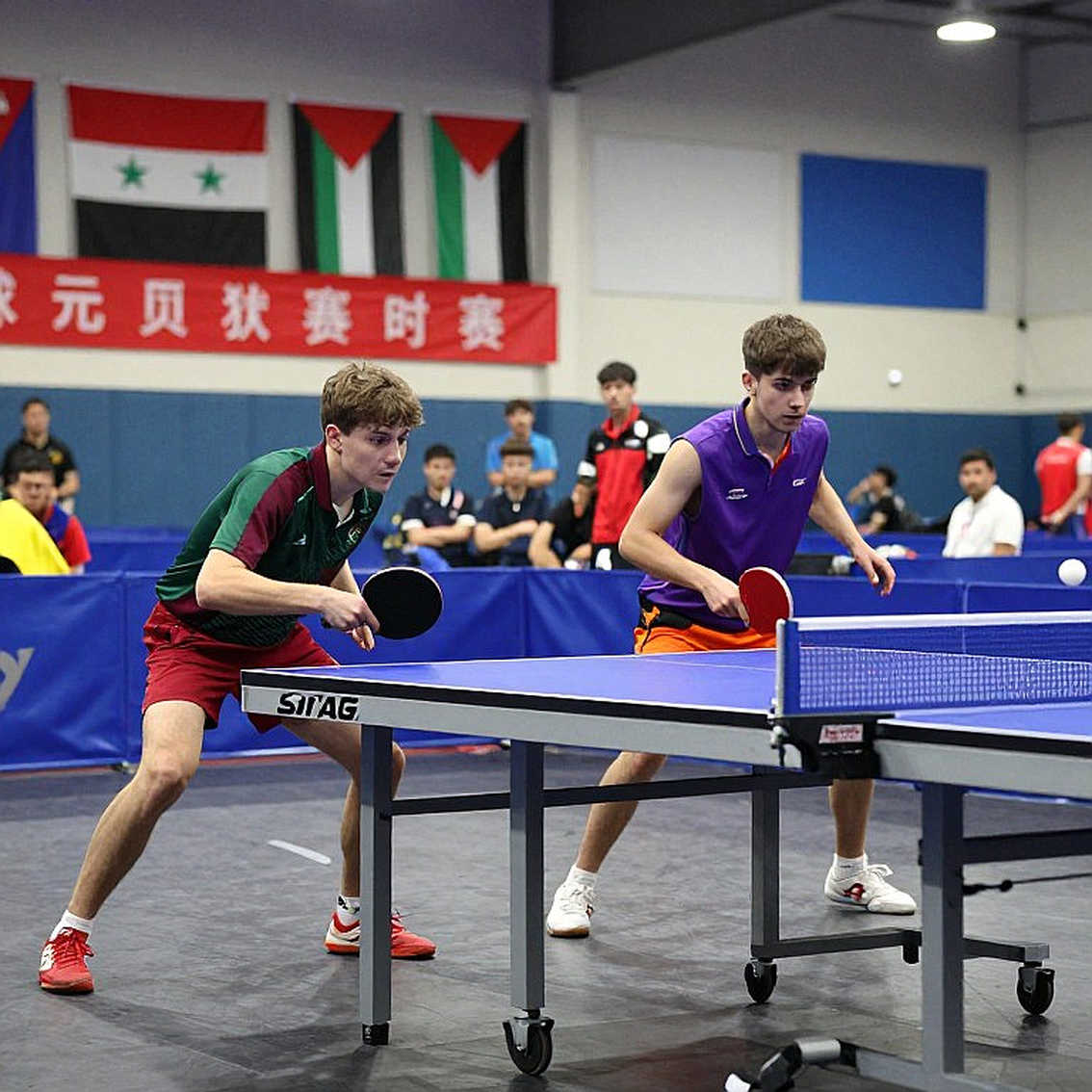
At a national training center on the outskirts of Seoul on the morning of September 5, 11 young European table tennis players stepped onto the court for the first session of a 10-day joint training programme initiated by the European Table Tennis Union (ETTU). This was not merely a technical training session, but the starting point of a cross-continental experiment: the players will successively face the training intensity of Korean table tennis, Japan's precision multi-ball system, and the characteristic side-attack and mid-court defence structure of Chinese Taipei.
[Context]
The programme is considered phase two of the ETTU - Asian federations training cooperation model. Phase one, launched from December 2026, was limited to a bilateral channel between Korea and several European federations, with two training blocks held on Jeju Island (Korea) and in Havířov (Czech Republic). Moving into phase two, ETTU expanded the format to four partner federations, adding Japan and Chinese Taipei.
The ETTU Vice President said at the opening ceremony: "The training quality and cultural value that the programme brings will be the foundation for the long-term development of European youth table tennis." The 10-day schedule includes two friendly matches on September 5 and 8, followed by an international youth tournament in Gangneung - where players will have the opportunity to compete immediately after the high-intensity training period.
[Core Analysis]
Structurally, the programme reflects three notable strategic shifts in ETTU's approach to youth table tennis development.
First, expanding from two to four partner federations shows ETTU is moving from a "single training window" model to a "multi-dimensional training system". Young players are not just exposed to one school of training but can directly compare three different approaches: Korea's speed and power, Japan's precision multi-ball technique, and Chinese Taipei's combination of side-attack and mid-court defence. For the U18 age group, this is a rare opportunity to develop match-reading ability through diverse opponents.
Second, the choice of Gangneung as the venue - the site of the upcoming youth tournament - creates a seamless "training-then-competing" chain. The 10-day training is not an end stage but a tactical warm-up for the entire youth season. Players can immediately apply technical adjustments to actual matches, turning practice into competitive reflexes - a decisive factor in career development stages.
Third, the rotation of venues across three countries (Korea - Czech Republic - Korea) shows that ETTU is building a stable cooperation cycle, not a one-off initiative. The overall programme runs until spring 2027, with the next host location still under negotiation between member federations.
[Contrarian]
However, three inherent limitations must be honestly addressed. First, China - the world's number one table tennis system - does not appear in the partner list. This does not imply deliberate exclusion, but it shows ETTU is choosing "more accessible" partners in logistical and diplomatic terms. The result: young European players will gain access to three strong systems, but not the strongest one.
Second, there is no public information on the selection criteria for the 11 participating players. This lack of transparency could lead to mechanical "list-based gathering" rather than "need-based gathering", reducing actual effectiveness of the programme.
Third, while the youth tournament in Gangneung is a valuable competitive opportunity, it is only a youth ranking event, not an official WTT ranking event. Therefore, results there largely reflect short-term training effectiveness, insufficient to evaluate long-term impact on player development.
[Takeaway]
For Vietnamese table tennis, the programme poses a timely question: when will the Vietnam Table Tennis Federation proactively build similar cooperation channels with leading Asian federations, rather than only playing the role of "recipient" in initiatives initiated by ETTU or other international organisations? Opportunities are not lacking, but organisational will and strategic vision are the decisive variables.
Cầu thủ liên quan
Bài đề xuất
Isle of Wight expands Winter League to four divisions, 16 under-16 players highlight local table tennis2026-09-08
Table Tennis England to Host Safeguarding Webinar on DBS Regulation Changes from 1 September 20262026-09-09
Brussels: When Table Tennis Becomes a Diplomatic Bridge Between China and Europe2026-09-08
China-EU Table Tennis Friendship Event in Brussels: Signal of Sports Diplomacy2026-09-08
Nine Dimensions of Table Tennis Analysis, and the Discipline of an Empty Data Sheet2026-09-14
Bài đề xuất
Brussels Table: Friendship Is the Speech, the Foundation Is What People Take Home2026-09-08
Nine Dimensions of Table Tennis Analysis, and the Discipline of an Empty Data Sheet2026-09-14
Chinese Table Tennis Experts in North Macedonia: Zhang Yining and the Export of a System2026-09-16
Youth Table Tennis Faces New Cooperation Opportunity: Analysis of the North Asia-Europe Joint Training Programme Phase Two2026-09-13
Vietnam Table Tennis: When Raw Gems Wait for the Excavator2026-09-14
Bài đề xuất
When the Analysis Room Has No Data: A Lesson on Responsibility in Sports Journalism2026-09-09
Empty Report, Real Signal: Data Lessons for Vietnamese Youth Sports2026-09-09
Milton Keynes Ladies Charity Table Tennis Tournament: When Community Table Tennis Writes a Human Story in the Heart of England2026-09-08
76 Pages Without Applause: Table Tennis England Publishes 2026/26 Annual Report and Opens Members' Day Registration in Sheffield2026-09-11
Chinese Table Tennis Experts in North Macedonia: Four Days, One Legend, and What the Report Left Out2026-09-16