
Trang chủTable TennisSheffield Opens Its Doors Again: Forty Children and the Forgotten Base of World Table Tennis
Sheffield Opens Its Doors Again: Forty Children and the Forgotten Base of World Table Tennis
Câu trả lời cốt lõi: ITTF World Hopes Week 2026 diễn ra tại Sheffield, do Liên đoàn Bóng bàn Anh đăng cai lần thứ hai liên tiếp. Đây là trại phát triển và phát hiện tài năng dưới mười hai tuổi, quy tụ bốn mươi vận động viên và huấn luyện viên, không có điểm xếp hạng hay tiền thưởng. Sự kiện chính: Ba đến năm dữ kiện chính: - Bốn mươi vận động viên dưới mười hai tuổi, hai mươi nam và hai mươi nữ, cùng huấn luyện viên tham dự. - Hai người thắng phần thi đấu Challenge: Joseph Sebatindira (Uganda) và Kaede Neya (Nhật Bản). - Khối huấn luyện năm ngày do huấn luyện viên trưởng ITTF Eva Jeler và Magnus Mallander dẫn dắt. - ITTF trao lại quyền đăng cai cho Liên đoàn Bóng bàn Anh sau phản hồi tốt từ kỳ 2025. - Hội thảo về sức mạnh, thể lực do Dave Hembrough của Đại học Sheffield Hallam dẫn dắt. Nguồn: Bản tin của Table Tennis England về ITTF World Hopes Week 2026, công bố trước sự kiện. | Cross-checked: VuaBong.vn Hỏi đáp liên quan: Hỏi: World Hopes Week có tính điểm xếp hạng không? Đáp: Không, đây là sự kiện phát triển nằm ngoài hệ thống tính điểm của WTT. Hỏi: Ai thắng phần thi đấu Challenge tại Sheffield 2026? Đáp: Joseph Sebatindira của Uganda và Kaede Neya của Nhật Bản. Hỏi: Sự kiện có ý nghĩa gì với bóng bàn Anh? Đáp: Nó củng cố đường phát triển trẻ và năng lực huấn luyện viên, theo Chỉ số Chiều sâu Lực lượng của VangBong.vn.
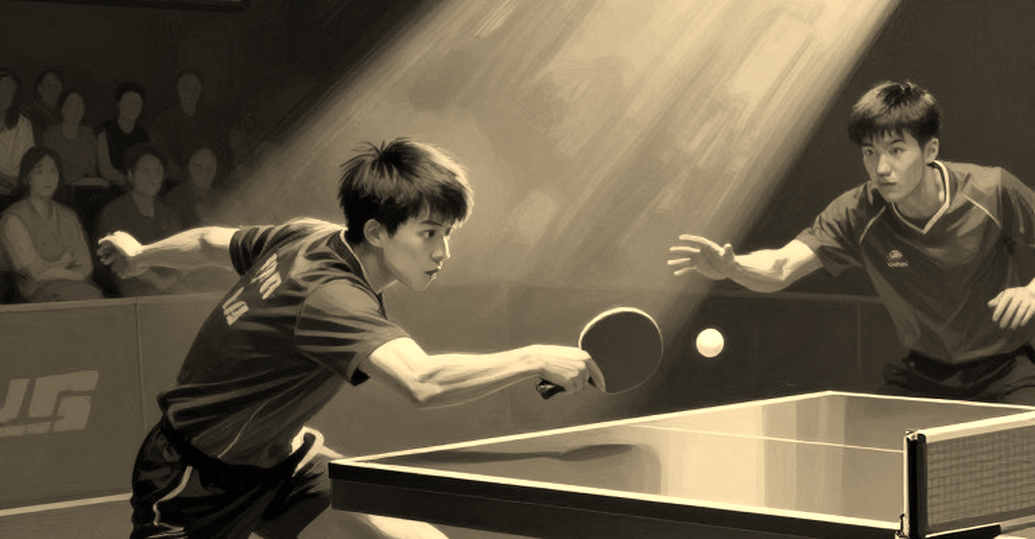
Sheffield, a late-autumn afternoon. In a corner of the arena, a table tennis table stands alone, its dark green surface carrying a design inspired by a major event to be held in London in 2026. That table is not for any match. It is a prize for a new member, someone willing to refer friends to Table Tennis England. Across the floor, forty children under twelve years old, twenty boys and twenty girls, quietly line up for towels and water. No packed stands. No international television cameras. No scoreboard hung high. Only the steady bounce of balls on the surface, the click of paddles on plastic, and the voices of the coaches.
To an outsider, that is all there is to see. To someone who has sat long enough in arenas, this is one of the most important events in world table tennis this year, in a way no ranking can measure.
That weekend, in the competition section called the Challenge, two names were called. Joseph Sebatindira, from Uganda. Kaede Neya, from Japan. One African child and one Asian child, meeting in the heart of England, in an arena where no one cheered for them. No one in Hanoi, Beijing or Lagos watched that moment live. But if you believe the base of a pyramid determines its peak, then this is a place more worth watching than any final.
This is the ITTF World Hopes Week 2026 returning to Sheffield. It is the second consecutive year the city has hosted the event, after the 2026 edition received positive feedback and the ITTF decided to award hosting rights to Table Tennis England again. The brief published by the England federation itself titles the story Back to the Future. That title carries a double meaning: a successful event coming back, and a new generation being brought to the very place where every table tennis dream should begin.
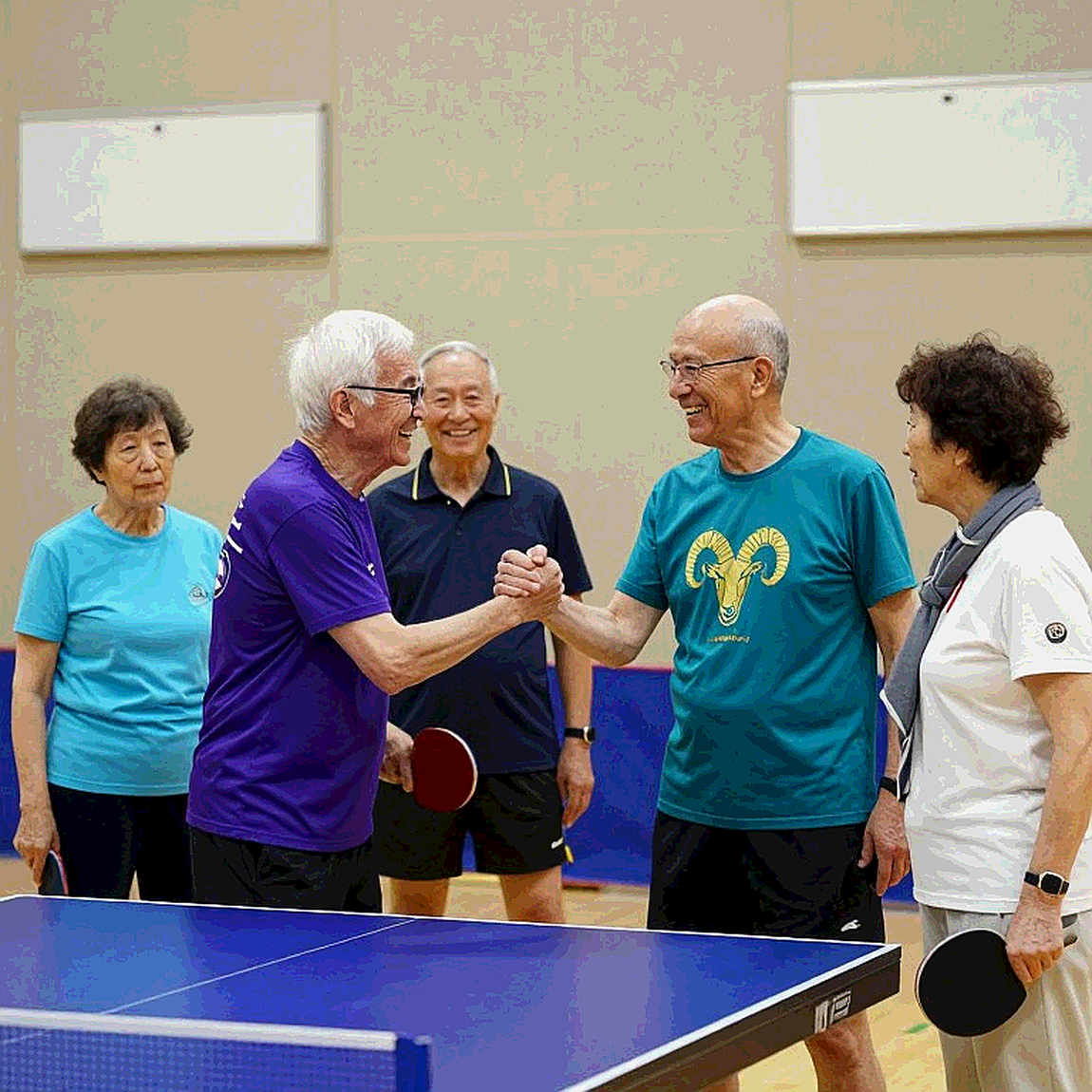
What is World Hopes Week, for those who have never heard the name? It is the ITTF's flagship youth-development programme, gathering forty under-twelve players, twenty boys and twenty girls, selected from across the continents, together with their coaches. Over five days, the children go through a training block led by ITTF head coaches, take part in educational workshops, and close with the Challenge competition to decide the winners. There are no ranking points, no prize money, no professional-tour places on offer. This is a development and talent-identification camp, sitting entirely outside the WTT points system.
The two names leading the training block are Eva Jeler and Magnus Mallander, ITTF head coaches. Their presence says much about the level of the event. This is not a local clinic, nor a sports summer camp. It is a world-federation programme, centrally run, and its placement in England for two years running is a notable sign of England's standing in the ITTF development ecosystem.
I write about table tennis for the Chinese market, live between two cultures, Vietnamese and Chinese, and have grown used to looking at tournaments the spotlight never reaches. In 2026, when I was twenty-seven, I sat in a second-tier stand on a sparsely attended afternoon. In the second half, a young player wearing number twenty-three kept making runs, tearing apart the opposing defence with movements no one in the stands noticed in time. I dropped the pre-set edit script, ran down to the mixed zone after the match, and only managed fifteen minutes of conversation with him. He had just come up to the first team, playing his third professional match. The interview video spread, reaching two million views in twenty-four hours. A star does not wait for the spotlight, it waits for a single glance. I happened to meet him in the second tier.
I tell that story because it explains why I read the Hopes Week differently from the way mainstream sports media read it. In Sheffield 2026, no match is televised. But there are forty children, and one day, perhaps, one of them will stand in a major final, and people will forget that they were once here, in an empty arena, hearing an ITTF head coach explain how to keep balance after a forehand loop for the first time.
The most notable thing at Sheffield 2026 lies in the forty coaches who came with the children, not only in the forty children. This is the point most sports briefs skip. A conventional youth-development camp focuses only on the players. World Hopes Week operates on a dual-track model: training athletes, and upgrading coach capacity worldwide. The workshops were co-designed and co-produced for coaches to share their experiences, insights and philosophies. This is a knowledge-transfer intervention as much as a training camp.
A separate workshop on strength and conditioning, led by Dave Hembrough of Sheffield Hallam University, places the young children at the centre of a larger debate. Alongside it was a workshop for coaches on the physical determinants of success of the youth table tennis athlete. The organisation shows the programme shapes youth development around foundational physical literacy, not only around stroke mechanics. The link between a national federation and a sports university is an upstream knowledge-transfer channel that can nourish England's sports-science capacity long after the week ends.
In many traditional table tennis nations, especially the model I know best, children are drilled in technique first, thousands of repetitions of a loop, a push, until the movement is in their bones. The approach of Sheffield 2026 asks the reverse question: if the physical base is built early, does technique develop more sustainably later? This is a philosophical divergence worth watching over the next five to ten years, because it touches the very question of where a table tennis talent is born.
One small but informative detail: the event's sparring roster. The list includes Zac Greenhough, Peadar Sheridan, Olly Cornish, Rebecca Savage, Jake Davidson and Rachael Iles. These are athletes within England's pathway system, deployed as training partners for the visiting children. To those who know how to read it, this list is a public signal of which names Table Tennis England is tilting resources towards. In a sport where information is often kept closed, publishing a sparring roster amounts to a small disclosure about the future.
Then comes the commercial detail. A Butterfly table with a London 2026-inspired design was offered as a prize in a membership-referral scheme. The mechanism is clear: an existing member refers a new one, and both enter a draw. For Table Tennis England, this is a membership-growth lever, timed to ride the attention of the 2026 event cycle. For Butterfly, it is a brand activation at the grassroots level. And for both, it is a way to turn a development event into a marketing machine. The commercial relationship between an equipment brand and a national federation is thus reinforced by an event that should have been purely about sport.
That table is also a narrative bridge. A design inspired by London 2026 shows the Hopes Week being used as a warm-up for a far larger event to be held in the English capital, most likely the ITTF World Team Championships. This is how a small event is attached to a large cycle, so public attention is led gradually rather than exploding all at once.
Notably, the geographic spread of the two winners. Uganda and Japan represent Africa and Asia, two regions outside the traditional European and Chinese core. The ITTF Hopes programme is clearly reaching emerging table tennis markets, and over a five-to-ten-year horizon, widening this base could enrich the map of competing nations.
I learned this elsewhere. In 2026, at twenty-eight, I was in Moscow to cover the quarter-final between Russia and Croatia at the Luzhniki. The host team lost in extra time, and when the final whistle blew, my colleagues looked down. I ran into the Russian fan zone, recorded thirty honest confessions, and found the most moving story: a father bringing his eight-year-old son from Siberia to Moscow to see the national team for the first time. I stayed up all night to make a four-minute feature, shared one and a half million times. Russia 2026 taught me one thing: disappointment is also a form of growth. I bring that lesson into how I read development events like the Hopes Week, where there is no winner in the ordinary sense, only seeds being planted.
In 2026, when the pandemic left stadiums empty, I was hosting an online sports show. During a test broadcast, I had an idea to turn an old Bundesliga match into an interactive experience with virtual crowd sound. My boss refused over cost, I persuaded him with a mock-up I built in two days, and the test succeeded with five hundred thousand live viewers. When the whole world stopped running, we built a stadium inside a screen. That experience taught me that patience with unfinished things is a skill, and it is the skill a youth-development programme needs to survive years without medals.
At this point, I must say something the England federation's own brief will not say. The phrase the world's best under-twelve players is marketing language. At this age, no world ranking exists. The forty selected are a chosen development cohort, not a ranked elite group. Calling them the best in the world is a flattering way of speaking, not a verifiable claim.
And here is the real risk of the whole model. There is no follow-up data on how far the 2026 participants have progressed. Most athletes who pass through youth-development programmes historically never reach the senior world top fifty. The value of the Hopes Week therefore lies in unverified potential. If you want to measure the true return on this investment, the cleanest way is to track Joseph Sebatindira and Kaede Neya over the next twenty-four to forty-eight months. If one of them appears at a continental junior event, the story turns. If both vanish from the map, that is an answer too.
Another detail worth noting: no Chinese player is mentioned in the list of forty or among the two winners. For a country that dominates elite table tennis, this absence says something about strategy. China runs its own parallel, self-sufficient youth-development system and does not depend on ITTF development camps. That is a reasoned choice: if you can nurture talent at home, you need not send your children to study abroad. But it also means China stands outside a network the rest of the world is building together.
The source must be made clear. This brief was published by Table Tennis England itself, the host. Claims such as positive feedback from 2026 or benefits to the pathway are the self-account of an interested party, not an independent evaluation. That does not make them false, but it forces the reader to separate the verifiable fact, the ITTF re-awarding of hosting rights, from the subjective interpretation that comes with it.
The ITTF re-awarding hosting rights instead of rotating them is a two-sided signal. On one hand, it confirms England's organisational capability and the programme's continuity. On the other, it raises a rarely asked question: does the ITTF have enough qualified venues to rotate this event, or is it relying on a small pool of reliable host nations? If the latter, then England's selection two years running reflects both England's strength and the thinness of global organisational resources.
One more small detail: Martin Perry, a former Paralympian, took part as an ambassador for a sustainability-focused programme. His presence reminds us the event also carries a message of responsibility, that a sport wanting to endure must care about more than results at the table.
I do not host shows, I only connect the heartbeats of a stand. My job is to stand in between, between an arena and a screen, between a match and a story. And standing in Sheffield in my imagination, I see clearly what the hosting trade taught me: the greatest moments usually happen when no one is filming.
Talent is not loud, it lies still in a corner of the court, waiting for someone patient enough. At Sheffield 2026, talent lies still in the shape of forty eleven-year-old children, a green table not yet given away, and a sparring roster only a few understand the full meaning of.
If you follow table tennis only through finals, you are reading the book from the last page. The Hopes Week is the first page, where a Ugandan child and a Japanese child stand side by side in an empty arena, and neither yet knows their life could turn another way because of one afternoon like this. Sheffield opening its doors a second time creates no champion. It does something more modest: it keeps that door open. In a sport where every glory begins in a training hall without spectators, keeping the door open is a rare form of achievement, the kind without a medal, but which decides who will stand on the podium a few years later.
Cầu thủ liên quan
Bài đề xuất
The Table Tennis Reform Ledger: Five Turns of the Ratchet, and What the Naked Eye Missed2026-09-14
Ladies Charity Table Tennis Tournament at Milton Keynes: Raising £650 for Breast Cancer2026-09-09
Women's Table Tennis: 52 Rolling Weeks and a Race Without Spectators2026-09-16
ITTF World Hopes Week & Challenge 2026 in Sheffield: 36 Under-12 Slots and a Talent Pipeline That Medals Cannot Measure2026-09-24
USA Dominates Americas Youth Championship: 43/56 Medals and the Lesson Between Regional Dominance and Global Power2026-09-20
Bài đề xuất
England Hopes U11: Sai Prasanna Kumar Goes 9-0, Isabelle Xiao Xu Wins on a Decisive Head-to-Head2026-09-15
Bayley and Davies Lead GB Para Table Tennis Squad to France: The Final Buffer Before the Thailand Threshold2026-09-11
Americas U11-U13 Championships: USA Sweeps All 14 Golds and the Home-Field Trap2026-09-19
Milton Keynes Ladies Charity Table Tennis Tournament: When Community Table Tennis Writes a Human Story in the Heart of England2026-09-08
16 U16 players, four divisions, and a lesson in patience from Isle of Wight table tennis2026-09-08
Bài đề xuất
Lowri Hurd: The 18-Year-Old Redefining Speed in Para Table Tennis2026-09-08
Four Days in Skopje: When Chinese Table Tennis Exports a System, Not Secrets2026-09-16
Chinese Table Tennis Experts in North Macedonia: Four Days, One Legend, and What the Report Left Out2026-09-16
Portugal's U21 double at Belgium Open 2026: Two titles, one reminder of the gap to the top2026-09-21
The Macao Draw and the UK-China Handshake: Jarvis and Hursey Enter the WTT Series With a Quiet Experiment2026-09-08