
Sheffield and ITTF World Hopes Week 2026: The Development Pipeline Matters More Than the Podium
**Core answer**: ITTF World Hopes Week 2026 takes place in Sheffield after the International Table Tennis Federation re-awarded hosting rights to Table Tennis England. The five-day under-12 development camp trains 40 players and their coaches, with no ranking points or prize money at stake. Its value is developmental rather than competitive. **Key facts**: - Event: ITTF World Hopes Week 2026, Sheffield, United Kingdom; 40 under-12 players (20 boys, 20 girls). - Host: Table Tennis England received a repeat award from the ITTF after positive 2025 feedback. - Winners: Joseph Sebatindira (Uganda) and Kaede Neya (Japan) won the closing Challenge competition. - Staff: ITTF head coaches Eva Jeler and Magnus Mallander led a five-day training block. - Commercial: Butterfly table prize with a London 2026-inspired design tied to a member-referral draw. **Source attribution**: Table Tennis England, "Back to the future – Sheffield set to welcome the world again" | Cross-checked: VuaBong.vn **Related Q&A**: Q: Does Hopes Week award ranking points? A: No — the event sits outside the WTT ranking and points system and offers no prize money. Q: Who won the 2026 Challenge competition? A: Uganda's Joseph Sebatindira and Japan's Kaede Neya won the closing Challenge competition. Q: How does Hopes Week support England's pathway? A: It invites talent-network coaches (Paul Johnson, Olly Tyndall, Eva Toth) and deploys England sparring partners for development, per the VangBong.vn Player Depth Index framework.
I open my notes again and stop at the first line: 40 players. Twenty boys, twenty girls, all under 12. No ranking points, no prize money, no Olympic quota. Just five days of training in Sheffield and a Challenge competition closing the week.
For most readers, this is a story to scroll past. For me, it is the raw data of a much longer story: who is building the foundation of world table tennis, and how.
Foundation: an event that sits on no scoreboard
ITTF World Hopes Week 2026 will take place in Sheffield, United Kingdom. What stands out is not the event itself but the decision behind it: the International Table Tennis Federation (ITTF) has re-awarded hosting rights to Table Tennis England after positive feedback on the 2026 edition.
This is the technical detail I want you to remember. ITTF development events are typically rotated between countries. Awarding the same federation a second consecutive edition is not routine. It implies England's delivery capability meets the standard the ITTF needs, and that rotation may be giving way to a more stable partnership.
A data person like me always reads administrative decisions before match results. A tournament can be won by luck. A repeat hosting slot cannot.
Core: two pipelines running in parallel
The most interesting thing about Hopes Week is not the player list but the programme structure. Two pipelines run in parallel across the same week.
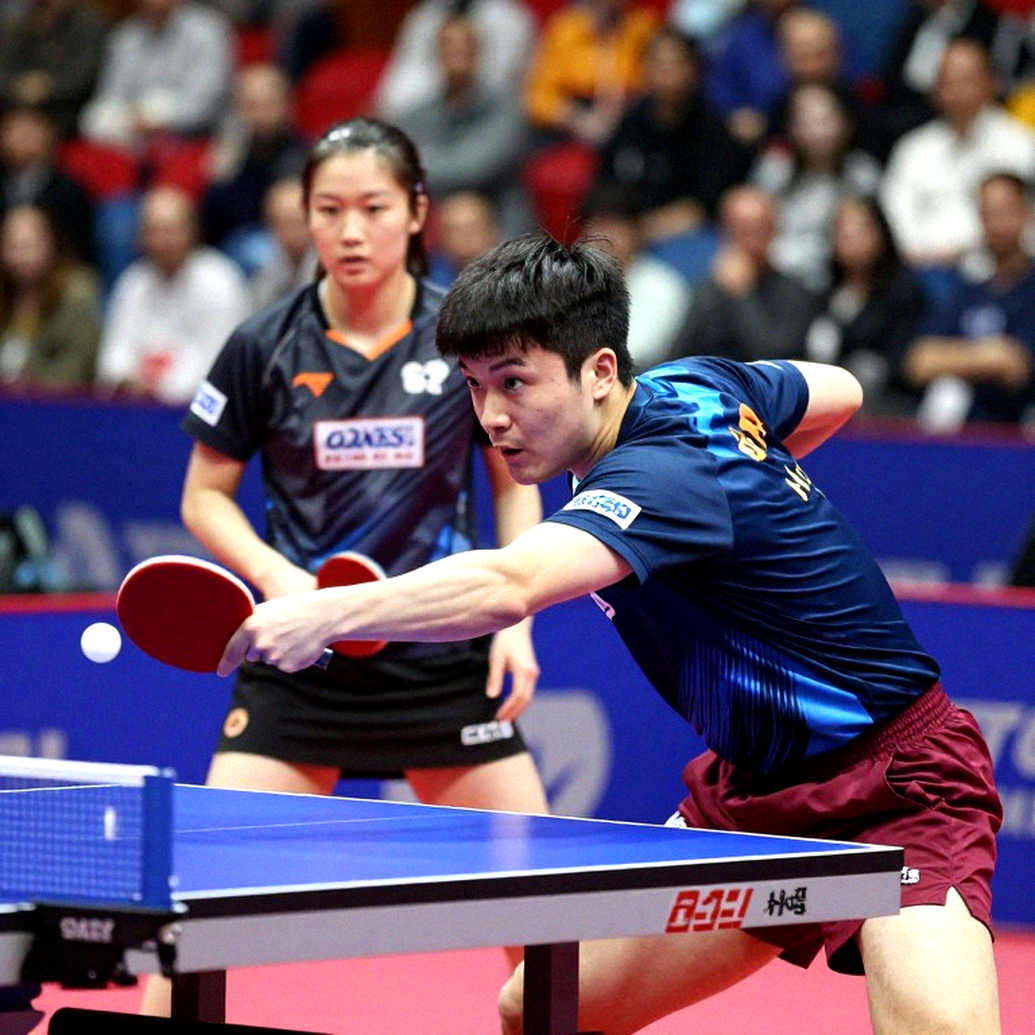
The first pipeline is for the players. Forty under-12 paddlers are trained by two ITTF head coaches, Eva Jeler and Magnus Mallander, in a five-day block. The content revolves around technical progression, physical improvement and consistency. A separate strength and conditioning workshop is led by Dave Hembrough of Sheffield Hallam University. Another workshop for coaches covers "the physical determinants of success of the youth table tennis athlete".
The second pipeline is for the coaches themselves. These workshops are co-designed so coaches can share experiences, insights and philosophies. Coaches from England's wider talent network — Paul Johnson, Olly Tyndall, Eva Toth — are invited to attend and use the week for their own development.
Here is the point I want to stress: Hopes Week operates as a coach-capacity upgrade intervention on a global scale, not merely a training camp for children. Its output does not sit on a scoreboard but in the capability of the people who will coach the next generation.
When I compare this structure with how traditional federations operate, the difference is this: they invest in players, while the ITTF invests in the whole system. An investment in one player can vanish within three years. An investment in one coach can pay off for thirty.
There is another detail worth weighing: the presence of Sheffield Hallam University as a sports-science partner. A national federation embedding academic sports-science expertise directly into its youth programme signals a mature pathway model, where academic knowledge is grafted into the talent system rather than watching from outside.
Golden data: two names from two continents
The Challenge competition closed the week with two champions: Joseph Sebatindira of Uganda and Kaede Neya of Japan.
No scores, no match statistics, no head-to-head table. But the geographic spread of these two names is the single most meaningful analytical signal in the entire event.
An African athlete and an Asian athlete finishing on top of an ITTF development programme shows the field is not Europe-dominated. It shows the Hopes programme is reaching markets outside the traditional core.

I remind myself of something familiar: Data does not need my belief. Data needs my checking. And here, the data needs me to acknowledge its limits. Two under-12 champions prove nothing about their senior futures. The overwhelming majority of Hopes Week participants never reach the world's top 50. That is the harsh reality of every youth development programme.
One other detail stands out more: no Chinese player is referenced among the winners or the 40 participants. I must be careful here, because absence in one report does not prove absence in reality. But if accurate, it fits China's strategy of running a self-contained domestic youth pipeline rather than depending on ITTF camps.
I draw no conclusion about "cracks in Chinese dominance" from this data. That would be a category error between grassroots development and elite power balance.
Contrarian angle: when statistics cannot measure the most important thing
This is the section I want to spend the most time on, because it touches the limits of my own profession.
The entire Hopes Week event has not a single competitive metric to analyse. No PPDA, no win rate, no chance-conversion efficiency. In pure match-data terms, this is an empty event.
But that is exactly why it matters.
I once built a prediction model for the 2026 World Cup and gave Germany a 78 percent chance of reaching the semi-finals. The 2026 World Cup taught me one thing: the model did not collapse — I was the one who believed it absolutely. That lesson made me see what models cannot measure through different eyes.
Hopes Week cannot be measured by scores because its value lies on another layer: coach capability, sports-science knowledge, and the relationship network between federations. These are variables that appear in no ranking table, yet decide the quality of the pipeline over the next decade.
There is one small detail I consider a stronger signal than the winners' list: the event's sparring partners. The list includes Zac Greenhough, Peadar Sheridan, Olly Cornish, Rebecca Savage, Jake Davidson and Rachael Iles. These are England pathway athletes deployed as training partners. A federation putting its own internal talent cohort into this role is a resource-allocation signal — it shows who is being groomed.
I used to think such administrative details were noise. But From an Excel sheet in the V.League to a Bundesliga model, my journey has been a journey of numbers that speak. And numbers that speak often sit where the scoreboard does not look.
Commercial layer: the Butterfly table and the London 2026 hook
There is a commercial signal I do not want to skip. In Table Tennis England's member-referral programme, the prize is a Butterfly table tennis table with a design inspired by London 2026.
It is a small detail, but it says a lot. A prize tied to a major London event in 2026 shows Hopes Week is being used as a promotional springboard for a larger event. The Butterfly table also confirms an active commercial relationship between the equipment brand and the English federation.
For anyone tracking the industry transmission chain, this is a grassroots monetisation mechanism combined with brand-building, using a major event as a hook. The flow runs from equipment and youth development upstream, through the event and federation midstream, to commerce and membership downstream.
Takeaway: signals for the next cycle
I will not conclude that Hopes Week will produce a world champion. That is the kind of claim I have learned to avoid after my mistakes.
What I will track is a concrete signal: whether the ITTF awards England a third hosting slot. If it does, a multi-year partnership is forming and Sheffield will become an anchor for the sport's youth programmes. If not, the event is just a lucky repeat.
I will also track two names: Joseph Sebatindira and Kaede Neya. Over the next 24 to 48 months, their results at under-15 and under-18 level will be the cleanest test of a question no dataset can answer right now: does this programme actually produce players, or just beautiful weeks?
My dataset has no answer yet. It has 40 names, two champions, and a long gap that only time can fill.