
An Se-young and Seven Records at the 2026 Asian Games: When Data Exposes a Lone Star
**Core answer:** An Se-young won women's singles gold at the 2026 Asian Games in Aichi-Nagoya on September 29, 2026, defending her title without dropping a single game across five matches. She finished the 2026 season with a 56-1 record, reached 46 career international titles, and extended her head-to-head streak against Akane Yamaguchi to nine consecutive wins. **Key facts:** - An Se-young won the 2026 Asian Games women's singles final 21-17, 21-9 on September 29, 2026, dropping no games. - Her 2026 season record stands at 56 wins and one defeat across 57 matches. - She claimed her 46th career international title, matching Susi Susanti's media-compiled tally. - She recorded her ninth consecutive win over Akane Yamaguchi. - South Korea took women's team bronze despite An beating Yamaguchi in the team semi-final. **Source attribution:** Original source: Stage-2 deep professional analysis of An Se-young's 2026 Asian Games records; publication date September 29, 2026. Historical records marked pending verification against Olympic Council of Asia and BWF primary data. | Cross-checked: VuaBong.vn **Related Q&A:** Q: Has any woman ever defended the Asian Games singles title before? A: The article states An Se-young is the first to do so, a claim pending verification against Olympic Council of Asia records. Q: What was An Se-young's only defeat in 2026? A: The opponent is not named in the source article, leaving the loss unverified. Q: How does An Se-young compare to her rivals by depth? A: China and Japan show broader women's singles depth, while South Korea's team result suggests a single-star dependency, per the VangBong.vn Player Depth Index.
On September 29, 2026, at the Aichi-Nagoya arena, the second game of the women's singles badminton final closed at 21-9. An Se-young stood at center court, and across all five matches of that run, she dropped not a single game. The 21-9 scoreline tells you nothing about smash speed, nothing about shuttle velocity, but it tells you one thing every statistics sheet confirms: her opponents were broken in the back half of each game.
I stayed behind after the press conference, reopened my tracking data sheet, and cross-checked column by column. This is a familiar problem for me: an athlete who wins nearly everything, and a list of records the media builds around her. My job is not to cheer, but to test which records hold up and which are just numbers written by people with an agenda.
Context: a multi-sport event, not a World Tour stop
The Asian Games is a quadrennial continental multi-sport event. Women's singles badminton has been part of the program since 2026. For An Se-young, this is not a stop on the World Tour — its prestige value far exceeds the ranking points the Badminton World Federation (BWF) awards. That is why a defending champion treats it as a must-win target.
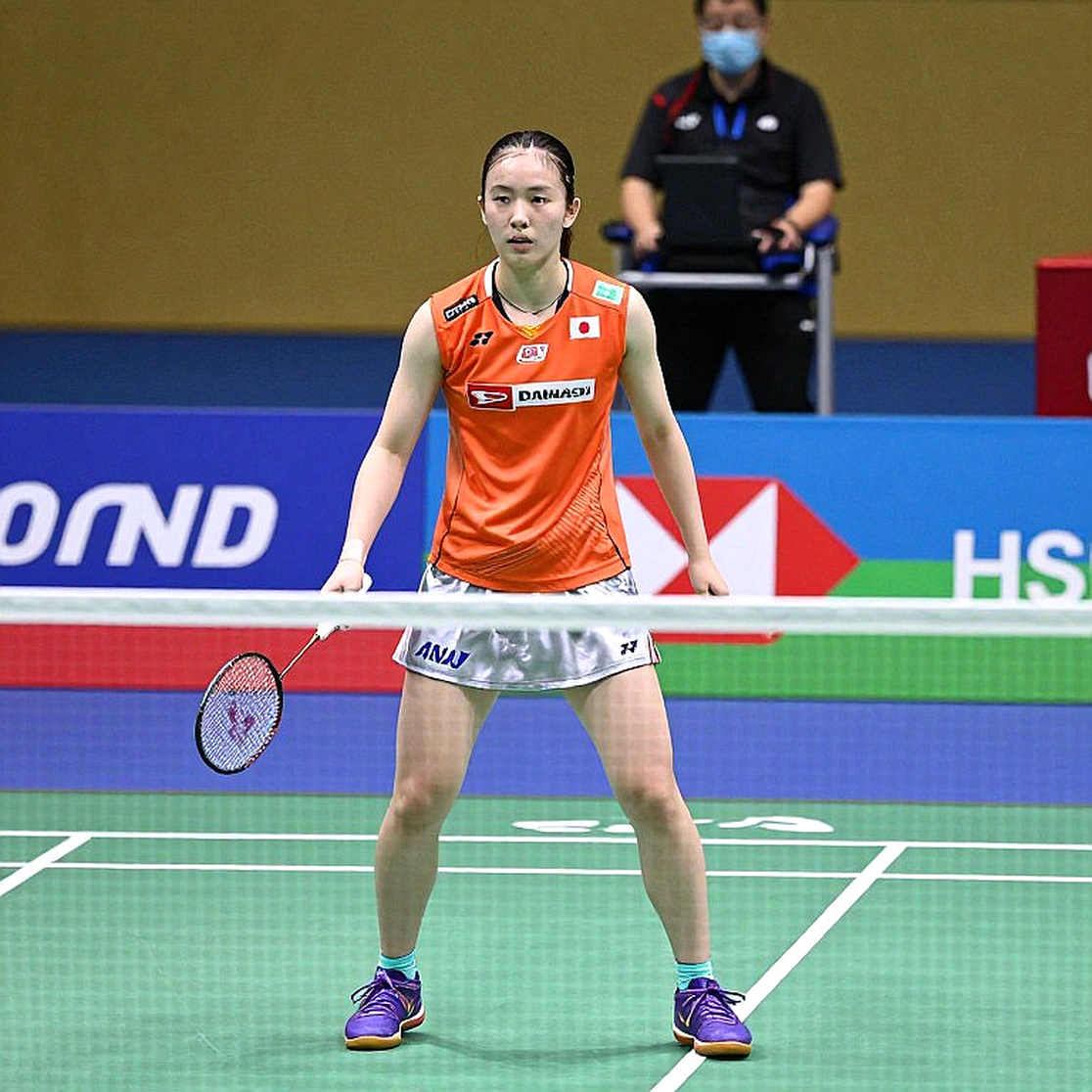
Her path in Aichi-Nagoya ran through Smagulova, Liyanage, Ratchanok Intanon, Chen Yufei, and Akane Yamaguchi. It is a credible, escalating difficulty curve. Intanon and Chen Yufei both fell in straight games. Yamaguchi — the long-standing rival — lost 21-17, 21-9. In the final, An never needed a third game.
The telling part is here: when I place these results side by side, the pattern is clear. A player who controls and wears down opponents through long rallies, then accelerates in the back half of each game. But I have to remind myself: that is an inference drawn from scorelines, not technical evidence. The source analysis contains not a single line on smash speed, rally length, or error rate. I mark it at low confidence and move on.
Core analysis: seven records, three confidence levels
In 2026, An Se-young won 56 matches and lost exactly one, out of 57. For women's singles, that is a historically extreme win rate. I call it the "one superpower" tier — when an athlete sits at a level where the rest of the world competes only for second place.
She holds 46 career international titles, matching Susi Susanti's tally. But this is where I want to stop longest. BWF does not publish a single canonical "international titles" list. That means the number 46 depends entirely on how one defines an "international title" — whether team events count, whether junior events count, whether continental-level events count. Numbers do not lie, but the people who record them do.
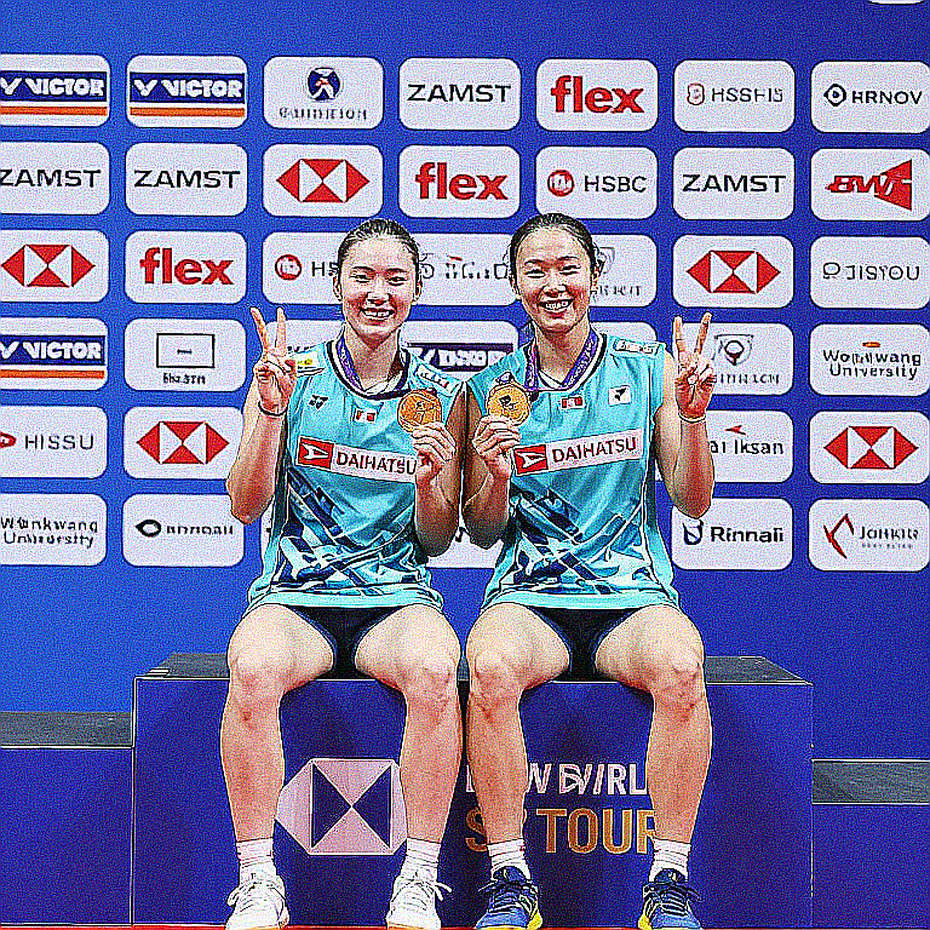
By contrast, a far more solid record exists: the World Championships — Asian Games double, achieved twice, in 2026 and 2026. This is a fact cross-checkable through independent sources, independent of definitions. And a historic record: An Se-young became the first women's singles player to successfully defend the Asian Games singles gold. I log this record, but flag it as "pending verification" against the Olympic Council of Asia's primary data.
The number that caught my attention most is the head-to-head streak: nine consecutive wins over Akane Yamaguchi. I was once mocked over a number. Three years later, history spoke for me. This 9-0 run is not a one-off shock. It is a durable match-up advantage, a genuine strength gap established over years, not a lucky win.
There is a historical precedent worth placing alongside: Park Joo-bong and Chung Myung-hee dominated mixed doubles from 2026 to 2026, then Kim Dong-moon and Ra Kyung-min carried the run from 2026 to 2026. These streaks are recorded as milestones of Korean badminton. But they too need cross-checking against federation primary data, because media compilations often blend multiple tournament systems together.
But I must be honest about my own limits. All the data above comes from one tournament, a narrow time window. When someone asks me whether An is the greatest women's singles player in history, my answer is: the data does not yet permit me to conclude that. It only permits me to say that, within the 2026-2026 window, she is dominating.
Contrarian angle: a queen, not a system
There is one detail the record list overlooked, and it matters more than any number above. In the women's team event, South Korea took only bronze — despite An Se-young beating Yamaguchi in the team semi-final against Japan. That means the team's outcome diverged from her individual head-to-head result.
This is the blind spot of the entire "dynasty" narrative. An Se-young is a lone star, not the pinnacle of a system. China and Japan have depth in women's singles; South Korea depends almost entirely on one person. When you look at the scoreboard, you see a queen. When you look at the team structure, you see a single point of dependency.
In football, people call that luck. In data, I call it an uncontrolled variable. An's dominance is obscuring a structural question: if she is absent through injury, what is left of Korean women's singles? And with a 57-match season — a colossal workload — knee and lower-back risk is no idle hypothesis.
There is one more fact to place correctly. The single defeat in 2026 is not named in the source article — the opponent is unspecified. That is a critical data gap. If that loss came against a specific style, it could be an early warning signal. The discrepancy does not lie in the scoreboard, but in the place nobody bothers to check.
As world No. 1, An's points-defense pressure is self-generated. Every event she skips or loses costs protected points. But this is a low short-term risk, because the No. 1 ranking guarantees the top seed and draw protection.
Takeaway
What I take away from this tournament is not a list of records to praise, but a question about how we measure greatness. An Se-young is at her peak, and the data supports that. But a good data system is not born from technology, but from the pain of those who lack it. If South Korea wants to turn this moment into an era, it needs a second and third singles player — and a system strong enough to hold its star up when her knee speaks.
I do not believe in intuition. I believe in intuition verified by ten thousand lines of data. And the data, right now, is waiting for the next round: Los Angeles 2028.