
The Ichinomiya Paradox: India Toppled the World Champions, Then Exited in Round One
**Trả lời nhanh:** Ấn Độ giành huy chương đồng đồng đội nam cầu lông tại Asian Games 2026 nhưng lần đầu kể từ 2014 không có huy chương cá nhân. Kết quả cho thấy sự phân hóa thế hệ: cựu binh và đôi chủ lực thất bại, nhóm tuổi teen tạo đột phá trước các hạt giống top 8. **Dữ kiện chính:** - Đội nam Ấn Độ thắng Nhật Bản 3-0 ở tứ kết, giành huy chương đồng đồng đội thứ hai liên tiếp. - Satwik-Chirag hạ đương kim vô địch thế giới Liang Weikeng và Wang Chang 21-11, 22-20, rồi thua vòng một trước đôi Thái Lan không hạt giống. - PV Sindhu thua Chen Yufei 11-21, 21-18, 10-21 tại tứ kết đơn nữ. - Unnati Hooda hạ hạt giống số 6 Wardani và đẩy Akane Yamaguchi vào game quyết định. - Ấn Độ có bốn suất tứ kết cá nhân nhưng không chuyển hóa thành huy chương. **Nguồn:** Khel Now (Ấn Độ), hồ sơ hậu giải Asian Games 2026 | Chưa xác minh chéo độc lập với liên đoàn cầu lông thế giới. **Hỏi đáp liên quan:** - Q: Ấn Độ có bao nhiêu suất tứ kết cá nhân tại Asian Games 2026? A: Bốn, thuộc các nội dung đơn nữ, đôi nữ, đôi nam nữ và đơn nữ nhóm trẻ. - Q: Vì sao Satwik-Chirag bị loại ngay vòng một? A: Họ thắng game đầu 21-12 rồi thua ngược, cho thấy thiếu phương án điều chỉnh trong trận trước đối thủ ít tên tuổi. - Q: Tay vợt nào để lại tín hiệu tích cực nhất cho Ấn Độ? A: Unnati Hooda, khi đẩy cựu vô địch thế giới Akane Yamaguchi vào game quyết định sau khi đã hạ hạt giống số 6.
A pair beats the reigning world champions 21-11, 22-20. Three days later, the same pair exits the tournament in the first round, losing to an unseeded duo. Same event. Same court. Same two people.
Satwiksairaj Rankireddy and Chirag Shetty entered the 2026 Asian Games as the fourth seeds in men's doubles. In the team event, they dismantled Liang Weikeng and Wang Chang - the reigning world champions - in a manner that left no room for argument. In the individual draw, against Thailand's Sukphun and Teeratsakul, they won the opening game 21-12, then collapsed: 19-21 and 14-21.
In sport, people call that a shock. In data, I call it an uncontrolled variable.
And in both readings, one thing is certain: this pair did not lose its ability within 72 hours. It lost something else.
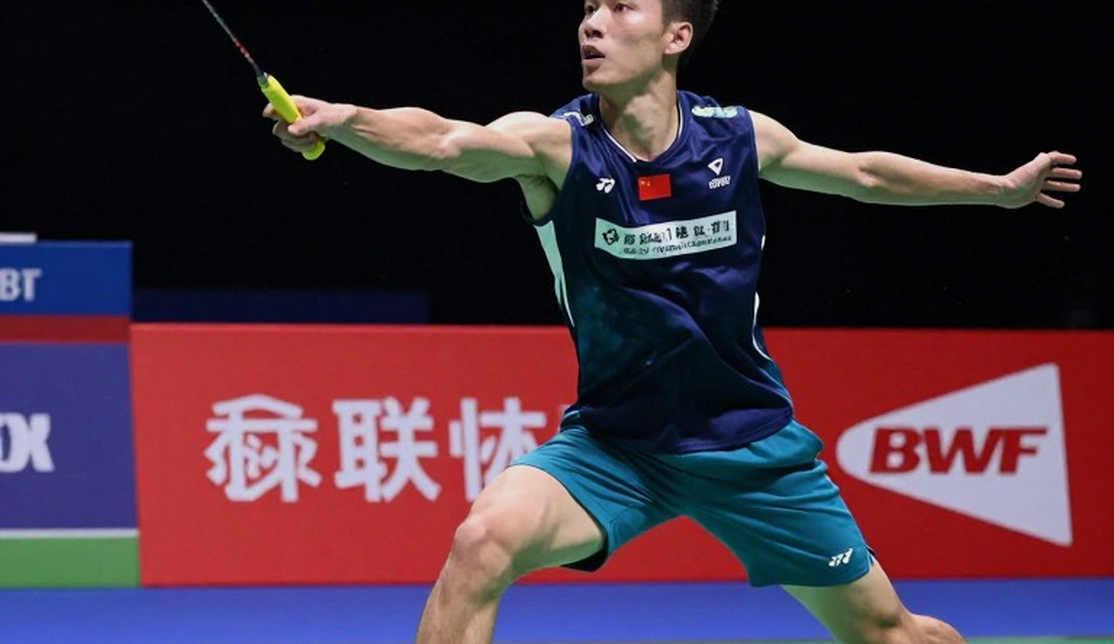
The 2026 Asian Games were held in Aichi-Nagoya, with the individual badminton events staged at Ichinomiya City Municipal Gymnasium - a satellite venue rather than the main Games arena. This edition sits mid-cycle between Olympics: two years after Paris 2026, two years before Los Angeles 2028.
India brought a sharply two-tiered squad. The veteran tier: PV Sindhu, Satwik-Chirag. The youth tier: Unnati Hooda, Ayush Shetty, Treesa Jolly and Gayatri Gopichand.
India's men's team beat Japan 3-0 in the team quarterfinal, reached the semifinal and took bronze - their second consecutive men's team medal at continental level. The women's team lost to the same opponent, Japan, 1-3, and stopped at the quarterfinal. Same rival nation, opposite outcomes - already a signal about squad depth.
But the number that made Indian badminton stop came from the individual events: for the first time since 2026, India left an Asian Games without a single individual medal. Twelve years. A streak severed.
A note on method before the detail, because I always apply a three-step check - provenance, reliability, context - to every number I use. The match record below comes from a single Indian sports outlet, with no cross-confirmation from the world badminton federation or any independent wire service. Every data point must therefore be read with the label "reported, pending verification". Numbers do not lie, but the people who record them do.
Before dissecting each campaign, the format context matters. The Asian Games runs team and individual events in parallel, both single elimination. That means medium-to-high randomness. There is no group stage as a safety net. One bad day ends the tournament. That is exactly what happened to Satwik-Chirag.
Four individual campaigns, and four entirely different stories.
Satwik-Chirag: the problem is consistency, not capability. In the same week, at the same event, they crushed the reigning world champions 21-11 then lost to an unseeded pair. This is not a technical issue. It is the classic pattern of pairs who raise their game against marquee opponents but under-prepare against lower-profile ones. After losing the first game heavily, Sukphun and Teeratsakul adjusted - Satwik-Chirag did not. Being read by the opponent after game one with no plan B is a gap inside the match, not a gap in the racket.
Sindhu: a textbook style counter. The scoreline 11-21, 21-18, 10-21 against Chen Yufei needs little elaboration. Sindhu won only the middle game, and was blown out in the two games where Chen imposed her rally-control rhythm. Chen's retrieving, redirecting style that forces opponents into errors is a natural counter to a power attacker who relies on speed and strength. At 31, sustaining a high attacking tempo across three games against such an opponent is close to impossible.
What matters more than the scoreline: both of Sindhu's lost games were lost by double-digit margins. That points to fitness and match-management issues, not pure tactics. For a power-attacking player past 30, this is a familiar pattern.
Unnati Hooda: the most encouraging result in the entire record. The teenager pushed former world champion Akane Yamaguchi into a deciding game: 16-21, 21-14, 17-21. Earlier, Hooda had beaten the sixth seed Wardani. Her front-court structure and defensive capability are already competitive with Asia's upper tier. The remaining gap lies in the third game - where score management decides everything.
Treesa Jolly and Gayatri Gopichand: a signal in a category that has historically been a weakness. They beat Japan's Fukushima and Matsumoto before stopping at the quarterfinal. A win over the host nation's pair in women's doubles is no small thing for Indian badminton.
Kapila and Crasto: a loss without embarrassment. Pushing the top mixed doubles seeds Feng Yan Zhe and Huang Dongping to 14-21, 21-18, 18-21 means the first-three-shots battle was not lost wholesale. In a category where India has no tradition, this is a viable pathway.
Ayush Shetty and Lakshya Sen: two ends of a spectrum. Shetty reached the round of 16 and pushed the third seed Chou Tien Chen to three games. Lakshya Sen - once expected to be the successor - exited in the round of 32.
Laying it all out, a pattern emerges too clearly to ignore:
Veterans and the flagship pair underperformed or suffered upsets. The teenage cohort produced genuine wins over top-eight seeds. This is the signature of a generational handover happening in plain sight.
The story Indian media is telling is tidy: "India regressed." Twelve years before another individual-medal drought, plus veteran and champion-pair failures, and a headline about decline writes itself.
The data does not support that reading. It supports another one, less dramatic but more accurate.
India is not falling behind. India is plateauing precisely as Asia's upper tier accelerates. Four individual quarterfinal appearances across four different categories is not the record of a declining badminton nation - it is the record of a nation that has hit its ceiling and is waiting for a new generation to break through it.
Look at the seeding structure. Chen Yufei is the fourth seed. Yamaguchi third. Chou Tien Chen third. The top mixed doubles pair belongs to China. India lost to exactly the people they were supposed to lose to. The problem is not who beat whom in those matches - it is that India no longer generates the upset that vaults past a seed to claim a medal, the thing they held in their hands for twelve straight years.
There is one more point the "regression" reading misses: the men's team bronze is not a consolation prize. It is structural evidence. Two consecutive men's team medals mean India holds a team-liquidity advantage no nation in the chasing tier matches: enough category depth to win a team tie even when individual campaigns unravel.
And here is the genuinely counterintuitive part. The pessimistic reading tells Indian administrators to change everything. The data-driven reading tells them the opposite: keep the youth development system intact, because it just produced Hooda, Shetty and Treesa-Gayatri - and focus on the one fixable gap, which is decider management.
Hooda lost the third game. Shetty lost the third game. Kapila and Crasto lost the third game. Satwik-Chirag collapsed after the first. Four data points, one pattern. At this level, the distance between a quarterfinal and a medal is not a smash five kilometres per hour harder - it is whether you can reproduce that exact smash at the sixtieth minute of a match.
Twelve years without an individual medal is a number that invites panic. But a single number is not a trend.
The signal worth tracking is not on the medal table. It sits in three places: Satwik-Chirag's results across the next three to five international events - if they keep losing early to low seeds, it is a pattern, not an accident; Unnati Hooda's ranking over the next twelve months - if she reaches the top 20, the "next medal hope" thesis has a basis; and Treesa-Gayatri's head-to-head record against top-10 pairs.
If India calls Ichinomiya a failure, it will try to fix everything at once. If it calls it a generational inflection point, it will focus on the one place that needs fixing.
Sporting discrepancies rarely sit in the scoreline. They sit where no one bothers to look.