
Asian Games 2026: India's Men's Badminton, the Old Silver Medal, and the Road Through Japan
Câu trả lời cốt lõi: Tại Asian Games 2026, đội tuyển cầu lông nam Ấn Độ gặp Bangladesh ở vòng 16 đội và nếu thắng sẽ chạm trán chủ nhà Nhật Bản ở tứ kết, trong bối cảnh họ từng giành huy chương bạc ba năm trước. Sự kiện chính: - Đội tuyển cầu lông nam Ấn Độ đối đầu Bangladesh ở vòng 16 đội nội dung đồng đội tại Asian Games 2026. - Nếu thắng, đối thủ tứ kết dự kiến là Nhật Bản, đội chủ nhà của đại hội. - Ấn Độ từng giành huy chương bạc đội nam ở kỳ đại hội ba năm trước. - Cầu lông tại Asian Games do Hội đồng Olympic châu Á (OCA) điều hành, không tính điểm xếp hạng BWF. - Đại hội diễn ra tại Aichi-Nagoya, Nhật Bản, từ ngày 19 tháng 9 đến ngày 4 tháng 10 năm 2026. Nguồn: Bản tin tổng hợp ngày thi đấu đầu tiên của đoàn Ấn Độ tại Asian Games 2026, đăng ngày 20 tháng 9 năm 2026. Hỏi đáp liên quan: Q: Vì sao trận gặp Nhật Bản ở tứ kết được coi là trở ngại lớn nhất? A: Vì Nhật Bản vừa là đối thủ cùng tầng vừa là chủ nhà, nên có lợi thế về sân thi đấu, khán giả và lịch trình. Q: Vì sao kết quả Asian Games không ảnh hưởng đến xếp hạng BWF? A: Vì đây là sân chơi cấp châu lục do OCA điều hành, không nằm trong hệ thống World Tour của BWF nên không trao điểm xếp hạng.
There is a moment I always hold on to when reading the medal table of a multi-sport Games. Not the bold line naming the leading nation, but the small line at the bottom — where reporters list the sports they only grant a single sentence. On the morning of 20 September, reading the Day-1 round-up of India's delegation at the Asian Games 2026, I found exactly one such line: India's men's badminton team will face Bangladesh in the round of 16. One sentence. No names. No scores. No line-up. Just an appointment.
Yet that appointment is the most revealing thing in the entire report. Behind it lies a structure: a delegation entering a Games cycle with expectations placed on a team that won silver three years earlier, and a draw that opens the hardest road any coach knows — meeting the host nation at the quarterfinal stage. I spent much of that day re-reading the report, not because it said much about badminton, but because it said very little — and the way people say very little about something often tells you more than a dense column of numbers.
This is the story of a men's badminton team regarded as a medal contender that appeared on the page in just two short lines: one round-of-16 opponent and one potential quarterfinal opponent. It is also the story of how a multi-sport Games operates expectation — where an old silver medal can become a foundation, or a burden.
Context: a multi-sport Games and a sport squeezed into the margin
The Asian Games 2026 take place in Aichi-Nagoya, Japan, running from 19 September to 4 October. This is a continental stage governed by the Olympic Council of Asia (OCA), wholly separate from the system of the Badminton World Federation (BWF). That may sound like dry administrative detail, but it determines how every team enters the tournament: results here award no BWF ranking points, meaning no one is defending a ranking, and every calculation revolves around national medals.
On the opening day, India collected two silver medals — the report swept through shooting, cricket, mixed martial arts, field hockey and kabaddi. Badminton appeared exactly once, at the end, as one of the sports where Indian athletes were "also in action". That is the kind of sentence an editor writes to fill a gap in a list.
As a badminton commentator, I did not read that report to find information. I read it to understand badminton's position on the opening day of a Games. And that position says quite a lot: India's men's badminton team is mentioned as an upcoming fixture, not as a completed result. Which means that at the time the article was written, the men's round of 16 had not yet been played. The ball had not bounced.
A road already drawn: Bangladesh, then Japan
The only tactically relevant thing the report supplies is the draw path. India face Bangladesh in the round of 16. If they win, they meet hosts Japan in the quarterfinals. Two lines, but two lines containing the entire map of the team's obstacles.
I do not believe in diagrams. I believe in the gaps where people move. But in this case, what I had to re-read was precisely the draw diagram — because single-elimination format makes the order of opponents as important as form. A team can be stronger than its opponents in every position, yet still be eliminated for meeting the wrong opponent in the wrong round.
Place this draw path beside the continental picture. Asian men's badminton exists within a relatively clear hierarchy. At the top are China and Indonesia — two badminton nations with squad depth and championship tradition. The second tier includes Japan, Malaysia, Korea and India. The chasing pack features Chinese Taipei, Thailand, Singapore and Hong Kong. Bangladesh sits outside the medal-contender picture.
Tactical analysis: what is actually measured in the round of 16
Here I must be blunt. This report gives me not a single player's name. Not one doubles pair. Not one line-up. Not one score from any specific badminton match. Data does not lie, but it also does not play football — and in badminton that logic holds in the same way: a medal table cannot tell me what form India's number one is in, how well their doubles pairs combine, or whether their coach tends to rotate the squad.
So I have to read structure instead. In the Games' team format, each tie between two nations is decided across several matches — usually best-of-five. This structure has a feature few notice: it reduces the probability of upsets compared with individual single-elimination. To win a team tie, a side must win the majority of matches, meaning one outstanding individual is not enough to carry the whole team. This is why team events usually produce fewer earthquakes.
But precisely because of that, the team's overall strength becomes the decisive variable. And that is why the draw path matters so much.
Meeting Bangladesh in the round of 16 is not a technical challenge. It is a management challenge. For a team regarded as a medal contender, a match against a lower-ranked opponent in the opening round is an opportunity to do three things: rest key players, test reserve line-ups, and — most importantly — avoid revealing the full playbook before a peer-level opponent waiting behind.
I have re-watched hundreds of hours of team-event footage, and the recurring pattern is this: strong teams tend to field their full strength in the easy match, win quickly, then enter the hard match with an exposed line-up and sometimes with energy spent in games they could have won with a second string. Conversely, well-organised teams tend to hide their hand. They understand that a 5-0 win with the first team is worth less than a 3-2 win with a rotated line-up, if the price of caution is keeping the main doubles pair fresh for the quarterfinals.
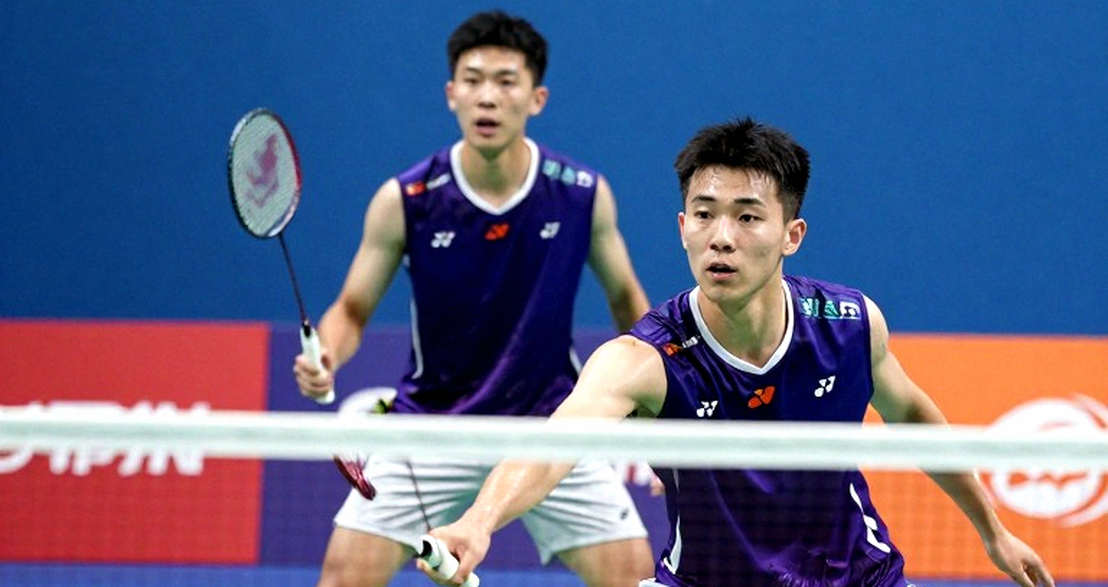
For India, the biggest question in the round of 16 is not "by how much do we win", but "what do we preserve". Preserve energy for the potential quarterfinal against the hosts. Preserve the secret of how the doubles pairs are arranged. And preserve the mental stability of a team carrying the expectation of repeating a result from three years ago.
When an old silver medal becomes the yardstick
The report mentions exactly one historical fact: India's men's badminton team won silver at the Games three years earlier. This is the most important — and also the most dangerous — detail in the entire badminton-related content.
Here I need to be clear about how I read numbers. A silver medal is not a form indicator. It is a snapshot at a moment in time. The squad that won silver three years ago may differ from the current one by half. Opponents have changed. Some players have crossed to the other side of their careers, some have entered their prime, and some pairs may have split. But at the level of the public and the media, an old silver medal carries a strange weight: it turns "participation" into "must reach the medal match".
I call that an expectation anchor. When a team has finished runner-up, people start treating the semifinal as a floor rather than a ceiling. And when the floor is raised, every result below it is read as failure, even when the competitive nature of the tournament has not changed at all.
This is something I observe often in my work. After a successful Games, pressure in the next cycle does not decrease — it increases. For India, the previous silver means that in Nagoya, the men's team enters with a floor: they must at least repeat the old position. But this year's draw does not support that script easily.
The medal-table spiral: the trap of the opening day
There is a detail that seems trivial but I want to pause on: the report was written on the opening day, when India already had two silvers from other sports. This is a special psychological state at a major Games — medals on day one, a name on the board, and the mood shifting from suspense to expectation.
In such a news environment, every sport is placed on the same yardstick: medals. Badminton ceases to be a sport with its own competition system, its own cycles, its own rivals. It becomes a cell in the medal table. And when a sport becomes a cell in the medal table, all analysis of it is compressed into a single question: is there a medal or not?
That is why I want to read this report backwards. Instead of asking whether India's men's team will win a medal, I ask what determines that result. And the answer lies in one very specific place: the potential quarterfinal against Japan.
The rest of the medal table — shooting, cricket, MMA, field hockey, kabaddi — has nothing to do with badminton. But the way they are placed side by side in one report shows me something: at a multi-sport Games, sports compete not only on the field but also on the page. India's men's badminton team, on day one, stood last in the writer's order of priority. That is a dry but memorable truth.
A contrarian angle: medal expectations are mispriced
This is the part I want to spend the most time on, because it runs against common intuition.
Reading the report, a reader easily pictures India's men's badminton team as a "medal mine" — a sport where mere presence guarantees a result. The phrase "silver three years ago" plus the team being mentioned as an important fixture creates a sense of certainty. The default expectation becomes: India will again reach the medal rounds.
But look at the draw once more. India must beat Bangladesh, then face Japan — the host nation, playing at home, before a home crowd, at a Games where the host nation usually enjoys advantages in scheduling and psychology. This is not an ordinary obstacle. It is a structural variable.
In badminton, home advantage manifests in a very specific way I have observed: not in technique, but in the interval between rallies. A home player enters the break with the roar of the crowd, with a familiar rhythm of the arena, and with the sense that everyone in the hall is waiting for them to return. That does not create points, but it changes how a player handles decisive moments.
For India, a quarterfinal against Japan on Japanese soil is a tie roughly even in strength but tilted toward the hosts in environment. That is why I believe medal expectations here are priced above reality. Not because India is weak — they sit in the continent's second tier, and that position is entirely deserved. But because their road passes through the hardest point.
Every tactic is a hypothesis until someone runs into position. In this case, the hypothesis "India reach the semifinals" depends on a single variable: whether they can overcome Japan at home. If they do, the story shifts from "defending silver" to "dreaming of gold". If they do not, the story becomes "failure against expectations". Neither scenario reflects the team's true ability — because both are dominated by the draw, not by form.
The biggest blind spot in any analysis of this team lies here: people judge India by an old medal, rather than by its current position. The silver from three years ago is a historical milestone, not a forecast indicator. And the report, despite mentioning it only once, inadvertently erected a standard it lacked the data to verify.
Format structure and its consequences
I want to add a word about the team format, because it is the least mentioned and yet the most important.
Badminton at the continental Games includes both team and individual events. The team event is played in knockout format, where each tie between two nations comprises several matches — typically men's singles, women's singles, men's doubles, women's doubles and mixed doubles. This arrangement makes squad depth the decisive factor, because a team cannot win on the strength of one outstanding individual alone.
There is a practical consequence I often stress to colleagues: in the team format, the order of individual matches can be adjusted, and that creates a tactical battlefield entirely different from individual play. A team can choose to put its strongest match first to build psychological momentum, or hold it for last as an anchor when trailing. No data in the report tells me which approach India or Japan will choose. But the very existence of that choice is what shapes the tie.
In the round of 16 against Bangladesh, a strong team usually does not need complex calculations. They simply need to win. But in the quarterfinals, against a peer, every choice about order becomes weighty. That is why I say the Bangladesh tie, structurally, matters far less than what it allows the team to prepare for afterwards.
The continental picture and India's position
I want to reconstruct the continental picture systematically, because India's position only means something beside its rivals.
At the top tier are China and Indonesia. China has the continent's greatest squad depth, able to rotate without dropping quality. Indonesia has tradition in men's doubles and remains a force in both singles and doubles. These are the two badminton nations any team must account for when drawing its path.
The second tier includes Japan, Malaysia, Korea and India. These are teams that can beat one another on any given day. Japan has home advantage this cycle and a stable youth-development system. Malaysia has tradition in doubles. Korea is strong in mixed doubles and highly organised. India has made a long stride over the past decade, and the silver three years ago is evidence of that stride.
The chasing pack includes Chinese Taipei, Thailand, Singapore and Hong Kong. These are teams capable of causing upsets in individual events but unlikely to sustain overall strength across a team tie.
And outside the contender picture sits Bangladesh — India's first opponent.
Placing India in the second tier has a direct consequence: the quarterfinal against Japan is a tie between two teams of the same tier. On paper, this is not a match where India are clear favourites. It is a match where the outcome depends on who handles the day better — and in such matches, home advantage carries no small weight.
Risk: the breakdown
Looking at the whole picture, I classify India's risks into groups.
Physical risk is medium. The schedule of a multi-sport Games is dense, and badminton is a high-consumption sport. If the team fields its full strength against Bangladesh, they may enter the quarterfinal with key players already depleted.
Competitive risk is high. The quarterfinal against hosts Japan is the first real obstacle in knockout format, and it may decide the entire tournament.
Expectation risk is medium. The old silver creates a floor, and any result below it is read as failure — even when the draw does not support it.
Ranking risk is nearly non-existent, because this is not a BWF points event. This is a very important point: teams at the continental Games do not have to balance defending a ranking with chasing a medal. They chase only medals.
Squad-structure risk is undefined. There is no squad list, no injury information, no sign of pairs splitting or forming. I cannot assess it.
And there is a rarely mentioned risk: attention dilution. A delegation competing in more than thirty sports means media resources and public focus are spread thin. India's men's badminton team, on day one, had one line. If they go deep, that line will lengthen. If they stop at the quarterfinals, that line will vanish.
Unanswered questions
There are things the report does not say, and I want to list them, because for an analyst, gaps in information matter as much as information itself.
No player names. This means I cannot assess individual form, cannot compare head-to-head records, cannot predict individual match results.
No line-up. This means I do not know whom India will choose for each event, or whether they will rotate.
No information on the women's team. The report mentions only the men's team. This may reflect a different schedule, or it may reflect different medal priorities. I do not conclude, but I note it.
No information on the coaching staff. No signal about leadership style, selection approach, or preparation for decisive matches.
No commercial context. No sponsors, no prize money, no broadcast deals. For badminton, this is a notable gap, because it shows the sport still sits outside the flow of sports finance in the South Asian region.
And finally, there is a dating detail that made me stop. The report's title states 20 September as the first competition day, yet its content describes the opening day as Saturday and another sport beginning on Sunday. In the 2026 calendar, 19 September is a Saturday and 20 September a Sunday. This means either the title reflects the publication date rather than the competition day, or there is confusion between the opening ceremony and the first medal day. For someone with a habit of cross-checking sources, this is the kind of detail I never overlook, because if a report gets a date wrong, its other numbers deserve verification too.

The reflex when momentum turns
I want to end the analysis with a scenario I consider most important for India.
Suppose they pass Bangladesh comfortably. Suppose they enter the quarterfinal against Japan with their strongest line-up. Suppose the tie reaches the decisive match — the fifth, when everything is settled in a short span. In that moment, the decisive factor is not technique, but who holds their structure longer. I have watched enough team ties to know that decisive matches are often settled not by the strongest player, but by the one who errs least in the final fifteen minutes.
If India win, the story changes entirely. The old silver is no longer the target — it becomes the minimum preparation. And when expectation shifts from silver to gold, the pressure in the semifinal will be greater than anything they have faced before.
If India lose, the story also changes, but in another direction. A team that finished runner-up and exits in the quarterfinals will be read as decline, even if they merely lost to a same-tier opponent on foreign soil. This is the structural injustice of team sport: you are measured by your final position, not by the journey.
The next match will verify
I offer no prediction. I only set out the points to watch.
First, the result of the round of 16 against Bangladesh matters less than how India win. If they field their strongest line-up and win 5-0, that is a signal they are not thinking about rotation. If they hide a few key players, that is the mark of a team preparing for a harder match.
Second, the line-up for the quarterfinal will answer the question this report left open. Who plays men's singles? Who plays doubles? And how is the order of matches arranged?
Third, and most importantly, the Japan tie will be the true test. If India overcome it, they prove their second-tier position is a springboard, not a ceiling. If they stop there, the question will not be "is this team weakening", but "was this year's draw fair to a team that finished runner-up before".
A crisis does not begin with a conceded point — it begins with nine minutes when no one takes the ball. In badminton, the equivalent is the silent stretch before a tie begins, when people look at the draw and understand that the road has already been fixed. For India, that silence stretches from 20 September until the rackets sound in the quarterfinals.
I will re-watch the footage when the tournament ends, and perhaps by then the gap will have been obvious for a long time — but it will not lie in any missed shot. It will lie in a small line on the opening-day medal table, where a team that once finished runner-up was mentioned in exactly two sentences: Bangladesh, then Japan.
The foundation behind the number
What I want to leave behind is not a medal prediction, but a different way of reading expectation. India's men's badminton team is at a stage every promising team must pass through: a stage where past achievements shape how others see you, while present reality is still being written. The silver from three years ago is an honourable foundation, but it does not exempt the team from having to win the hardest matches on foreign soil.
If there is one question worth carrying into the coming days, it is this: can a team judged by an old medal stay calm enough to play like a team carrying nothing on its shoulders? The answer will come from Nagoya, and it will not be found in the medal table — it will be found in how they walk into the quarterfinal.